Green Bin Program - Frequently Asked Questions
What you need to know
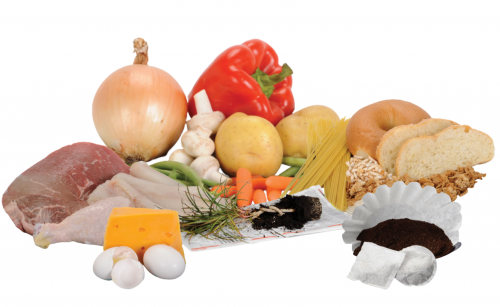
The Green Bin Program separates organics (fruit and vegetable scraps, paper towels, coffee grinds, etc.) from garbage or recycling.
Organics are materials that break down naturally and can be turned into compost. This saves them from going to landfill - landfill space is costly and hard to find.
Yes, you may continue to backyard compost. At the same time, we also encourage you to participate in the Green Bin Program. There are some additional items that you can't currently compost that are accepted in the Green Bin Organics Program - animal waste, meat, fish products, diapers, etc.
Every household with curbside pick-up receives:
- Kitchen container that can be attached inside a cupboard or kept on the counter.
- A larger container (green) for the curb. The one for the curb has wheels and handles so that it's easy to move around.
- Instructions about what goes into the Green Bin.
- Apartment/condo residents receive a kitchen container.
Every household with curbside pick-up receives:
- Kitchen container that can be attached inside a cupboard or kept on the counter.
- A larger container (green) for the curb. The one for the curb has wheels and handles so that it's easy to move around.
- Instructions about what goes into the Green Bin.
- Apartment/condo residents receive a kitchen container.
Participating in the Green Bin Program is mandatory for all City of Toronto residents receiving curbside collection. Every resident has a responsibility to ensure that materials designated as organics under the Green Bin Program are kept separate from garbage and are properly placed out for collection.
What materials are accepted in the Green Bin Organics Program?
See "What goes in the Green Bin".
There is no limit on the amount of Green Bin materials that may be placed for collection each week, however a Green Bin cannot weigh more than 20 kg (44 lbs).
Yes, as a convenience, you can. The bags will be removed in the processing facility.
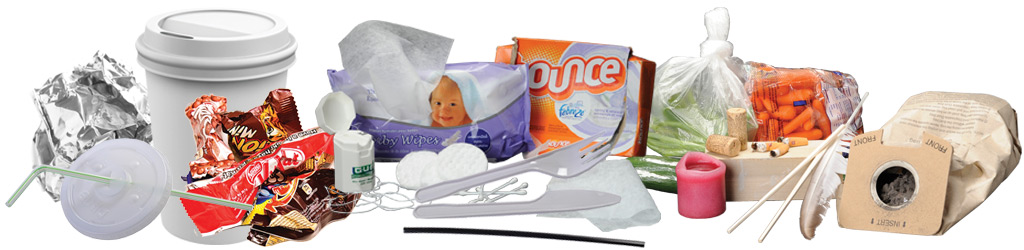
Are there specific items that I can't put in the Green Bin?
- Hot drink cups, lids and sleeves
- Plastic wrap, baggies, sandwich bags
- Plastic items such as food containers (e.g. yogurt or margarine tubs), cutlery
- Plastic milk bags
- Styrofoam, meat tray liners
- Foil
- Wax paper
- Artificial flowers and plants
- Leather, textiles, clothing
- Rugs, carpets
- Cigarette butts, tobacco
- Corks (from wine bottles, etc.)
- Gum
- Ear cleaners, cotton balls, make-up removal pads
- Dental floss
- Baby wipes
- Disposable mop sheets
- Dryer lint, dryer sheet
- Vacuum cleaner bags and contents
- Feathers
- Hair, pet fur
- Dead animals
- Fireplace or BBQ ashes
- Wood products, wood chips
- Candles
- Recyclable materials
No. Please continue to use rigid open-top containers (garbage cans, bushel baskets) or kraft bags for your yard waste and set them out on the yard waste collection day noted in your local collection calendar. (Please remember that we don't pick up yard waste in plastic bags.) The composting process is different for yard waste. It is taken to a different facility than the Green Bin organics.
While it's okay to line your containers with plastic bags, it is not okay to include your plastic baggies, bread bags, and other plastic packaging. Too much plastic causes serious quality problems at the processing facility. The mechanisms at our organics processing facility are designed to remove the plastic bags you use to line your containers, but not plastic packaging. Bottom line, plastic is not good for the final product. We appreciate your help in producing clean, rich compost. Certain plastic tubs and lids are recyclable in the Blue Bin.
What do I have to do?
- Line your indoor container or outdoor Green Bin with a plastic bag. Line just one or the other - not both. No special bag is required for either collection container. If you wish, you can reuse plastic grocery bags or use a kraft paper bag to line your indoor container. Any plastic bag (e.g. garbage bag) can be used to line your outdoor Green Bin.
- Place all items accepted in the Green Bin Program into your outdoor Green Bin.
- Latch your Green Bin before setting it out.
- If you use a bag to line your outdoor Green Bin (required if you have not lined your indoor kitchen container), make sure it is completely tucked into the bin when you set it out; otherwise the edges may be used by animals to pull the bin over.
- On your collection day, place your curbside Green Bin container at the curb by 7 a.m. if you have day time collection, or by 9 p.m. if you have night time collection.
- Remove bungee cords and ensure that your Green Bin is accessible by placing it 0.5 metre (approximately 2 feet) away from your Blue Bin, Garbage Bin or yard waste. In winter, place your bin and items in a clearly visible, accessible area.
Line your indoor kitchen container (no need to buy special bags ... your used grocery bags or a kraft paper bag will do just fine) or your outdoor Green Bin. Do not line both bins. By lining your kitchen container, you don't have to handle the organics twice. Just remove the full plastic bag from your indoor container and toss it into your outdoor Green Bin -twisted or loosely tied, if possible, as it helps us separate the plastic from the organics at the processing facility. A note about winter: Using plastic bags as liners prevents loose organics from freezing to the side of the bin in winter. Also, please note that both containers are washable. (Do not place your kitchen container in the dishwasher.)
While your name is not necessary, we encourage residents to write their address on the Green Bin with a permanent marker.
The Green Bin is designed with wheels and a handle to help easily roll it to the curb.
Where should I store my Green Bin – are there any animal issues or health concerns to worry about?
Consider storing your Green Bin where you currently keep your Blue Bin and Garbage Bin. As for the smaller kitchen container, place your indoor container in a convenient location - it can be attached inside a cupboard or placed underneath your sink.
The Green Bin is collected once a week; garbage or recycling is collected every second week. It is important to understand that all of the "smelly" garbage goes in the Green Bin and is picked up every week. That should only leave a few items (plastic that can't be recycled, dryer sheets, hair/pet fur, vacuum cleaner bags, etc.) left in your garbage – nothing that has a potential for odour.
The Green Bin Program is completely sanitary and safe.
Consider storing your Green Bin where you currently keep your Blue Bin and Garbage Bin. As for the smaller kitchen container, place your indoor container in a convenient location - it can be attached inside a cupboard or placed underneath your sink.
The Green Bin is collected once a week; garbage or recycling is collected every second week. It is important to understand that all of the "smelly" garbage goes in the Green Bin and is picked up every week. That should only leave a few items (plastic that can't be recycled, dryer sheets, hair/pet fur, vacuum cleaner bags, etc.) left in your garbage – nothing that has a potential for odour.
The Green Bin Program is completely sanitary and safe.
Yes, as much as is practically possible, the Green Bin is designed to be animal-resistant. It is durable and has a tight-fitting latch. If you use a bag (strictly optional) to line your outdoor Green Bin, make sure it is completely tucked into the bin when you set it out; otherwise the edges may be used by animals to pull the bin over, but more importantly, you want to avoid any food residue left on the plastic from attracting animals.
When you take your bin to the curb is important. If you know you’ve had a problem with animals, rather than putting your bin out the night before pick-up (if you have day time collection), wait until early the next morning and put it out before 7:00 a.m. on your collection day (raccoons usually feed at night). If you store your bin in a garage or shed, make sure the doors and windows are closed.
In addition to securely latching your bin shut, you may wish to try hooking a bungee cord from one side to the other, as long as you remove it before collection.
Raccoons, in particular, have always been an issue to deal with when it comes to setting out garbage for curbside collection. By securing your bin as described above, you’re taking the best precaution against attracting and feeding raccoons.
Yes, as much as is practically possible, the Green Bin is designed to be animal-resistant. It is durable and has a tight-fitting latch. If you use a bag (strictly optional) to line your outdoor Green Bin, make sure it is completely tucked into the bin when you set it out; otherwise the edges may be used by animals to pull the bin over, but more importantly, you want to avoid any food residue left on the plastic from attracting animals.
When you take your bin to the curb is important. If you know you’ve had a problem with animals, rather than putting your bin out the night before pick-up (if you have day time collection), wait until early the next morning and put it out before 7:00 a.m. on your collection day (raccoons usually feed at night). If you store your bin in a garage or shed, make sure the doors and windows are closed.
In addition to securely latching your bin shut, you may wish to try hooking a bungee cord from one side to the other, as long as you remove it before collection.
Raccoons, in particular, have always been an issue to deal with when it comes to setting out garbage for curbside collection. By securing your bin as described above, you’re taking the best precaution against attracting and feeding raccoons.
The Green Bin Program is completely sanitary and safe. All of the materials collected in the Green Bin were previously collected as garbage, so the common sense precautions you take when handling household waste still apply. Between collection days, store your Green Bin in a secure location to avoid accidental tipping and animal interference. Keep the lid closed to minimize odours and discourage flies/pests. Just as you would after handling any waste container, wash your hands after handling the Green Bin.
Materials collected in the Green Bin Program go through a series of processing operations resulting in a clean and safe compost product.
Sanitary engineering practice has developed standards for the composting process that ensure elimination of disease-causing organisms (pathogens). The high temperatures occurring naturally during the composting process destroys pathogens. Maintaining such high temperatures for a minimum time period ensures the final finished compost is pathogen-free.
Ontario's Ministry of the Environment specifies and regulates processing requirements via the operating permits it issues to composting facilities in the province.
The Green Bin Program is completely sanitary and safe. All of the materials collected in the Green Bin were previously collected as garbage, so the common sense precautions you take when handling household waste still apply. Between collection days, store your Green Bin in a secure location to avoid accidental tipping and animal interference. Keep the lid closed to minimize odours and discourage flies/pests. Just as you would after handling any waste container, wash your hands after handling the Green Bin.
Materials collected in the Green Bin Program go through a series of processing operations resulting in a clean and safe compost product.
Sanitary engineering practice has developed standards for the composting process that ensure elimination of disease-causing organisms (pathogens). The high temperatures occurring naturally during the composting process destroys pathogens. Maintaining such high temperatures for a minimum time period ensures the final finished compost is pathogen-free.
Ontario's Ministry of the Environment specifies and regulates processing requirements via the operating permits it issues to composting facilities in the province.
How does the program work?
Your organics are picked up at curbside and taken either directly to the Dufferin Organic Processing Facility (DOPF) in Toronto or to a City transfer station. The material at the transfer stations is sent to either the DOPF or to external contractors located in Ontario. The DOPF employs a biological process, called anaerobic digestion, which breaks down the organic material in an oxygen deprived vessel. The resulting product is a digestate which is sent to contractors to be converted into compost. The external contractors convert the organic material into compost employing a biological process in the presence of oxygen, called aerobic.
It will be used as a soil amendment for use on parks and farmland.
No, they aren't. It may look like the organic material is going in the same place as the garbage. However, the trucks used to collect the materials have two separate compartments. You can't see the two compartments unless you're standing at the back of the truck. One week the truck collects organics in one compartment and garbage in the other, and the following week organics in one and recyclables in the other. With this type of two-compartment vehicle, there are fewer trucks going up and down the streets of your neighbourhood on your collection day and the materials remain separated.
Your Green Bin is picked up weekly because it contains all the potentially “smelly” garbage that used to go in your Garbage Bin. This means that your Garbage Bin can be collected every two weeks because it should not contain anything that has a potential for odour (e.g. plastics that can’t be recycled, dryer sheets, hair/pet fur, wood chips, vacuum cleaner bags, etc.).
If you put your regular garbage out on the wrong week, you will likely find that your collector has put a sticker or notice on the garbage bag or bin reminding you to check your local collection calendar.
Your Green Bin is picked up weekly because it contains all the potentially “smelly” garbage that used to go in your Garbage Bin. This means that your Garbage Bin can be collected every two weeks because it should not contain anything that has a potential for odour (e.g. plastics that can’t be recycled, dryer sheets, hair/pet fur, wood chips, vacuum cleaner bags, etc.).
If you put your regular garbage out on the wrong week, you will likely find that your collector has put a sticker or notice on the garbage bag or bin reminding you to check your local collection calendar.
The City is rolling out the Green Bin Organics Program to all multi-residential buildings receiving City collection services.
What if I don't have a bin or I need another bin?
There could be several reasons why you need another bin, here’s how you can get a new Green Bin or an additional Green Bin.
You can get an additional Green Bin at City of Toronto Container Pick-up Locations, a Community Environment Day (April - Oct 1) or by calling 311.
If you do not have an extra bin, excess material can be put in a see-through large plastic bag and placed beside the Green Bin (no special bag is required as long as it's see-through, but please use one large bag instead of many small ones). We recommend that you put non-food waste (e.g. diapers, animal waste) in this bag as the best precaution against attracting and feeding raccoons or other pests..
You can get an additional Green Bin at City of Toronto Container Pick-up Locations, a Community Environment Day (April - Oct 1) or by calling 311.
If you do not have an extra bin, excess material can be put in a see-through large plastic bag and placed beside the Green Bin (no special bag is required as long as it's see-through, but please use one large bag instead of many small ones). We recommend that you put non-food waste (e.g. diapers, animal waste) in this bag as the best precaution against attracting and feeding raccoons or other pests..
If your Green Bin breaks, is damaged or if you lose your Green Bin, you may get a replacement at City of Toronto Container Pick-up Locations, a Community Environment Day (April - Oct 1) or you may call 311. In the case of damaged bins, please be prepared to give back your broken bin when receiving your new bin.
If you have just moved and don't have a Green Bin and kitchen container, visit any of the City of Toronto Container Pick-up Locations, attend a local Community Environment Day (April - Oct. 1) or call 311 within 90 days of your move to get both containers. Proof of residency will be required.
The big picture: Diverting waste from landfill
Yes. We know from City research and waste audits that, on average, each participating household is diverting 200 kgs of organics from landfill. Each year, the City’s waste diversion rate increases.
Every City or Region is interested and committed to reducing the amount of waste requiring landfill disposal. About 1/3 (30 per cent) of that garbage is organic material - material that can be processed into compost for use on farms and parklands instead of being sent to landfill. The purpose of the new Green Bin Program is to divert these organic materials from landfill and turn them into compost.
More questions?
E-mail 311@toronto.ca or call 311 for more information.