City of Toronto  
HomeContact UsHow Do I...? Advanced search Go
Living in TorontoDoing businessVisiting TorontoAccessing City Hall
   
Transportation Services
   
Walking
Toronto Walking Strategy
Walking Tours
Newsletter
Pedestrian Charter
Pedestrian Initiatives
Pedestrian Environment
Pedestrian Safety
Walking in Toronto
Reports
Contact us
   
   
Toronto Walking Strategy


What is the Toronto Walking Strategy?
The aim of the Walking Strategy is to build a physical and cultural environment that supports and encourages walking, including vibrant streets, parks, public squares and neighbourhoods where people will choose to walk more often. By envisioning a city where high-quality walking environments are seamlessly integrated with public transit, cycling and other sustainable modes of travel, the Strategy sets out a plan that will produce tangible environmental, health and social benefits for residents and visitors to Toronto.

Implementing the Toronto Walking Strategy will require ongoing consultation between several City Divisions and Agencies. 'The Public Realm Section within the Transportation Services Division will lead the implementation of the Toronto Walking Strategy.

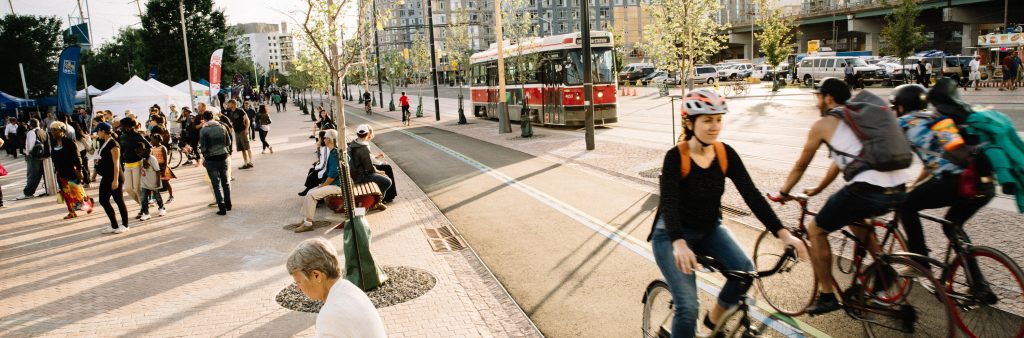
Harbourfront

Toronto Walking Strategy

Public Consultation

Creating a Walking Strategy

This workshop is the first in a series of staff working sessions and public consultations to provide input in the development of the Toronto Walking Strategy

The presentations:

Walking Around the World - Dr Rodney Tolley, Director, Walk21; Honorary Research Fellow, Staffordshire University presented an overview of the benefits of walking and the need to prioritize pedestrian planning within cities. He introduced concepts such as “shared” and “naked” streets and raised awareness of the potential for these projects within the City of Toronto.

Where We Are Now - A coordinated staff presentation which highlighted several pedestrian related activities from various departments within the City. This presentation featured actions from an inventory of existing City of Toronto pedestrian policies, guidelines, programs and projects compiled as part of a background piece to the Toronto Walking strategy.

Making Toronto Streets - Commenting on the institutional framework for street construction within the City of Toronto, Beth Milroy and Paul Hess presented their paper “Making Toronto Streets”. This presentation highlighted that the opportunities for changing streets are plentiful, modest in scale and widely spread throughout City functions. An interdepartmental team, clear policy direction and designated funding were highlighted by Milroy and Hess as key elements to change.

International Case Study – Walkable Communities - Gil Penalosa presented on examples from around the world where innovative walking initiatives and pedestrian infrastructure projects took precedence. He presented compelling statistics and discussed the many attributes of creating walkable communities and encouraged us to campaign for a more walkable Toronto.

Walking Plan for London - Jim Walker presented on the Walking Plan for London. The Plan’s potential included a Mayor who was committed to making London “the most walking friendly city by 2015”, a sound policy framework with six key objectives, and a mapping exercise which highlighted need areas and tangible projects in each borough to be acted on. He also listed thirteen lessons learned through the development of the London Plan.

International Charter for Walking - Bronwen Thorton (Living Streets, U.K. www.livingstreets.org.uk) presented on the International Charter for Walking and discussed the eight principles of the Charter and how these are translated into pedestrian planning actions within cities. The group was then led in a facilitated discussion of the issues, actions and major hurdles for Toronto in relation to the eight principles of the Charter.

You'll need the free Adobe Acrobat reader to view PDF files. Get the Free Acrobat Reader

Back to the top


Toronto maps | Get involved | Toronto links | 311 | Comment | Subscribe | Privacy statement
© City of Toronto 1998-2013