City of Toronto   *
HomeContact UsHow Do I...? Advanced search Go
Living in TorontoDoing businessVisiting TorontoAccessing City Hall *
*
*
Urban ForstryCity Forester's Office
blue bullet Forest Health Care
blue bullet Tree Planting
blue bullet City Owned Trees
blue bullet Private Trees
blue bullet Ravines and Natural Features
*  
Forestry operations
blue bullet North District
blue bullet South District
blue bullet East District
blue bullet West District
*  
Documentation & resources
blue bullet By-laws & Policies
blue bullet Forms
blue bullet Links
blue bullet FAQ
*  
*
* * What does Urban Forestry Services do? *
* *

Urban Forestry Services staff are professionals and experts in the field of urban forestry management and arboriculture. Urban Forestry Services employs certified arborists, professional foresters, highly skilled professional tree climbers and a host of other staff who have experience, and are trained to perform a broad range of forestry-related operational and management tasks.

Trees on Public Property
A major responsibility of Urban Forestry Services is the maintenance of City owned trees, particularly trees that grow on the City road allowance and in parks. Urban Forestry Services is responsible for maintaining approximately 600,000 City owned street trees and 4 million trees in parks, ravines and natural areas.

Maintenance of City owned trees involves:
  • inspection
  • evaluation
  • protection
  • pruning
  • watering
  • fertilizing
  • health care
  • removal
  • planting

Urban Forestry Services staff actively implement and enforce municipal by-laws that protect City owned trees.

Trees are routinely removed due to poor health, hazardous condition, or other problems however, Urban Forestry Services replaces them and plants thousands more trees annually as part of our tree planting programs. We also actively seek out opportunities and locations for new tree planting sites throughout the City.

Trees on Private Property
While the majority of Toronto’s trees grow on private property, they are an important part of the urban forest that is nurtured and protected by Urban Forestry Services. In some cases, trees on private property are protected and regulated under the provisions of municipal by-laws.

Urban Forestry Services encourages property owners to work with us to keep Toronto’s trees green and healthy and to protect healthy trees on private property that are not subject to the provisions of municipal by-laws.

Ravines, Natural Areas and Woodlots
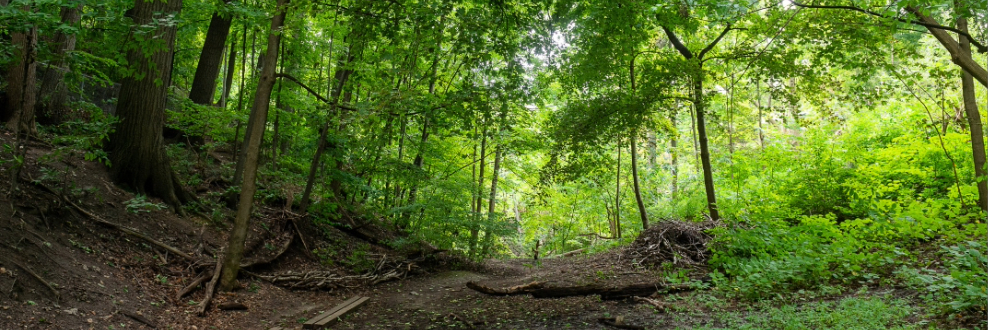
Toronto’s natural landscape was created when the last glaciers and Lake Iroquois (the predecessor to Lake Ontario) receded. Over the past 200 years urban development has contributed to many changes in our natural landscape – in some cases, valleys were filled and streams were altered or buried. Fortunately, a number of our original ravines have escaped these dramatic changes.

Ravines are highly sensitive areas. They are storehouses of water and vegetation. When the topography, water flow or the natural plant community is altered in any way, the ecology and function of ravines are also affected. This impacts on forest health, water quality, flood control, wildlife habitat and natural linkages. Certain human actions can result in problems in ravines. A change in a ravine’s natural elevation, removal of vegetation from a ravine, or the disposal of run-off water from swimming pools or eavestroughs can cause erosion.

The entire Toronto region is ecologically healthier and more beautiful because of these remnant areas. In many ways, ravines define and help give special identity and beauty to Toronto.

Urban Forest Health Care
To promote the health of the urban forest, Urban Forestry Services’ takes a holistic approach to tree care that focuses on improving the health of trees in an urban environment. Trees in urban forests are exposed to severe environmental stresses such as poor and compacted soil, drought, air pollution, damage from construction, poor planting or pruning techniques and much more. Trees planted on the right sites and that are properly maintained, are less likely to become stressed and are more resistant to insect pest and disease problems.

Urban Forestry Services promotes insect pest and disease management programs that are environmentally, socially and economically sound.


*Toronto maps | Get involved | Toronto links | 311 | Comment | Subscribe | Privacy statement
*
© City of Toronto 1998-2013