Request the inspection of a City tree for pest concerns such as Asian Longhorned Beetle, Beech Bark Disease, Beech Leaf Disease, Dutch Elm Disease, Emerald Ash Borer, Fall Cankerworm, Hemlock Woolly Adelgid, Spotted Lanternfly, Oak or Verticillium Wilt.
Trees are resilient and can recover from most insect feeding and leaf-distorting diseases. These are some of the common issues urban trees face. The City will not remove a tree or use pesticides if the insect of concern is considered a nuisance or causes only cosmetic damage. Toronto uses pesticides as a last resort option for pathogens that cause serious tree damage.
If you are concerned about pests that the City will not treat, you may apply for permission to hire a tree care company to do work on City-owned trees to treat certain pests.
Complete the following forms to apply for permission and indicate that the application is for Integrated Pest Management (IPM) work:
Qualified staff will review the request to ensure the proposal is reasonable and that the proposed pesticide and the timing of the treatment are appropriate. The best time to submit these requests is during the winter leading up to the season. Often, once the pests are visible, it is too late for treatment but a plan can be developed for the next season.
Definitions
Dieback
The death of external parts of a tree, like the twigs on the end of branches.
Girdling
The removal of a strip of bark around the entire tree.
Invasive Insect Species
Invasive insect species are non-native insects that have been introduced to Ontario and North America. Without natural predators, these insects can reproduce to outbreak levels and may need additional control measures such as pesticide intervention to manage their population growth. At outbreak levels, invasive insects may cause damage to environments.
Native insect species are insects that live or grow naturally in a region without direct or indirect human intervention.
Pruning
In most cases, if pruning is done to promote the health of a tree a permit is not needed. If significant pruning needs to be done or you are unsure, call 311 to see if you require a permit to remove or injure a tree.
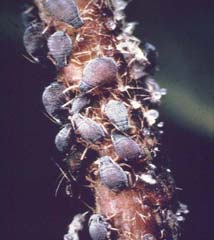
Aphids
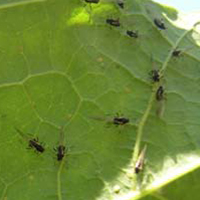
Aphids on a maple leaf.
Aphids are small soft-bodied insects that feed on plants by sucking sap from leaves and stems.
They do not cause significant damage to trees but they can make them vulnerable to other insects and diseases.
What the damage looks like
Aphids produce honeydew that can drip onto trees, branches, cars and more.
A black, sooty mould can grow on honeydew and can prevent leaves from getting nutrients from the sun.
Ants may appear to eat the honeydew and carry aphids to new areas.
Leafs might curl, buds might distort and die back might occur.
What you can do
Spray the aphids off the tree with a hard jet of water from a hose. Doing this in the morning lets the tree dry during the day and prevents other diseases.
Don’t use broad-spectrum insecticides since these products can kill insects that eat aphids.
Apply a dormant oil in the spring before buds bloom or in the fall after leaves fall – visit your garden centre for details.
Use an insecticidal soap in spring can reduce damage.
Use a sticky band around the base of the tree to stop ants from helping aphids move around – visit your garden centre for details.
Encourage ladybugs into your garden as they feed on aphids.
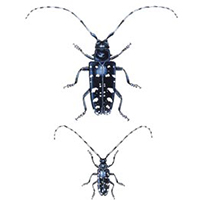
Graphic of beetle appearance – female on top, male on the bottom. Credit: USDA, Forest Service
Management program in effect.
The Asian longhorned beetle is a very serious threat to the hardwood trees of North America. It does not harm animals or humans.
This beetle kills healthy trees by burrowing deep and it is attracted to maple trees, specifically ones that produce sap for maple syrup. Adults lay eggs in the tree bark, the larvae and pupa burrow deep into the centre of the tree, and the adults emerge through holes to start the cycle again on a fresh tree.
What the damage looks like
Egg pits can form on the tree trunk, branches or exposed roots:10-15 mm around.
Sap can leak from the holes the beetles make.
Presence of larvae wasps, ants, flies, butterflies and other insects who like the sap.
Short strands of wood fibres, called frass, collect in bark cracks, tree joints, or at the base of the tree.
Holes 10-15 mm around made from emerging adult beetles: These holes are spaced out irregularly.
Yellow or drooping leaves that drop early.
What you can do
Learn to recognize what adult beetles and infested trees look like. Know the beetle’s host tree species (including birch, willow, poplar, and prefers maples).
Alert your family, friends and co-workers to the threat posed by the beetle.
Focus on finding adult beetles. Younger beetles are hidden deep in the tree. Adult beetles have:
Bodies that are glossy black with 0 to 20 irregular white spots on the back.
Bullet shaped bodies 1.7 to 3.5 cm in length.
Two long antennae that are longer than the body – 1 to 1.3 times longer in females, 2.5 times longer in males.
11 black segments in their antennae that are bluish white.
Six legs that are black with a blueish-white tinge.
Adults can be found in the landscape or the tree.
Male adults in the tree can be found in the leaves and female adults in the tree can be found on the bark, laying eggs.
Be aware if you’re in a regulated area. Don’t remove restricted woody material, including firewood or wood chips. Expect regular visits from the CFIA – they might remove infested trees.
Birch Leafminer
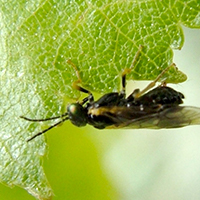
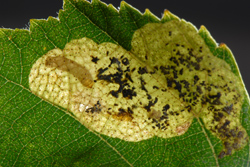
A birch leafminer on a leaf. Credit: Cheryl Moorehead – bugwood.org
The birch leafminer is included in a group of insects known as sawflies. The fly itself is small (approximately 3 mm long) and black in colour, and can be seen hovering over the tops of birch trees or crawling over its leaves in springtime. The fly will lay eggs within newly flushed leaves, which hatch into larvae a few days later and begin to feed.
The larva causes the damage to the leaves of birch trees. The damage is primarily but can make the tree vulnerable to other insects and diseases.
What the damage looks like
Reddish-brown blotches on leaves.
Young leaves might be deformed.
Larvae might be seen in the tunnels in the leaves.
Leaves stay on the tree until fall, which makes the tree look brown.
birch leafminer
What you can do
Avoid over-pruning as this:
creates new shoots that attract the adult leafminer to lay eggs
causes stress to the tree and makes it less likely to resist an infestation
Plant birch that are resistant to leafminers:
River
Black
Yellow
Don’t use broad-spectrum insecticides since these products can kill insects that eat leafminers.
Injected pesticides might be an option – contact a professional for details.
Bronze Birch Borer
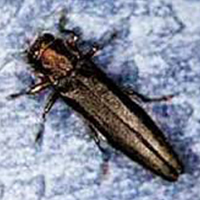
The bronze birch borer adult beetle. Credit: Whitney Cranshaw, Colorado State University – bugwood.org
The bronze birch borer is a native, North American beetle that can cause serious damage to birch trees. The larvae burrow into the tree and starve the tree of nutrients.
Older trees or trees that are in dry areas are more likely to be attacked.
What the damage looks like
Thinning of leaves in the upper part of a tree.
Raised, puffy sections of bark.
“D” shaped exit holes in the wood.
Woodpecker damage.
Adults might be in the tree, feeding or laying eggs.
Dieback.
Bronze Birch Borer
What you can do
Birch trees have shallow roots. During dry periods, water the tree.
Protect the ground around the roots.
Plant birch trees in cool, moist areas.
Injected pesticides might be an option – contact a professional for details.
Bronze Poplar Borer
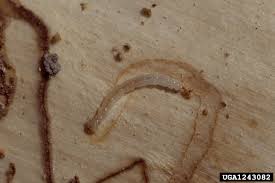
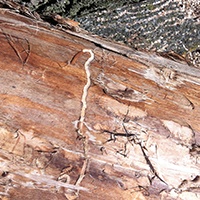
Bronze Poplar Borer larvae tunnels on wood.
The bronze poplar borer is a flat-headed borer that feeds on poplars and is native to North America. The larvae burrows into the tree and starves the tree of nutrients. This can kill the tree.
What the damage looks like
Larvae feed in the cambium, excavating long zigzag tunnels.
The larvae are white, segmented and up to 40 mm long.
Dieback and eventual tree death.
Infestation usually starts at the top of the tree and works down.
What you can do
Encourage woodpeckers.
Prevent damage from other insects, diseases and injuries which might weaken the tree.
Injected pesticides might be an option – contact a professional for details.
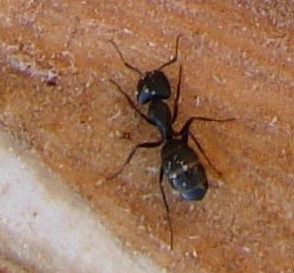
Carpenter Ants
The carpenter ant is a social insect and lives in colonies. They nest in wet wood in the cavities of trees. They are not a serious pest but can be an indicator of wood decay.
They are most active at night when they feed on insects, fruit, garbage and the honeydew from aphids.
What the damage looks like
Sawdust collects at the entrance to the colony.
They make loud rustling noises which can be heard through walls.
They leave frass (sawdust-like particles) around the tree base.
Carpenter ant
What you can do
Carpenter ants only affect decaying wood – not healthy wood. This could mean structural failure of the tree, such as branches falling.
If you see ants, place honey or jam in that area and follow the ants to see where the colony entrance is.
Repair all leaking roofs, plumbing and drains to stop damp wood.
Replacing rotting porches, fences or wood structures.
Store outdoor firewood or lumber above ground.
You can use boric acid or sodium borate based baits as close to the nest entrance as possible – visit your garden centre for details.
Eastern Tent Caterpillar
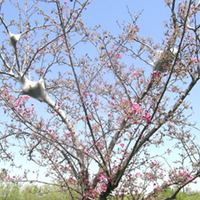
The tents on the upper branches of a cherry tree.
The Eastern tent caterpillar is a native insect that rarely occurs in large enough numbers to cause tree death in Toronto. Their tents are unsightly and disturbing to homeowners.
What the damage looks like
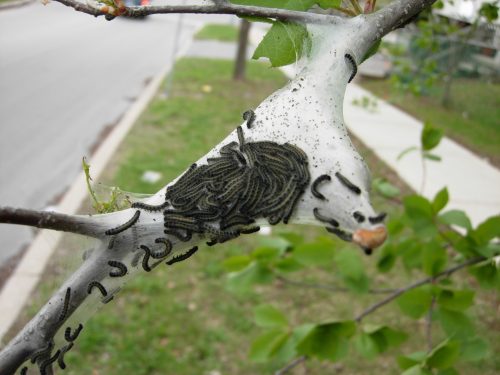
Eggs hatch and the caterpillars gather at a major branch where they make a silken tent.
As dropping collect in the tent, the tent can turn black.
Fully grown caterpillars are black with a white stripe down the middle of its back. It has yellow lines on its sides with blue dots in between.
Caterpillars will descend to cocoon on lower parts of the tree or on fences.
White tan moths emerge and can lay eggs in oval clusters up to 20 mm in length.
Egg clusters surround outer twigs at the tops of trees and are covered with a black coating.
Leaf growth can be patchy.
Eastern Tent Caterpillar
What you can do
Prune out egg clusters. This is easier in winter after the leaves fall.
Prune underlying branches from tents are first noticed. Once the tents get too big or numerous, this might not be possible.
Remove and destroy cocoons by scraping them off as soon as you notice them.
Attract birds and other creatures that eat these insects by planting attractive flowers, herbs or shrubs in your garden.
Release parasitic wasps when you notice moths – visit your garden centre for availability.
For severe infestations, apply Bacillus thurigiensis var. kurstaki (Btk), when the tree leaves first start unfurling – visit your garden centre for details and ask for Btk availability.
Elm Bark Beetles
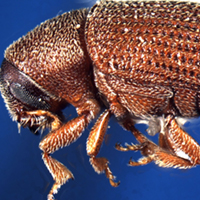
A close-up photograph of the native elm bark beetle. Credit: J.R. Baker & S.B. Bambara, North Carolina State University – bugwood.org
There are two species of bark beetles that feed and breed on elm trees:
The smaller European elm bark beetle.
The native elm bark beetle.
The beetle doesn’t cause permanent damage to a tree but transmits a fungus that does – learn more about Dutch Elm Disease.
What the damage looks like
These beetles only affect elms.
Signs of Dutch Elm Disease include leaves wilting, curling, and turning yellow. Eventually, no leaves will be left.
What you can do
Control breeding habitats by removing dead or dying elm trees immediately and destroy the wood.
Don’t store or transport elm firewood unless it has been debarked and is free of hidden beetles.
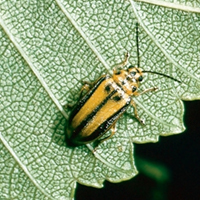
A photograph of the elm leaf beetle adult. Credit: Kansas Department of Agriculture Archive – bugwood.org
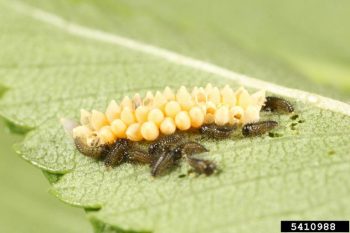
The elm leaf beetleis originally from Europe and was first discovered in Ontario in 1945. The beetle doesn’t cause permanent damage to a tree and does not transmit the fungus cause Dutch Elm Disease.
The larvae go to the ground to pupate into adults.
What the damage looks like
Adults create small round holes in leaves.
Larvae ‘skeletonize’ leaves.
Badly affected leaves turn brown and drop early.
Entire tree crowns can be affected.
What you can do
Elm Leaf Beetle
Remove the larvae that pupate near the ground by vacuuming or sweeping them up.
Remove the adults by vacuuming them up from sheltered areas like garages or basements.
Attract birds and other creatures that eat these insects by planting attractive flowers, herbs or shrubs in your garden.
For severe infestations, apply Bacillus thurigiensis var. tenebrionis (Btt), when the tree leaves first start unfurling – visit your garden centre for details and ask for for availability.
Elm Leafminer
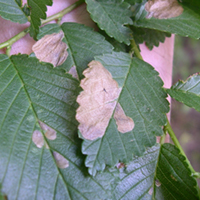
Damage on a leaf from an elm leafminer.
The elm leafminer (Fenusi ulmi) is a European insect that has been known in North America since the late 19th century.
This insect eats the tree’s leaves and makes it difficult for the tree to get enough sunlight.
What the damage looks like
First appears as tiny white spots on leaves.
Grows into large blotches.
The leaves eventually turn brown.
What you can do
Attract birds and other creatures that eat these insects by planting a variety of flowers, herbs or shrubs in your garden.
Water properly.
Release nematodes that attack insects – visit your garden centre for details.
Don’t use pesticides since this kills insects that control the population of elm leafminers.
Emerald Ash Borer
Management program in effect.
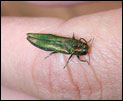
The Emerald Ash Borer (EAB) is an introduced insect pest (non-native to North America) that attacks and kills all species of ash trees. Learn more about Emerald Ash Borer (Agrilus planipennis), what the City is doing and what you can do.
Emerald Ash Borer
Fall Cankerworm
Fall Cankerworm
Fall cankerworm is a native insect that loves to eat leaves. This limits the amount of sunlight a tree receives and can weaken and stress the tree.
Preferred trees:
Manitoba maple
Red and black oak
Crab apple
What the damage looks like
Leaves will have small holes in them.
These holes will widen over time until the entire leaf is gone.
Dieback can occur.
The tree may die if it can’t produce new leaves.
What you can do
Install a sticky band around the base of the tree trunk in October. This traps the females and prevents them from laying eggs:
Wrap strips of quilt batt, cotton batt or foam about 1.5m above ground level – strips should be 10-20cm wide.
Overlap strips of plastic wrap and pull it tightly over the quilt/cotton batt or foam – strips should be 20-30cm wide.
Apply a thin layer of Tree Tanglefoot or Stickem – available at most garden centres – to the plastic wrap using a paint stirrer.
Attract birds and other creatures that eat these insects by planting attractive flowers, herbs or shrubs in your garden.
Don’t use pesticides since this kills insects that control the population of elm leafminers.
Release nematodes that attack insects – visit your garden centre for details.
For severe infestations, apply Bacillus thurigiensis var. kurstaki (Btk), when the tree leaves first start unfurling. Visit your garden centre for details and ask for Btk availability.
Hemlock Woolly Adelgid
What is it?
Hemlock woolly adelgid (HWA) (Adelges tsugae) is a tiny aphid-like insect that feeds on the needles of hemlock trees (Tsuga spp.). It is native to Asia and Northwestern North America where natural predators help to keep the population in check.
In Eastern North America, the eastern hemlock tree (Tsuga canadensis) is highly susceptible to the damage caused by this invasive species, which can kill the tree in 4 -15 years.
HWA was first recorded in Eastern North America in 1951 in Virginia. There are established populations of HWA in Nova Scotia (2017) and in the Niagara Region (2019). Recently, there have been two detections of HWA in Toronto, Ontario in Rouge Park and Morningside Park (2025).
HWA spreads slowly within a forest, but it can spread quickly when transported on firewood, equipment, and clothing.
What does it look like?
White “woolly” sacs at the base of needles on new growth
Loss of needles
Dieback of buds, twigs, and branches
Discoloured foliage, thinner, greyish-green crown
Tree death within 4-15 years
What can you do?
Don’t move firewood. Always buy firewood locally or choose kiln dried firewood to avoid spreading pests to new areas
Clean your gear. Wash boots, clothes, and equipment after visiting hemlock forests to reduce the spread of HWA to new areas.
Stay alert. If you see signs of HWA in the hemlock trees around you, report suspected sightings immediately to the Canadian Food Inspection Agency (CFIA)
What is the City doing?
The City is working collaboratively with external partners and stakeholders, including the Canadian Food Inspection Agency, the Invasive Species Centre, Parks Canada (staff at Rouge National Urban Park) and the Canadian Forestry Service to continue monitoring for HWA, explore options for treatment and public education.
There are several species of plant bugs and leafhoppers that feed on honey locust trees.
What the damage looks like
Leaves may distort.
New leaves might be smaller than normal.
Leaves may have yellow or brown spots.
Tiny holes may appear in leaves.
Severe infestations can cause dieback and death of the tree.
What you can do
Find out if you have these bugs by tapping the leaf over a white piece of paper. Otherwise, they might be hard to see.
Spray them off the tree with a hard jet of water from a hose. Doing this in the morning lets the tree dry during the day and prevents other diseases.
For severe infestations, apply insecticidal soaps or horticultural oils 7-10 days after the buds break in May – visit your garden centre for details.
Japanese Beetle
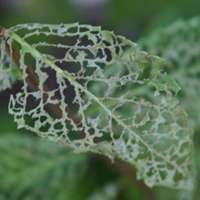
The skeletonising of a leaf.
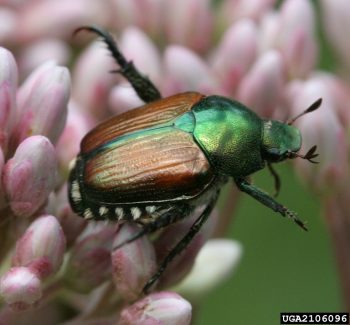
Japanese beetles were introduced to North America in 1916. They are a voracious eater of the leaves and fine roots of over 300 different species of plants, grasses and trees.
They cause primarily cosmetic damage but they could weaken the tree and make it more vulnerable to other pests and diseases.
What the damage looks like
The Japanese Beetle likes to eat the green parts around the veins of a leaf, which gives the leaf a skeletal appearance. The whole tree can look scorched.
What you can do
Japanese Beetle
Encourage predators of the Japanese Beetle, like birds, toads, moles, shrews and skunks.
Don’t use broad-spectrum insecticides since these products can kill insects that eat Japanese Beetles.
Collect the grubs and destroy them.
Some lawn pesticides can be used – contact a professional.
Lace Bug
The damage caused by lace bugs. Credit: Whitney Cranshaw, Colorado State University – bugwood.org
Lace bugs are a native North American insect that feeds on a wide range of trees.
They cause primarily cosmetic damage but they could weaken the tree and make it more vulnerable to other pests and diseases.
What the damage looks like
White stippling on leaves.
Stippling can spread and eventually turn brown.
Dead leaves may fall early.
Dark shiny areas of insect dung may appear.
What you can do
Don’t use broad-spectrum insecticides since these products can kill insects that eat Lace Bugs.
Spongy Moth (Lymantria Dispar Dispar)
Management program in effect.
Spongy moth is a defoliating insect that can severely weaken or kill trees. It is a major pest in North America. Learn more about the Spongy Moth (Lymantria Dispar Dispar), what you can do and how the City manages this pest.
Scales
A large number of scales, tiny insects, feed on trees by sucking sap from leaves, twigs or stems. They can make trees vulnerable to other pests and diseases.
What it looks like
leaves might be spotted yellow or brown
leaves could be distorted or curled
honeydew can form and drip from the tree
black, sooty mould can form on the honeydew later in summer
What you can do
a hard jet of water from a hose can remove scales and honeydew
do this in the morning so the tree can dry
repeat every 10 days when feeding is heavy
scrape scales off, but be sure to not damage the bark of the tree
small colonies can be pruned out and destroyed
apply dormant oil after leaves drop in the fall or before buds bloom in the spring
insecticidal soap or oils and be applied early in summer – check with your local garden centre for details
Termites
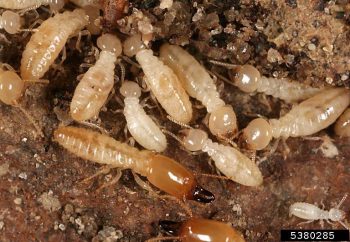
The eastern subterranean termite was introduced to Toronto in 1938 and has since become established in homes throughout the city.
Termites
What the damage looks like
Termites eat dead parts of trees and don’t attack healthy wood. Termites are hard to detect. The best way to tell if termites are present is to see whether they have built tubes from the ground to the wood they are feeding on.
What you can do
Termites nest in the soil so removing a tree will not fix the issue.
Trees may need to be removed if it’s structurally unsound.
Prune away dead parts of a tree to cut off termites from its food source.