

By Hakeem Muhammad
When Phil Grondin describes his new apartment, he talks about the afternoon sun. He likes to rest as the light comes in. He can put his plants by the window. Outside, there are garden beds where he can grow plants as well.
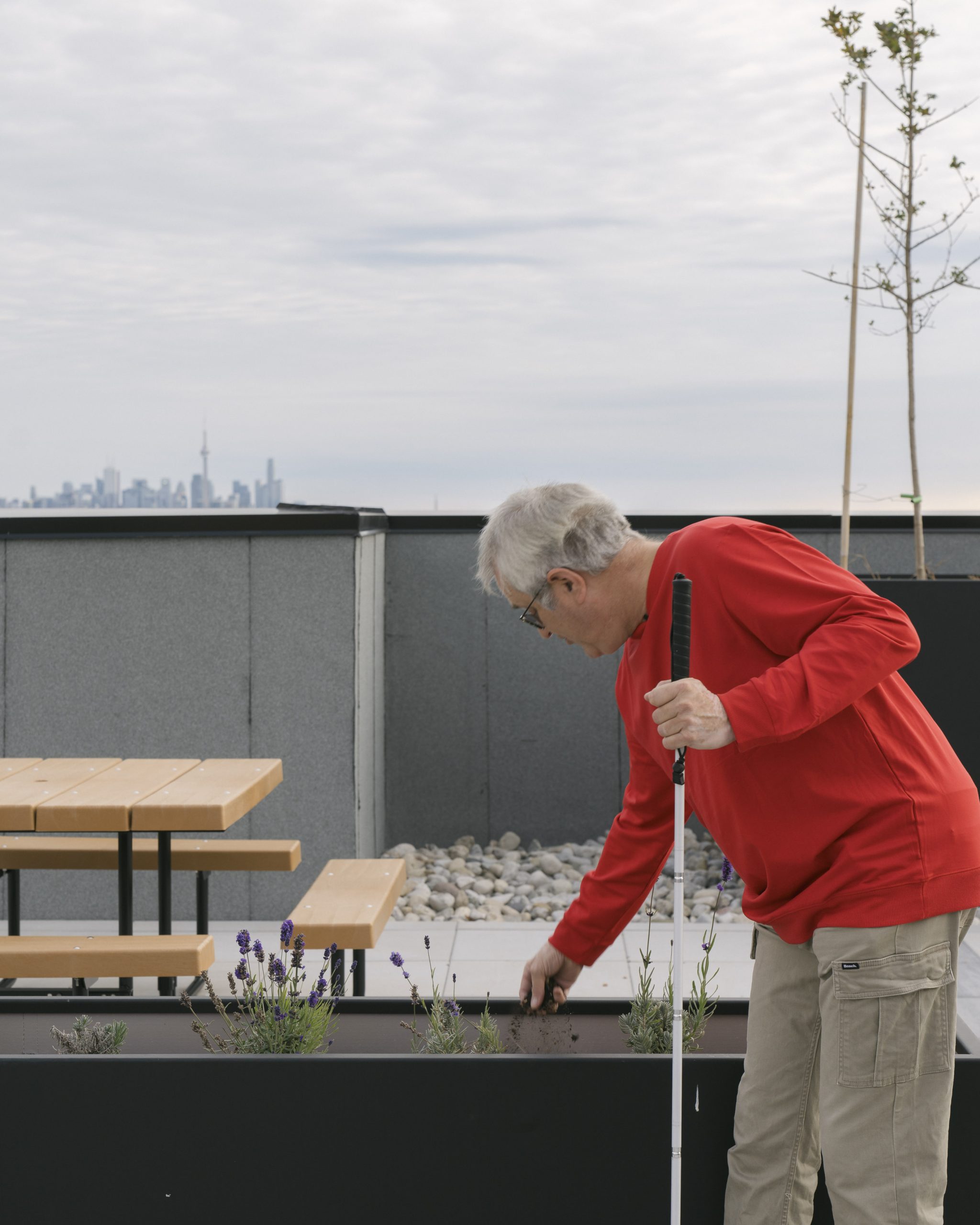 He is also clear about what he wants from the years ahead.
“I don’t want to keep moving from place to place,” he said, noting that his new neighbours seem friendly and easygoing.
Grondin lives at 150 Eighth St. in Etobicoke, where Canadian Helen Keller Centre has developed 56 affordable and accessible apartments. The building also includes a 6,500-square-foot training centre for people who are deafblind, with space to learn skills for everyday life.
For someone with combined vision and hearing loss, an apartment within reach of their income may still be difficult to live in. Signs they cannot read or appliances they cannot operate can make ordinary tasks dependent on someone else’s help.
Lessette Morales, a housing transitions specialist who has worked at the centre for 20 years, helps people navigate that search. She works with prospective residents, their families and support teams. Conventional housing options, including shelters and affordable housing, often lack the accessibility features people need, she said.
Morales met Grondin last year while he was looking for housing. She helped him secure a temporary unit while the new building was being completed. He became its first tenant.
“It was also a big deal for me,” Morales said.
At Eighth Street, accessibility is integrated throughout the building. Signs have raised lettering and braille. Contrasting colours help people with low vision distinguish surfaces. Acoustic ceiling features reduce echo, while tactile flooring provides information underfoot.
Grondin describes an open layout that gives him room to navigate.
“I can feel everything with my cane,” he said.
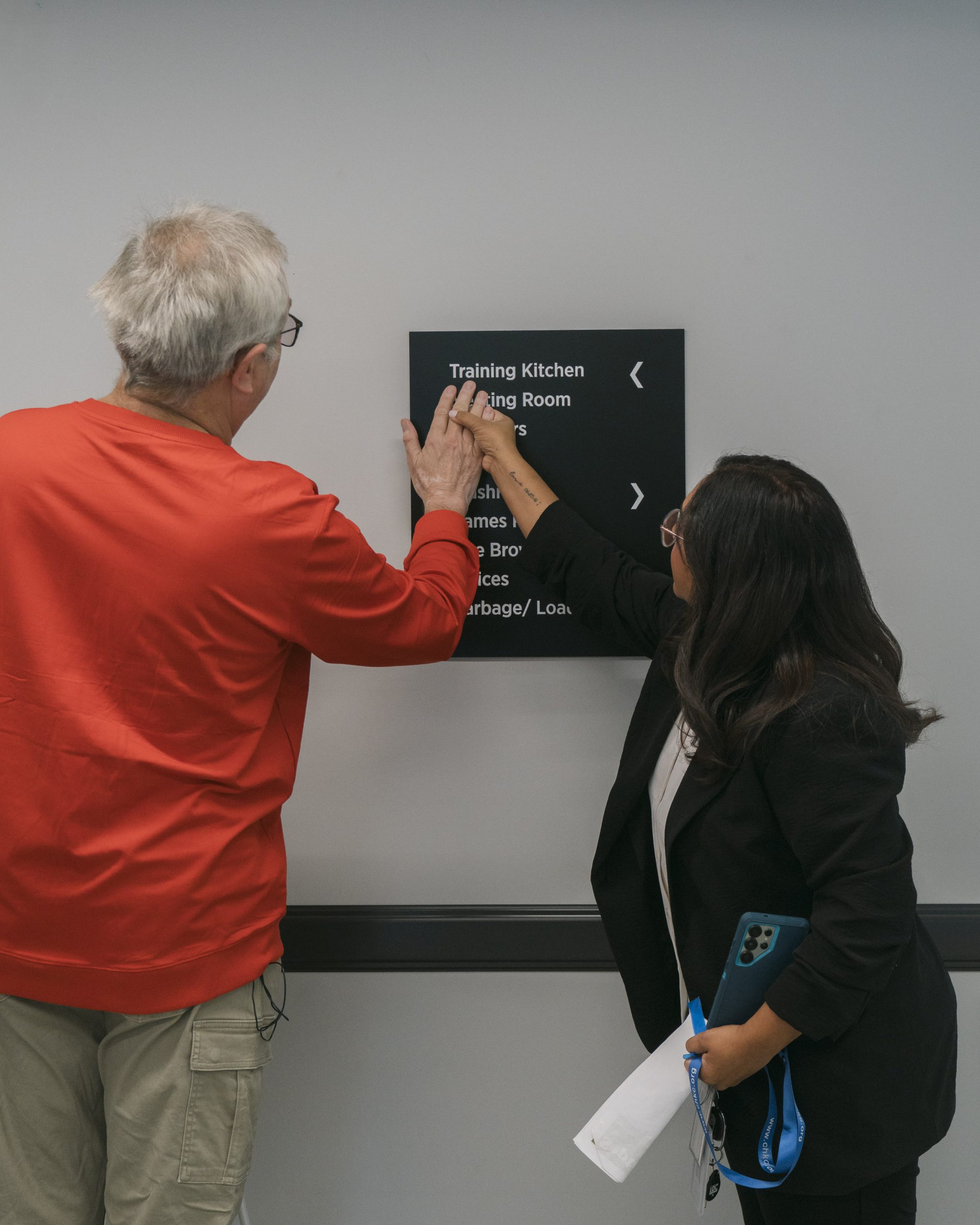
The same attention extends to preparing a meal. Lower countertops accommodate wheelchair users. Tactile markers, known as ‘bump dots’, can be added to stoves and microwaves to help residents use them independently.
The training centre provides space to develop those skills with support. Its accessible kitchen and training rooms are intended for programs that include cooking and technology. Morales said the training centre works with people to identify the daily living skills they want to improve and the help they need to do so.
That means the work continues after someone receives their keys. A resident can have a kitchen designed for their needs and a place to learn how to use it. The training centre is also intended to serve the wider deafblind community, extending its role beyond the people who live upstairs.
The development brings together the training centre’s experience supporting people who are deafblind and government assistance to create affordable homes. Federal support came through the Rapid Housing Initiative. The City of Toronto also helped reduce development costs by waiving planning application and building permit fees and providing exemptions from municipal development charges.
“150 Eighth Street shows what’s possible when the City works with non-profit housing providers that understand the diverse needs of residents,” said Hugh Clark, Executive Director at the City’s Housing Development Office. “Affordable housing isn’t one-size-fits-all. By creating permanent, affordable homes that are designed around residents’ accessibility needs and support independent living, we can provide the stability people need to put down roots and live full lives.”
For Grondin, the affordability of his apartment is part of what makes staying feel possible. His rent is geared to his income, which he says makes him feel more secure financially and emotionally. He does not have to worry as much about finding another place or paying unaffordable rent.
As for the future, Grondin is interested in cooking programs and may pursue further education. For now, he’s putting down roots at Eighth Street – getting to know the building and the people in it.