City of Toronto   *
HomeContact UsHow Do I...? Advanced search Go
Living in TorontoDoing businessVisiting TorontoAccessing City Hall
 
Parks, Forestry & Recreation
About Us
Special Events
Parks and Gardens
Recreation and Facilities
Photo Gallery
Toronto Islands
Toronto and Region Conservation Authority
Toronto Zoo
Contact Parks
   
   
    Toronto Island Park
History and development Photographer - Peter Mykusz
Hanlan's Point
Centre Island
Wards Island
General Information
Gibraltar Point Lighthouse
Franklin Garden

Toronto Island Ferry information: 416-392-8193

Toronto Island Ferry Schedules:
 
April 17, 2009
  Summer
May 30, 2009
 
September 8, 2009
 

October 13, 2009


Toronto Permits and Map
For more info on Toronto Islands permits - call 416-392-8188
View the Permit Guide (includes maps) - Click here (PDF)


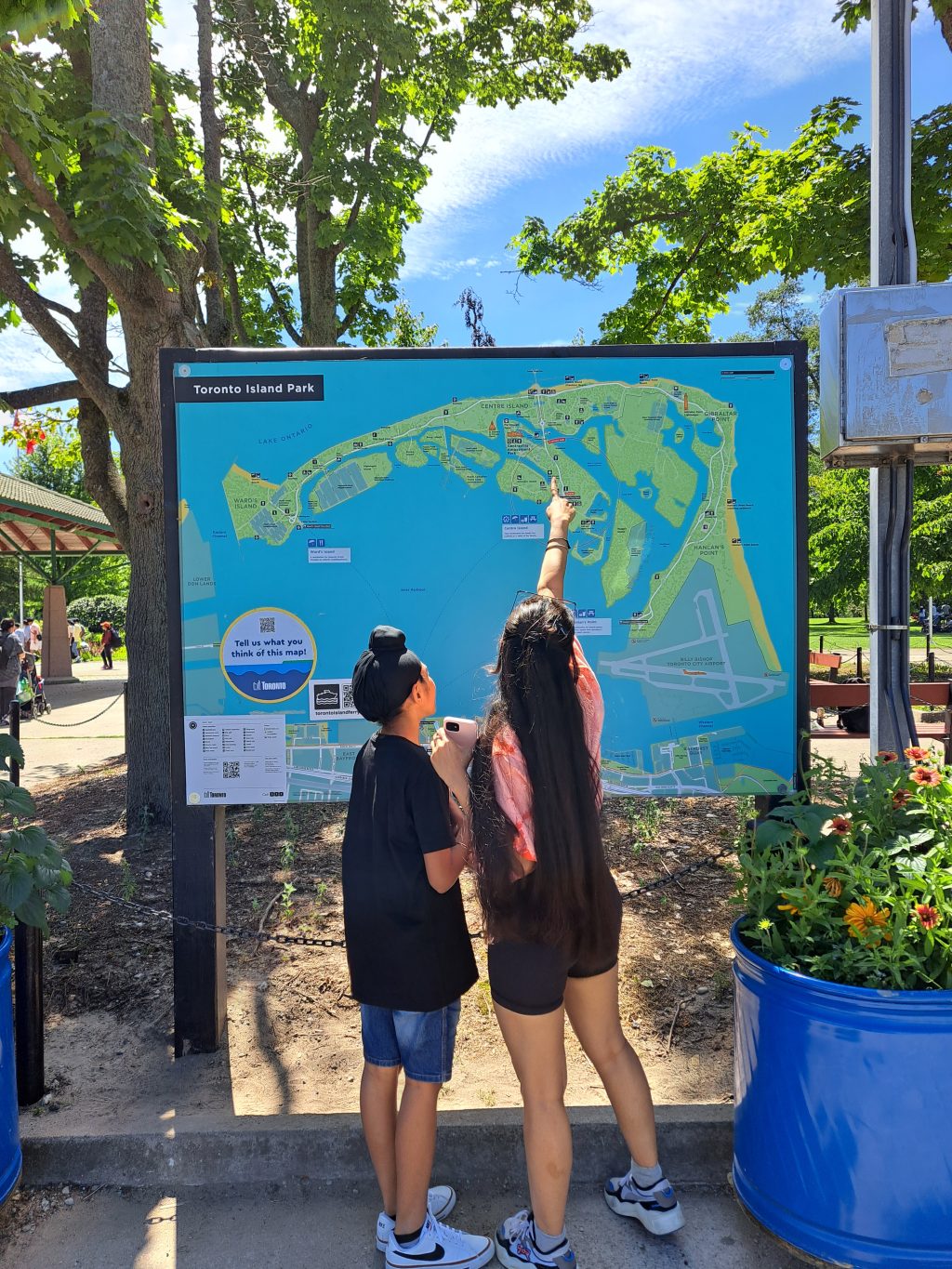
Toronto Island Map

Download the map here (PDF - 586 kb)

Natural history and development
The Toronto Islands were not always islands but actually a series of continuously moving sand-bars, or littoral drift deposits, originating from the Scarborough Bluffs and carried westward by Lake Ontario currents. By the early 1800s, the longest of these bars extended nearly 9 kilometres south-west from Woodbine Avenue, through Ashbridge's Bay and the marshes of the lower Don River, forming a natural harbour between the lake and the mainland.

Olympic Bridge - click for larger imageVisitors to the Toronto Islands have enjoyed their lakeside charm for centuries. Although the peninsula and surrounding sand-bars were first surveyed in 1792 by Lieutenant Bouchette of the British Navy, they were well-known by native people, who considered them a place of leisure and relaxation. The main peninsula became known to European settlers as the "Island of Hiawatha". D.W. Smith's Gazetteer recorded in 1813 that "the long beach or peninsula, which affords a most delightful ride, is considered so healthy by the Indians that they resort to it whenever indisposed". Many Indian encampments were located between the peninsula's base and the Don River. The sand-bars were also important to birds and other wildlife. During migration periods vast numbers of birds frequently stopped at the sand-bars and marshlands of the Don River and Ashbridge's Bay.

A carriage path from York which led to Gibraltar Point at the western tip of the peninsula, and also followed the shoreline east to Scarborough Bluffs, was very popular during the early 1800's. It later became known as Lake Shore Avenue. Part of the boardwalk on Centre Island traces this same route. A bridge across the Don River that was constructed to enable people from the city to reach Lake Shore Avenue also aided settlement east of the river. In 1850, the young engineer Sanford Fleming studied the sand-bar movement and calculated that twelve hectares had been added to the western section of the sand-bars over the previous fifty years. During that decade, a number of severe storms and their strong wave action worked to erode the peninsula, requiring frequent repair to small gaps until finally, in 1858, an island was created when a storm completely separated the peninsula from the mainland and the gap was not repaired. The Eastern Gap has since become an important shipping route into the Toronto Harbour.

Dredging projects have been undertaken to stabilize shorelines, reduce sand-bar movement, create deeper boating channels, or raise land levels generally. During 1904-6, a channel was cut north of the Island Filtration Plant, alongside Hiawatha Avenue. In 1909, Long Pond was dredged to replace the regatta course previously located at Hanlan's Point. The resulting material was used to enlarge Mugg's Island. Similar projects created Olympic Island. High lake levels continually damaged island properties and, on January 1, 1956, the City of Toronto transferred responsibility for the Toronto Islands to The Municipality of Metropolitan Toronto (Metro) to be developed as a regional park. Many projects were undertaken by Metro Parks and Culture including fully accessible washrooms, a public marina, an amusement area and petting zoo, and the establishment of naturalized areas and wildlife reserves. In 1998, Metro and six municipalities were amalgamated to become the new City of Toronto.

Over 1,225,000 people visit this 230.388 hectare park each year.


Hanlan's Point

Hanlan's Point - click for a larger image

The Hanlan family was among the first year-round inhabitants on Toronto Island, settling at Gibraltar Point in 1862. After the islands were transferred from the federal government to the City of Toronto in 1867, Plan D-141 divided the land into lots and allowed cottages, amusement areas and resort hotels to be built. The west side of the island, commonly known as West Point, rapidly became a resort destination for the citizens of Toronto; the first summer cottage community was found here. In 1878, a hotel was built by John Hanlan at the north-west tip of the island and soon after the area became known as Hanlan's Point. Edward "Ned" Hanlan, probably the most famous member of the family, earned international recognition as a rower and held numerous world records. By the 1890's, three hotels and a summer recreation centre had been built.

In 1894, an ambitious lakefill project by the Toronto Ferry Company added space for an amusement park that included an exciting roller-coaster called the Big Scream. A baseball stadium, built in 1909 and destroyed by fire one year later, was rebuilt to hold 10,000 spectators. Babe Ruth, a baseball legend, hit his first professional home run here. The role of Hanlan's Point as a centre of recreation declined after the 1930's when the stadium was closed and the Maple Leaf baseball team moved to a new facility at the foot of Bathurst Street. The amusement park was demolished and in 1937 Toronto Island Airport was constructed.

Parks Features

Main park type

  • island picnic park

Pedestrian/bicycle trails

  • 2.48 kilometres from Hanlan's Point Ferry Dock to the Island Filtration Plant

Park facilities

  • 3 fully accessible washrooms
  • 1 washroom-changeroom
  • 1 changeroom
  • 8 drinking fountains
  • 11 water taps
  • 13 picnic areas with 4 fire pits
  • First Aid station

Food, recreation and fun

  • 2 snack bars (seasonal operation)
  • Toronto Island Natural Science School
  • bicycle rental
  • historic Gibraltar Point Lighthouse
  • serviced public boat moorings (48-hour limit)
  • 2 wading pools
  • 6 illuminated tennis courts
  • 2 softball diamonds
  • 3 volleyball courts
  • 2 supervised beaches (July and August)
  • Island Yacht Club on Mugg's Island (private)
  • public phones


Centre Island

Centre Island pier

Centre Island is between Hanlan's Point and Ward's Island. A carriage route along the peninsula connecting the mainland to Gibraltar Point Lighthouse later evolved into Lake Shore Avenue, the main east-west axis along Centre Island. By the late 1800's, many of Toronto's wealthiest families built beautiful Victorian summer homes along Lake Shore Avenue, east from Manitou Road to Ward's Island.

In 1884, construction of an Anglican church, St. Andrew-by-the-Lake, was directed by Archbishop Sweatman. Four years later Island Park was established on land previously occupied by the Mead Hotel, and has continued to offer an impressive panoramic view of downtown Toronto ever since.

Two distinctive bridges, still in use today, were built to accommodate the increase in traffic along the central north-south axis as the Centre Island Ferry, operated by the Toronto Ferry Company, became more popular. The Manitou Road bridge (1912) replaced an old wooden bridge and the Olympic Island bridge (1914) was built to link Olympic Island with Island Park.


Ward's Island

Ward's Island, actually the east section of the old peninsula, was named after the Ward family who first settled here about 1830. David Ward, a local fisherman, raised seven children. His son, William, built the landmark Ward's Hotel in 1882, just south of the ferry docks at Channel Avenue. Originally the building had two floors and a central, third story tower, but in 1922 the tower and upper floor were removed after the structure deteriorated. The remaining building operated as a grocery supply and ice-cream parlour until its demolition in 1966. The hotel, in addition to Wiman's Baths, built in 1881, created a pleasant resort that attracted many visitors.

Park features

Main park type

  • island picnic park

Pedestrian/bicycle trails

  • 1.11 kilometres from Island Filtration Plant to boardwalk
  • 1.68 kilometres from boardwalk to Ward's Island Ferry Dock
  • 0.76 kilometres from Centre Island Ferry Dock to Lookout Pier

Park facilities

  • 2 fully accessible washrooms
  • 2 fully accessible washroom-changerooms
  • 1 washroom and 1 washroom-changeroom
  • 18 drinking fountains
  • 10 water taps
  • 21 picnic areas with 6 fire pits
  • 2 First Aid stations

Ward's Island

  • 4 drinking fountains
  • 2 water taps

Food, recreation and fun

  • 4 snack bars (seasonal operation)
  • Iroquois Restaurant + Paradise Restaurant (licensed)
  • bicycle and boat rental
  • Centreville Amusement Area
  • Far Enough Farm
  • Toronto Island Marina
  • serviced public boat moorings (48-hour limit)
  • 2 softball diamonds (Centre and Olympic)
  • 3 wading pools
  • 2 volleyball courts (Centre and Olympic)
  • Allan A. Lamport Regatta Course On Long Pond
  • The Island Church (Anglicanl)
  • Avenue of the Islands Gardens
  • Royal Canadian Yacht Club (private)
  • public phones on Centre and Ward's Island
  • Disc Golf Course (PDGA approved course and one of North America's premier courses)

Ward's Island

  • Queen City Yacht Club (private)
  • Ward's Island Beach (with washroom) and playground


General information

School groups and catering
Advance catering arrangements may be made by contacting Centreville Amusements and Catering. Please phone (416)203-0405 for details. Please note no outside caterers are permitted on the Toronto Island.

Alcoholic beverages
Individuals/organizations may not bring alcohol onto Toronto Island. Alcoholic beverages may be purchased in advance from Centreville Amusements and Catering. Please phone (416)203-0405 for details.

Freight wagon rental

  • Four-wheeled freight wagons (approx. 5' x 2 1/2' x 3') can be rented at the Mainland Ferry Docks on a first-come, first-served basis for a $10.00 fee plus a $20.00 refundable deposit. Deposits will be refunded provided the wagon is returned within the same day.

Picnic and fire pit permits

  • A $72.61 non-refundable picnic permit is required for groups larger than 25 persons, or groups of any size wishing to use the fire pits. Wood is often provided free of charge (while quantities last) with a fire pit reservation.
  • For information on Toronto Islands permits - please call 416.392.8188

Gas barbecues

  • Propane or gas B.B.Q.'s are not permitted on the Ferry Boats for safety reasons. We recommend that you bring along a small portable charcoal operated hibachi B.B.Q., just in case one of our B.B.Q. stands is unavailable for your use.

Centreville Amusement Park - http://www.centreisland.ca
is operated by Beasley Amusements and is open daily for the summer (from the May long weekend through Labour Day weekend).

Weekend hours are 10:30 a.m. to 8:00 p.m.
Weekday hours are 10:30 a.m. to 5:00 p.m.


Links

Toronto Island Community - torontoisland.org

Toronto Island Canoe Club - torontoislandcanoeclub.org
Offering Children's day camps, recreational canoeing and kayaking, water sports and canoe instruction.

Waterfront Montessori Children's Centre - waterfrontmontessori.net


City maps | Get involved | Toronto links
© City of Toronto 1998-2009