

The City of Toronto, in co-ordination with transportation and public safety partners, has released its FIFA World Cup 2026™ Mobility Plan, outlining how residents, businesses and visitors will move throughout the city during the tournament, including measures to support accessible travel and minimize overall travel impacts.
The Mobility Plan reflects a multi-agency approach to managing transportation during the FIFA World Cup 2026 and builds on Toronto’s experience delivering major events. People are encouraged to plan ahead, allow extra time, travel outside peak periods, and take transit, walk or cycle.
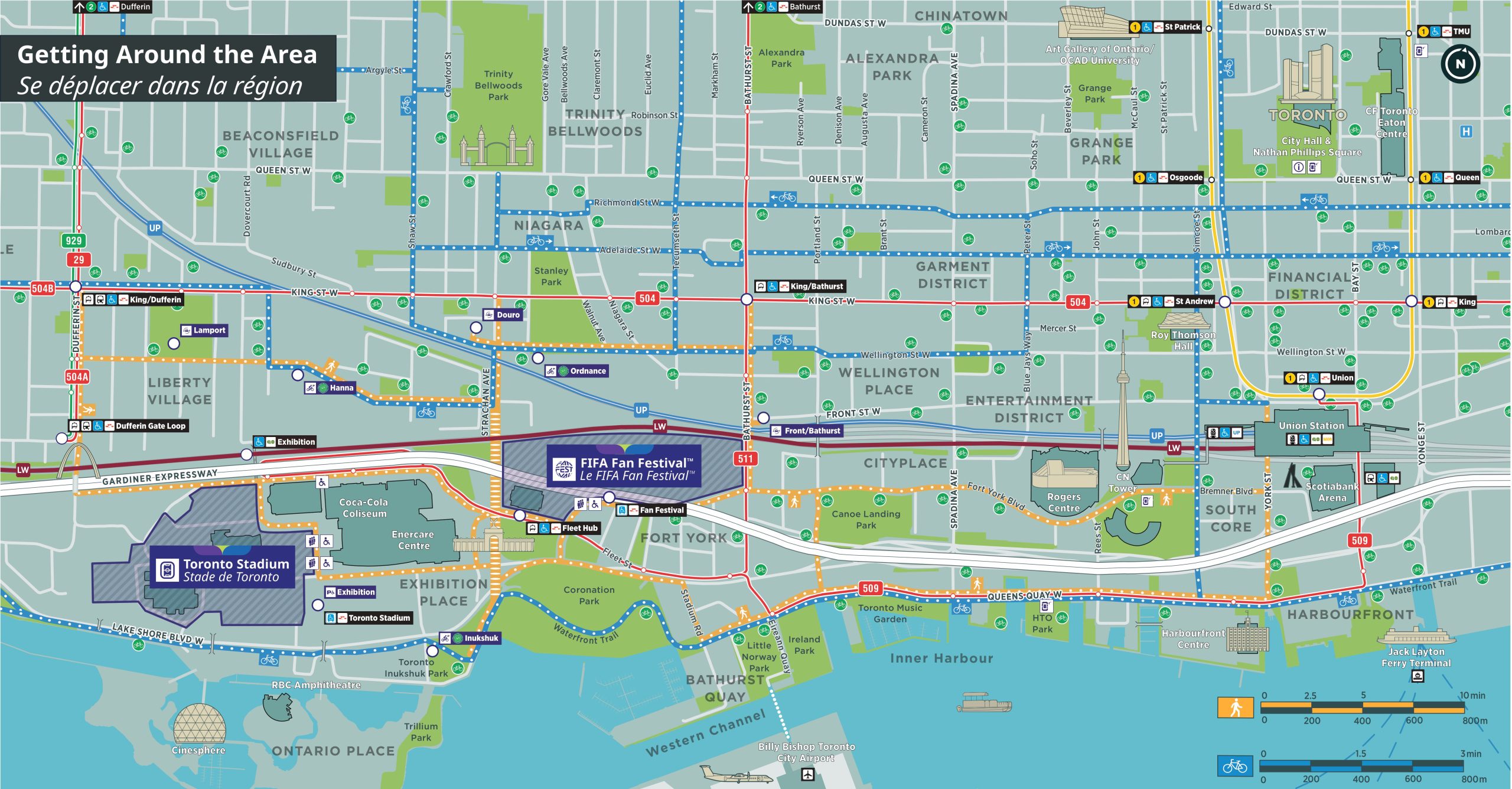
Toronto will experience varying levels of activity during the FIFA World Cup 2026, with the highest volumes occurring on match days. On match days, Toronto Stadium is expected to host more than 45,000 spectators per match. Up to 20,000 people could attend the FIFA Fan Festival™ at Fort York National Historic Site and The Bentway during up to 22 operational days between June 11 to July 19.
What residents and visitors can expect
The Mobility Plan was developed by a third-party consultant in collaboration with the FIFA World Cup 2026 Toronto Secretariat, Transportation Services, the Toronto Transit Commission, Metrolinx, the Ontario Ministry of Transportation, Toronto Police Service, Toronto Emergency Management, Toronto Parking Authority (including Bike Share Toronto), Greater Toronto Airports Authority and Billy Bishop Toronto City Airport.
It will be considered by the City’s FIFA World Cup 2026 Subcommittee on Monday, March 30, followed by Executive Committee on April 15 and Toronto City Council at its April 22 to 24 meeting. The Mobility Plan is required under the Host City Agreement and will be reviewed by FIFA.
FIFA World Cup 2026Toronto will host six FIFA World Cup 2026 matches beginning in June 2026, including the first-ever men’s FIFA World Cup match on Canadian soil featuring Canada’s Men’s National Team. The Government of Canada is supporting preparations related to hosting matches of the FIFA World Cup 2026, including contributions toward upgrades at Toronto Stadium. The Government of Ontario will support the infrastructure and logistics required for Toronto’s matches and related events.
In December 2024, FIFA released an economic impact assessment prepared by Deloitte Canada, estimating that FIFA World Cup 2026 could generate up to $940 million in positive economic output for the Greater Toronto Area, including $520 million in GDP growth, $340 million in labour income and $25 million in government revenue. The tournament is also expected to create more than 6,600 jobs between June 2023 and August 2026.
Toronto is home to more than three million people whose diversity and experiences make this great city Canada’s leading economic engine and one of the world’s most diverse and livable cities. As an Official Host City for the FIFA World Cup 2026™ and the fourth largest city in North America, Toronto is a global leader in technology, finance, film, music, culture and innovation and climate action, and consistently places at the top of international rankings due to investments championed by its government, residents and businesses. For more information visit the City's website or follow us on X, Instagram or Facebook.