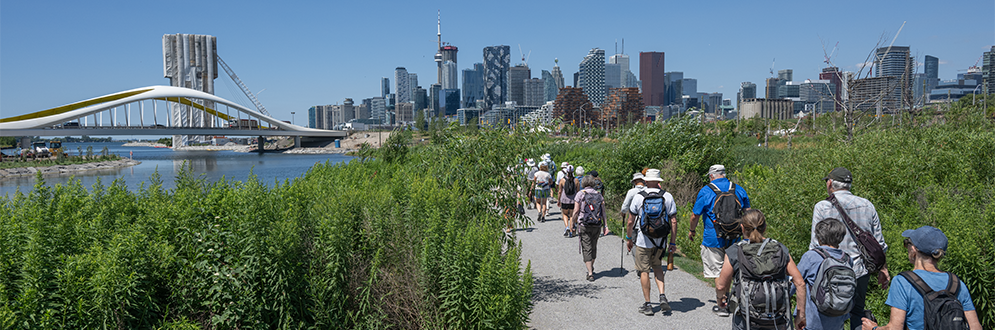
Rouge Park, one of Toronto's best kept secrets, and Toronto's largest park is becoming Canada's first national urban park. It will stretch from the Oak Ridges Moraine to the shores of Lake Ontario and cover over 40 square kilometres encompassing Canada's largest wetland, National Historic Sites, wilderness areas, historic farmlands, fishing areas and a sandy beach. French explorers are responsible for giving the park its name and the history of the area can be traced back to the 1700s and events in the 1990s laid the groundwork for the development of Rouge Park as Canada's first national park. There are many outstanding viewpoints in Rouge Park. Glen Eagles Vista is one of them.
Report: Natural Capital in Rouge National Park
Press Release: Greater Toronto Area Sitting on a Fort Knox of Natural Assets
Glen Eagles Vista is a viewpoint with outstanding view of river valleys and geologic features. From this viewpoint you can see the Rouge River and Little Rouge Creek valleys, a provincially-significant geologic feature and meadow species of plants and animals. It's main features include a 0.6 km long trail, vista point with outstanding view of river valleys and geologic feature, and short trail with interpretive signs and native vegetation.
Rouge Beach Park is located at the mouth of the Rouge River. Two distinct geographical features define this area: a white sand beach on Lake Ontario which is a popular spot for swimming and picnicking and a marsh area on the north side of the entrance road. The marsh habitat is stopover point for migratory birds, a breeding ground for waterfowl and a great spot for birdwatching.
The Rouge river and its main tributary, Little Rouge Creek, flow through an area that remains largely undeveloped - the watershed encompasses about 2,200 hectares within Metropolitan Toronto. Red clay in the river's banks give the water a distinct colour as it flows towards Lake Ontario; early eighteenth century French explorers noted the water's colour and recorded it as Rivière Rouge on maps.