Humber
Bay Butterfly Habitat
HUMBER BAY BUTTERFLY HABITAT: IF YOU BUILD IT, THEY WILL
COME.
The
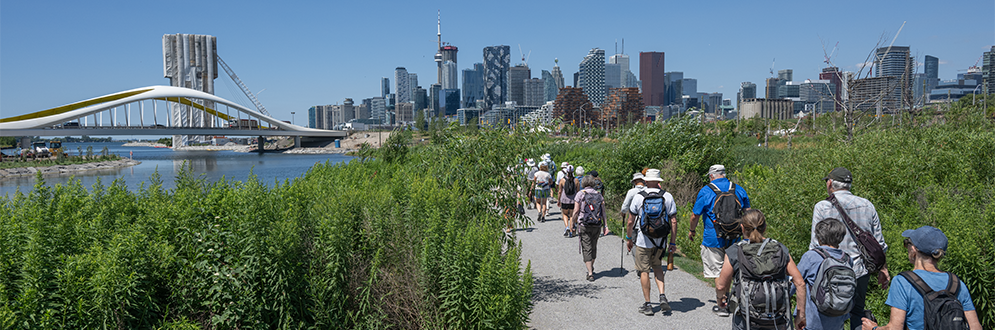
Humber Bay Butterfly Habitat (HBBH) is an ecological
restoration project that provides critical habitat for a variety
of native butterfly species. Located along the shores of Lake
Ontario in Toronto's west end, HBBH incorporates a diversity of
native wildflowers, shrubs, trees, grasses, sedges and a variety
of physical features known to support butterflies throughout their
life cycles. Throughout the site, interpretive features explore
the relationship between butterflies and their natural habitat.
The goal of the HBBH is to establish a self-sustaining native
plant community which will support a variety of butterfly species,
while educating park users about the value of urban conservation.
The Humber Bay Butterfly
Habitat is honoured with a Regional Merit Award from the Canadian
Society of Landscape Architects
The Parks and Recreation
Division is pleased to be honoured with a 2003 Canadian Society
of Landscape Architects Regional Merit Award for its newly opened
Humber Bay Butterfly Habitat (HBBH).
HBBH is located in
Humber Bay Park East along the shores of Lake Ontario in Toronto's
west-end. It was officially opened on September 24th, 2002, after
3 years of planning, design and implementation. The goal of HBBH
is to establish a self-sustaining community of native vegetation
that will attract a variety of native species of butterflies,
while educating and engaging the public about urban wildlife habitat.
The Canadian Society
of Landscape Architects Regional Award winners represent the very
best regional work completed by Ontario Landscape Architects.
Announced on March 1 in Winnipeg, winning projects demonstrated
excellence in visionary, artistic and environmentally responsible
design solutions. The jury remarked that HBBH carries a strong
sense of place, and it brings the importance of conservation to
the public in a tangible way.
Humber Bay Butterfly
Habitat is the first of its kind to have large areas devoted exclusively
to native plants and to incorporate large plantings through the
organization of volunteer stewards. As well, it is the first to
incorporate a "Home Garden" component where the general
public can see first hand some of the types of plants they can
use in their own backyards to increase urban wildlife habitat.
For more information
about HBBH, please contact Garth Armour at 416-392-0360.