City of Toronto   *
HomeContact UsHow Do I...? Advanced search Go
Living in TorontoDoing businessVisiting TorontoAccessing City Hall
 
Division
About Us
Special Events
Parks and Gardens
Recreation and Facilities
Photo Gallery
Toronto Islands
Toronto and Region Conservation Authority
Toronto Zoo
Contact Parks


Toronto Parks

Etienne Brule Park

Etienne Brulé Park recognizes the accomplishments of one of North America's earliest explorers. On September 19, 1615, at the age of twenty, Etienne Brulé became the first European to see Lake Ontario and, later, was probably the first to see Georgian Bay, Lake Huron, Lake Michigan and Lake Superior. He was also the first European to live among the native people and adopt their customs.

Brulé had come to North America as a servant to Samuel de Champlain, the father of the French colony of New France. In an attempt to win Huron Indian support, Champlain offered to help them wage war against the Five Nation Iroquois Indians of upstate New York. Champlain sent Brulé to the New York-Pennsylvania border (near the Town of Waverly) to meet an allied tribe known as the Carantouans, and enlist their help with the raid. From Huron territory around Lake Simcoe, Brulé travelled south along the Holland and Humber Rivers, across Lake Ontario, then through New York to the Susquehanna River.

Although Brulé ultimately deserted the French and was ostracized by Champlain, his exploration of the hinterland was very important to the expansion of the fur trade. A commemorative plaque and marker is located at South Humber Park.

Park Characteristics
Park Type
Valley picnic park
 
Special Features

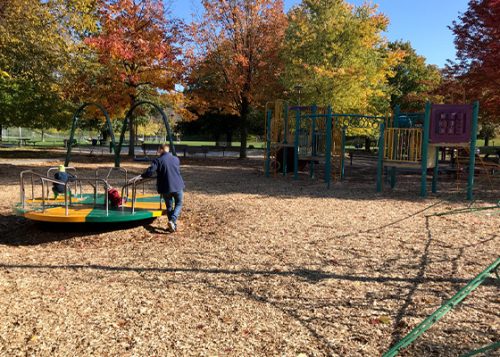
Playground facilities
Cross-country skiing (casual use)
Seasonal fishing

 
Entrances and Public Transit
Etienne Brulé Park can be entered at the south from Old Mill Road or at the north from Lundy Avenue. The park is only five minutes walk from Old Mill subway station. Pedestrians and cyclists can also travel through the park on the Tommy Thompson Trail, using entrances at Pasadena Gardens and Lundy Avenue.
 
Back to park


Toronto maps | Get involved | Toronto links
© City of Toronto 1998-2009