|
The Humber River
Valley was part of an early passage into Huronia used regularly
by natives and European traders and settlers. The Humber Trail,
or the Toronto Carrying Place, actually followed the east bank of
the river along what is now Riverside Drive. After Yonge Street
was constructed in 1796, the Humber River declined as a major route
inland because overland travel aided by the horse, and later rail,
was not restricted by low water levels or the availability of boats.
A plaque honouring
Etienne Brulé stands in South Humber Park. In 1615, he became
the first European explorer to reach the mouth of the Humber River.
His likely vantage point was from the scenic lookout at Humber Marshes,
a steep ridge at the beginning of the Humber Trail.
South Humber
Park is located on the west bank of the river across from the Humber
Marshes, just north of the Humber Sewage Treatment Plant. The former
Metropolitan Toronto purchased the former Humber Valley Golf Course
in the early 1950's, but did not dedicate the remaining land as
open space until 1955. One year earlier, the Humber Valley was severely
damaged by Hurricane Hazel. To prevent similar disasters from reoccurring,
a program of public ownership of other lands in the floodplain was
initiated.
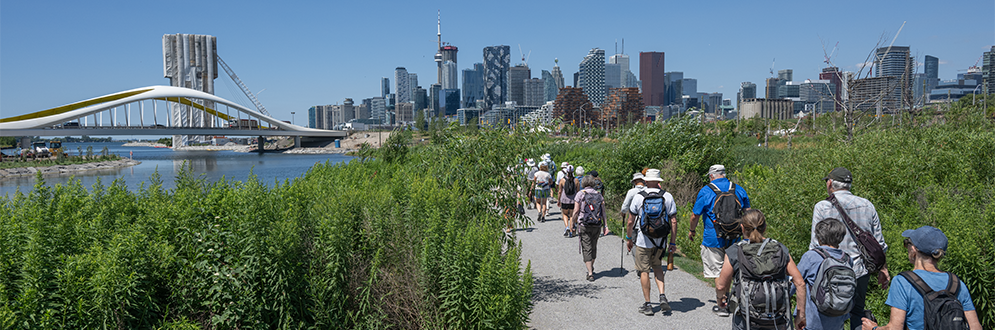
In 1994, the
Humber Bridge, a 6.5-metres wide and 139-metres long structure spanning
the mouth of the Humber River was built at a cost of $4.05 million.
This "landmark gateway" connects the Waterfront and Martin Goodman
Trails along the Lake Ontario shoreline with the Tommy Thompson
Trail through the Humber Valley. Elements reflected in the bridge's
design and surrounding landscape reacquaint visitors with the region's
cultural history and geographic significance.
|