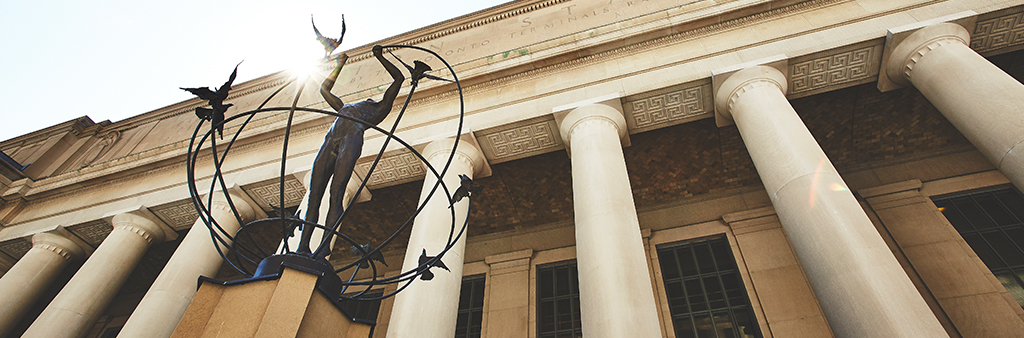
Union Station is Canada’s busiest, multi-modal passenger transportation hub, a designated national historic site and a significant part of Toronto’s history and identity. More than a quarter-million people use Union Station daily. The City led Union Station’s revitalization with three objectives: to improve the quality and capacity of pedestrian movement, to restore heritage elements and to transform the Station into a major destination for shopping, dining and visiting.
Customer service update
- Union Summer: Enjoy Toronto's ultimate summer hotspot from June 8 to August 9, featuring the city’s best food, culture, and entertainment all in one iconic destination.
- Lost and Found: The Lost and Found office is located at Counter 6 in the York Concourse. It takes approximately five business days for a lost item to be brought to the office, and it is held for 30 calendar days.
- New Signage: To assist with navigation at Union Station, the production and installation of new wayfinding signage is now complete.
- Award-Winning Station: Union Station was the recipient of the 2024 Built Heritage Award for heritage planning & architecture, and a 2025 Toronto Urban Design Award recipient.
- History: Union Station is approaching its 100th anniversary in 2027! Learn about the history of Union Station at our new exhibits in the VIA Concourse.
- Bay Street Bridge: Pedestrian access is now available between Union Station and CIBC Square.
- Enhancement: Metrolinx is actively upgrading their rail network through the Union Station Enhancement Project.
- Food and Beverage: You can now have the ultimate dining experience at Union Station, as we are home to a diverse selection of food and beverage offerings. Remember to bring your sweet tooth!