

Another new park is coming to 2400 Yonge Street, just a few blocks away from this one. Visit its project page to learn more.
While we aim to provide fully accessible content, there is no text alternative available for some of the content on this site. If you require alternate formats or need assistance understanding our maps, drawings, or any other content, please contact Hakima Hoseini at 416-395-0242.
Construction of the permanent park is expected to take place in 2027 following the completion of construction staging by an adjacent developer on the eastern portion of the site.
The timeline is subject to change.
Sign up for or unsubscribe from updates related to the New Park at 20 Castlefield Ave.
This project has been classified as an Involve project based on the International Association of Public Participation Spectrum. This means we work directly with the public and stakeholders throughout the design process to ensure that ideas and aspirations are understood and considered for the design of the new park and its features.
The final design for the new park was developed through a three-phase community engagement process.
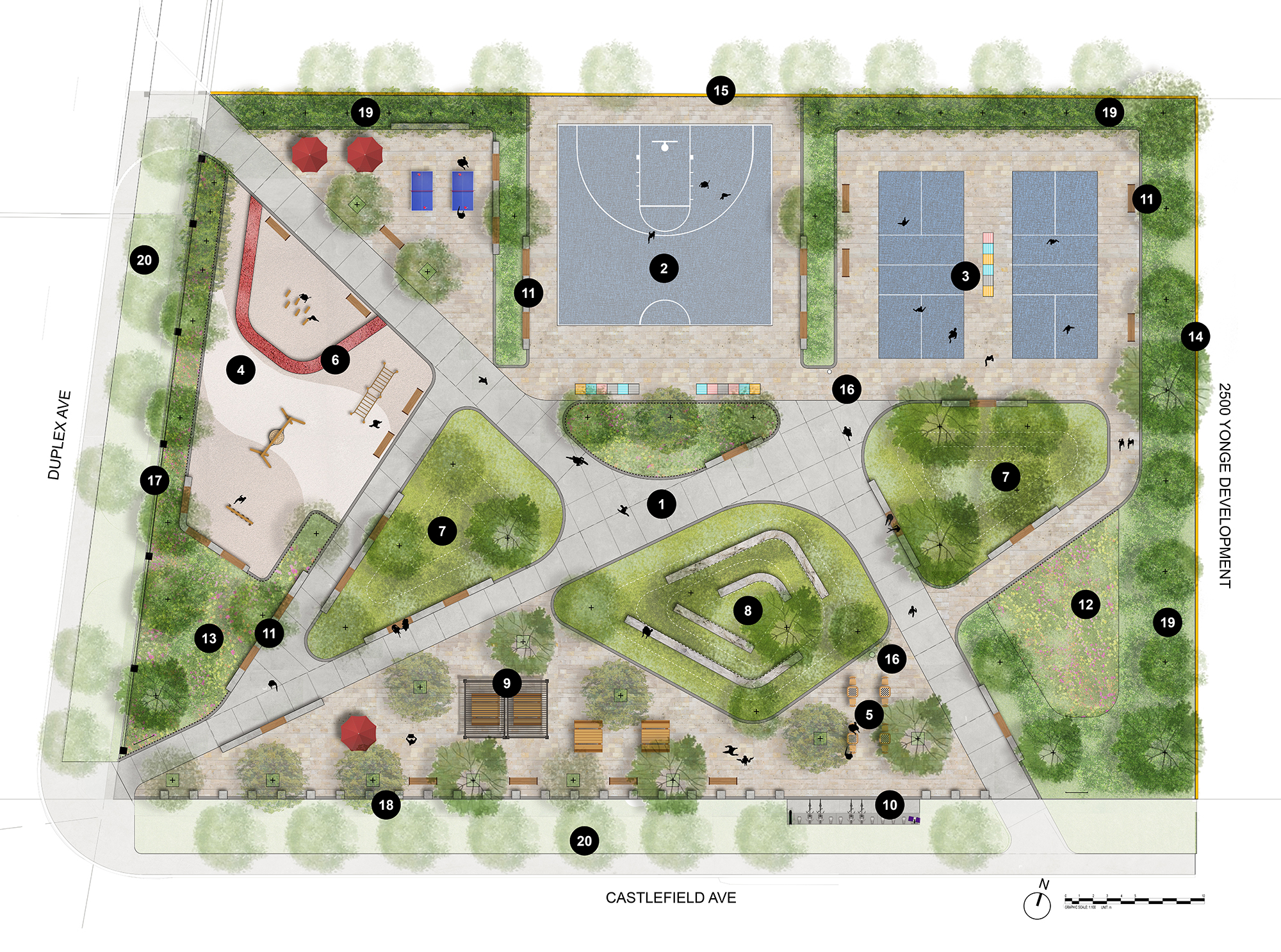
In response to feedback from Community Engagement Phase 3, the proposed walking trail has been removed from the design to accommodate expanded green and play areas.
In this phase, the project team collected feedback to develop a draft vision statement, guiding principles and big moves which will guide the development of park design options in Community Engagement Phase 2.
The vision is co-created with the community to describe the ideal future park. It is a big-picture statement that should inspire everyone toward a common understanding of the project’s overall goals and objectives. The vision statement for the new park is:
The new park at 20 Castlefield Ave. will be a vibrant public space that fosters play, connection and relaxation for visitors of all ages. It will balance spaces for play and active exercise with peaceful green spaces where people can escape the city and connect with nature. The park will have plenty of shaded accessible seating for people of all ages to relax alone or with friends and family. The park will be flexible, with the potential to host small events and adapt to the community’s evolving needs.
The guiding principles are high-level directions that reflect the community’s most important values and ideas for how the park should look and feel. They help to clarify the vision statement and guide how the park should be designed by describing the desired outcomes. The guiding principles of the new park are:
The park will provide space for people of all ages to play, get exercise and be physically active.
The park will provide access to green, shady spaces so that community members in this densely populated area can connect with nature.
The park will include flexible spaces that can change based on community needs to potentially host small outdoor events such as a farmer’s market.
The park will provide a quiet place to unwind and relax and will feel separated from the noise and bustle of the city.
The park will be a place where all feel welcome, where friends, families and coworkers meet to relax and enjoy the outdoors, and where neighbours build community.
The big moves communicate the main priorities of both the community and the City for the design of the park. They are specific directions for how the physical design can achieve the vision and guiding principles. The big moves for the new park are:
To achieve a playful and active character, the design should:
To achieve a green and sustainable character, the design should:
To achieve an eventful character, the design should:
To achieve a peaceful character, the design should:
To achieve a social character, the design should:
On September 25, a public meeting took place at Northern District Library to share information about the new park. Approximately 30 community members attended. The Deputy Mayor was also in attendance.
Following a short presentation, community members reviewed boards which summarized community feedback, including a draft vision statement, guiding principles and big moves.
Download the September 25, 2024 public meeting presentation.
From July 29 to September 5, an online thought exchange activity collected 339 thoughts and 6,195 thought ratings from 446 participants.
Review an interactive report of the September 2024 thought exchange activity.
When asked to complete the statement, “the new park at 20 Castlefield Avenue should be a place where…”, the most popular thoughts reflected the community’s desire for a park where:
The most popular park characters were:
The most popular park activities were:
23 per cent of participants shared feedback on other park activities they would like to do at the new park. Of the 92 comments, the most common reflected the following themes:
The new park should include the following features which already exist on the site:
The most popular park features were:
On August 22, over 100 community members participated in a pop-up event at two locations in the neighbourhood to collect feedback for new parks coming to 20 Castlefield Ave. and 2400 Yonge St. Participants shared their preferences for the park character and activities on display boards, using sticky dots to select their top choices and sticky notes to write additional comments.
Community members were asked about their preference for the character of the new park at 20 Castlefield Avenue. Of the 104 responses collected, the most popular characters were:
Community members were asked to select the activities they would like to do at the new park. Of the 122 responses collected the most popular activities were:
The most common additional ideas shared on sticky notes included:
In this phase, the City and its design consultant worked off the outcomes of Community Engagement Phase 1 to develop two design options for the new park. These were presented to the community for feedback.
The outcome of this phase was the selection of a preferred design.
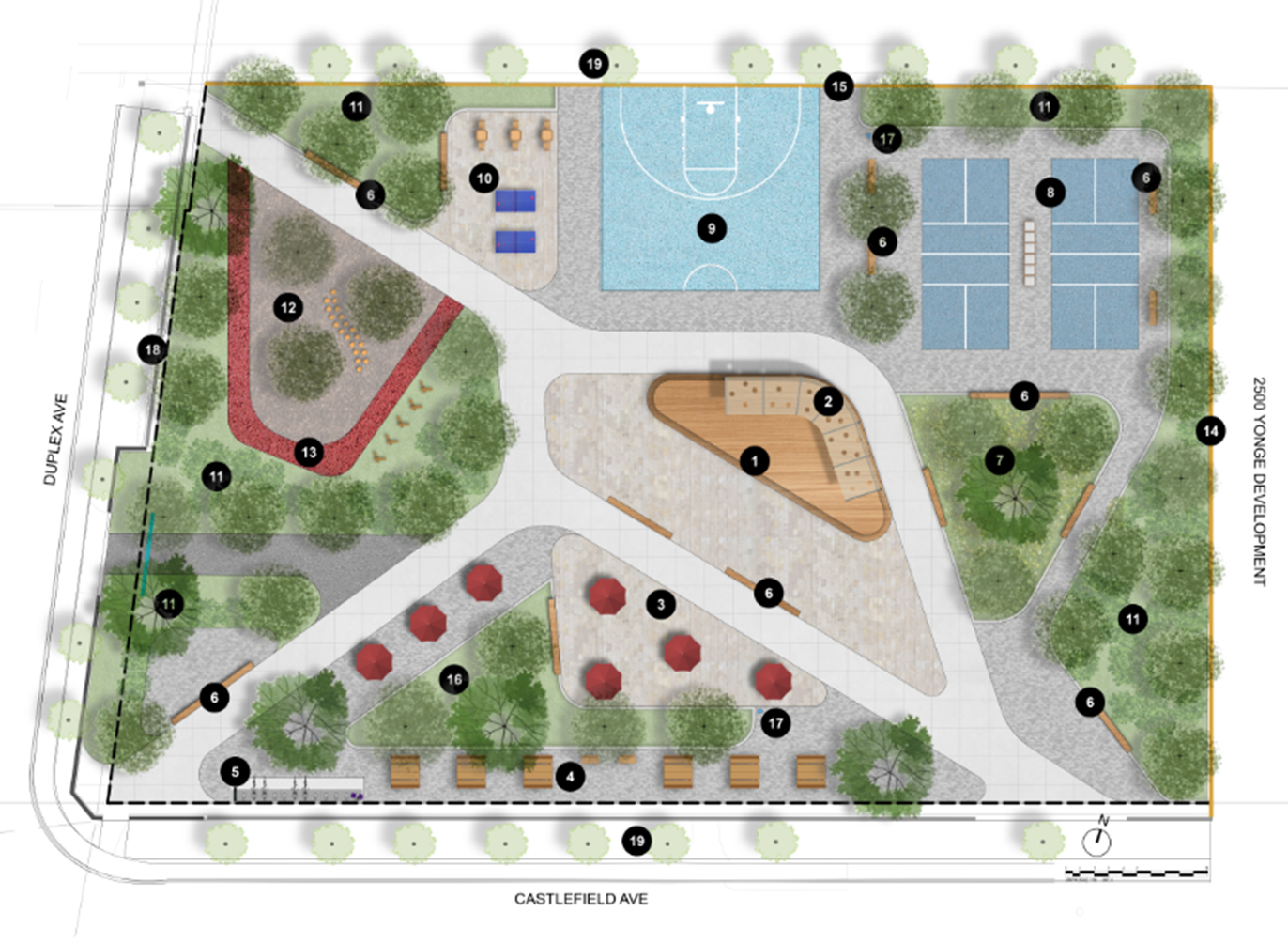
This design option features a central boomerang-shaped pathway that guides movement through the park from southeast to northwest and links all activity areas. At the centre, a plaza with a shade structure supports an event stage, community gatherings and seasonal programming. To the north, upgraded pickleball courts and a basketball half court are paired with table tennis and a small games area for additional active use. To the west, a play area with sculpted seating creates a playful edge, complemented by expanded green areas for natural play and relaxation under a tree canopy. Along the south edge, an outdoor dining area connects to a social space that can host small marketplace activities and community events. A pollinator garden and shade canopy trees define the eastern perimeter, providing shade as well as improved privacy and noise dampening for the new residential development next door. Noise is further dampened with sound absorbing fencing. Overall, this design option offers a vibrant park with diverse opportunities for visitors of all ages to play, gather and explore.
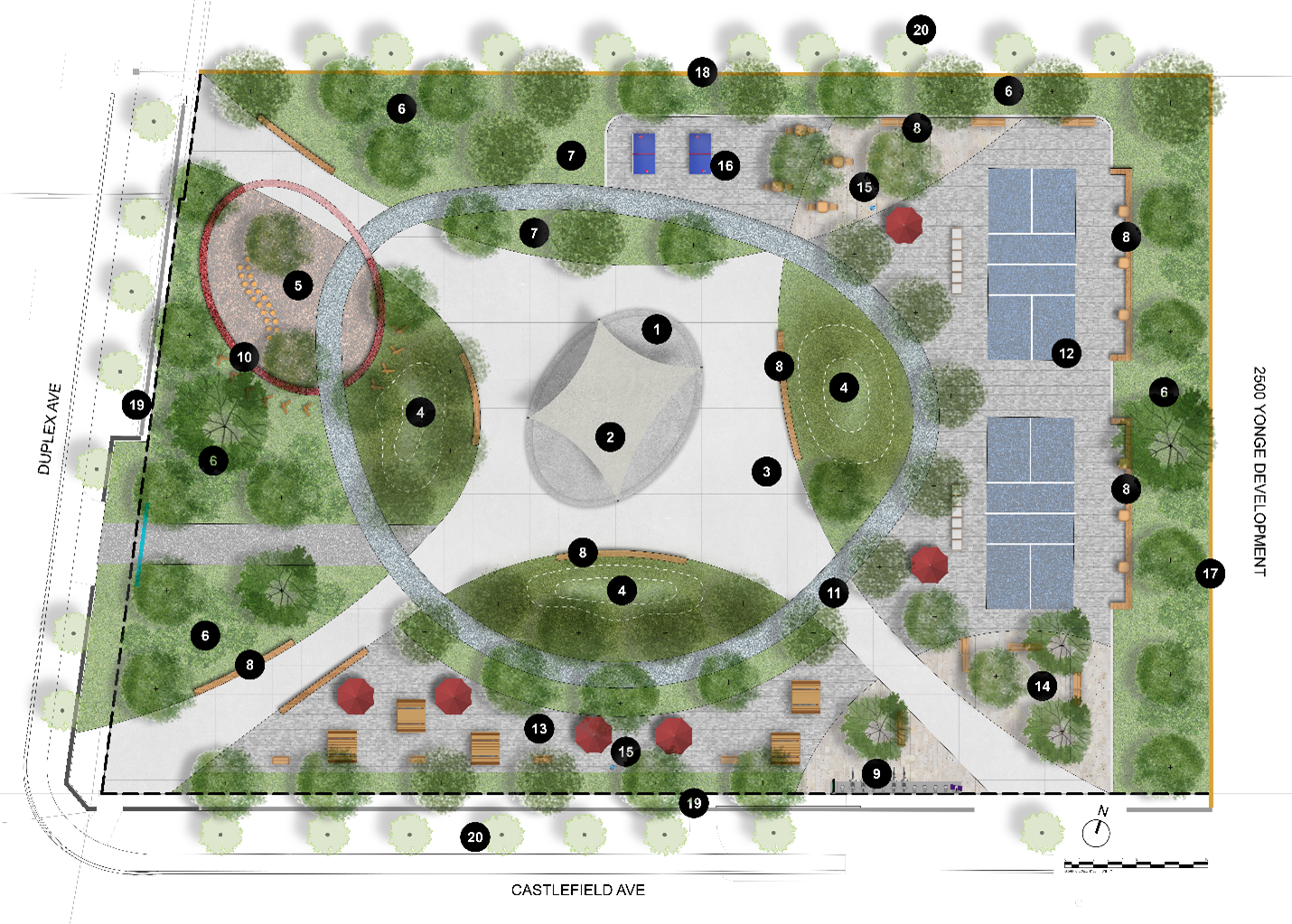
This design option creates a calm, nature-focused park organized around a central plaza featuring an event stage with a shade structure. An additional walking trail circles the plaza, connects all activity areas and highlights the central plaza. To the north and east, the active recreation zone includes pickleball courts, table tennis and games tables, supported by shaded seating areas. To the west, wood stumps and sculpted seating offer opportunities for natural play and exploration. Along the south edge, a plaza is paired with picnic tables and market-style seating that can support community events and informal gatherings. Landscaping and sound absorbing fencing along the eastern edge provide privacy and noise dampening for the new residential development next door. Expanded perimeter planting creates a sense of enclosure and offers additional seating areas. This design option presents a park that feels immersive, green and restorative, offering a series of quiet and active spaces for all ages.
On December 10, the project team gathered feedback on display boards showing the two design options and asking a set of questions from the online survey. Respondents shared their feedback using dot stickers and sticky notes on the display boards. The project team first gathered feedback from youth in a grade 8 class at St. Clement’s School (located next to the park), and then from high school youth in the hallway at the same school during the students’ break period. A total of 73 students and teachers participated.
The project team also gathered feedback on the same boards in the reception area of Northern District Library from 3:30 p.m. to 6:30 p.m. Participants included library visitors of all ages, as well as youth at the library’s drop-in Youth Hub. A total of 53 people participated.
Participants shared their feedback using dot stickers and sticky notes on the display boards. They were invited to answer any of the questions that interested them and were not required to respond to all questions.
Overall, participants liked both design options almost equally, with 30 people preferring Design Option A and 33 people preferring Design Option B.
Participants also shared their level of agreement with statements about each of the design options. Overall, a majority of participants agreed with the following statements for both design options (unless otherwise indicated):
Additionally, participants were asked their level of agreement with statements about specific features that pertained only to one or the other of the design options. A large majority agreed with these statements:
Design Option A:
Design Option B:
Participants then selected their top three most important design features for each category. These are listed in order of popularity under each category below.
Written comments included enthusiasm for the walking trail and pollinator garden, suggestions to include a water fountain and to move the pickleball courts closer to Duplex Ave.
From December 4 to December 19, community feedback on two design options was collected from 514 respondents through an online survey about the two design options.
85 per cent were satisfied with the vision statement, 88 per cent were satisfied with the guiding principles and 86 per cent were satisfied with the big moves.
Overall, 79 per cent were satisfied with the design options for the new park, 10 per cent were neutral and 12 per cent were unsatisfied.
Participants liked both design options almost equally:
Participants were asked to share their level of agreement with the following statements about each of the design options. Overall, a majority of participants agreed with the following statements about both Design Options A and B, and the level of agreement about each statement was closely aligned for both design options (within five per cent difference):
For these statements, there was more agreement with Option A:
Less than half of the participants liked the small stage for performances in both design options.
Participants were also asked to share their level of agreement with statements about specific features that were included in only one of the design options.
Design Option A:
Design Option B:
Participants then selected their top three most important design features. These are listed in order of popularity under each category below.
Additional written feedback was provided by up to 43 per cent of respondents on various topics. Some of the most common comments included enthusiasm for pickleball and basketball courts, concern about noise from pickleball, improving amenities for children and older youth, adding more greenery, dislike for the event stage, and ensuring plenty of shade and accessible seating.
In this phase, the City shared the preferred design with the community and collected feedback in an online survey.
The outcome of this phase was a refined preferred design. The project will now move into the detailed design phase where the design team will finalize the design by working through the technical details and plans for the construction contractor.
From March 19 to April 2, an online survey gathered feedback from 441 respondents on the preferred design for the new park.
After feedback was gathered during Community Engagement Phase 2, a preferred design was developed and shared with the community in this online survey, along with draft renderings and example images to show what proposed features can look like.
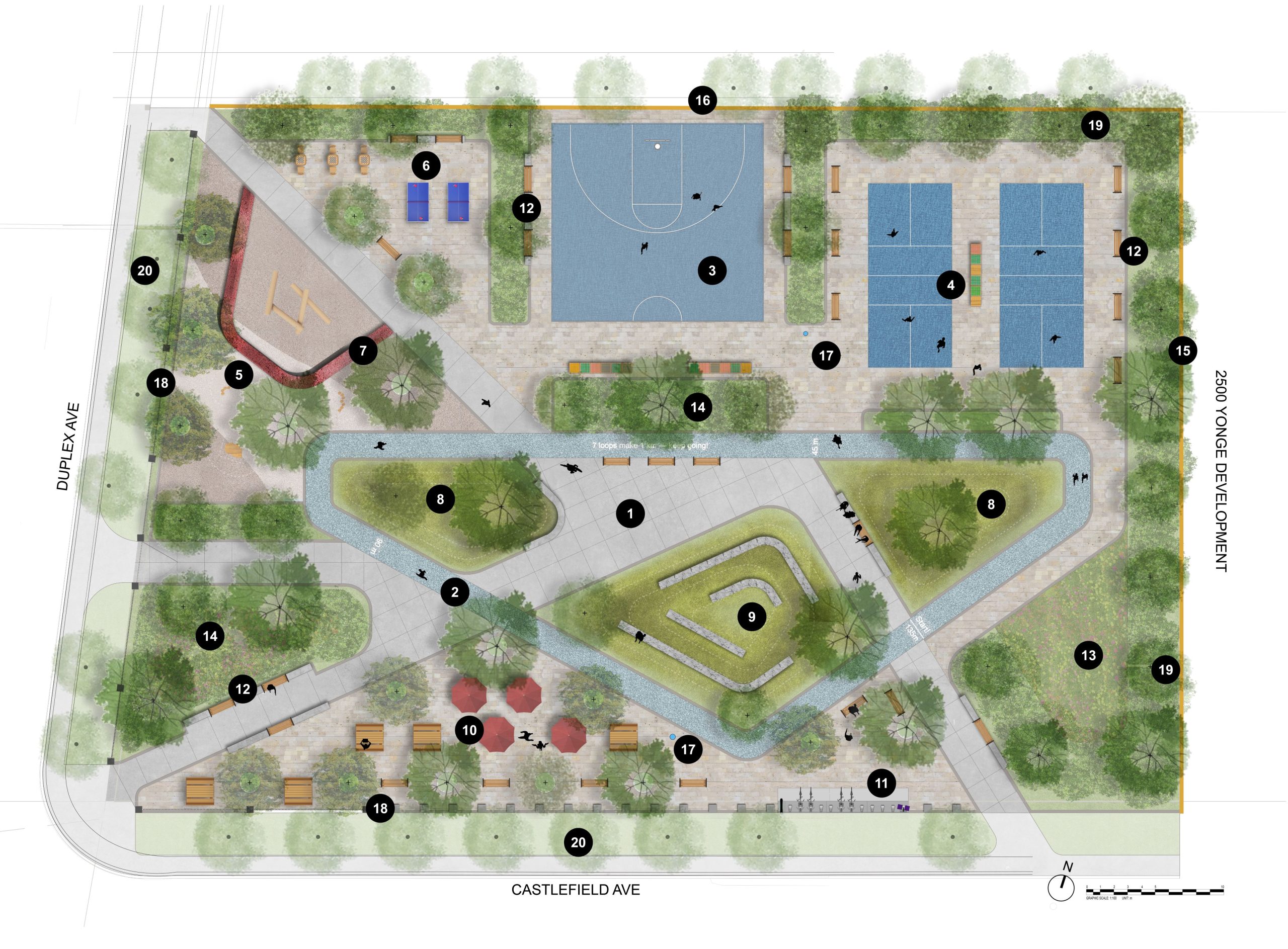
When asked to rate their level of satisfaction with the overall design for the new park, 77 per cent of respondents were satisfied or very satisfied, 7 per cent were neutral, 15 per cent were somewhat or very unsatisfied.
Participants were also asked to rate their level of satisfaction with specific features or design aspects:
Green amphitheatre area
Expanded children’s play area and play features
Rubber surfacing for children’s play area
Balance between active recreation and peaceful greenery
Plantings and green spaces
Noise reduction features
When asked whether they thought the design reflects the community vision for the new park, 86 per cent of respondents generally agreed – that is, 54 per cent of respondents said yes and 32 per cent said somewhat). 5 per cent of respondents were unsure and 9 per cent said no.
168 people chose to share additional comments (38 per cent of all survey respondents) about how to make this a welcoming, accessible and vibrant new park that fosters play, connection and relaxation for all community members.
The top two themes involved improving the children’s play area (42 comments) and the proposed plantings (35 comments):
Improve play area:
More greenery:
The new park at 20 Castlefield Ave. is located in a neighbourhood with one of the fastest rates of growth and lowest rates of parkland in the city. Once constructed, the park will be the largest park addition in Midtown Toronto in decades.
The park design will be developed through a community engagement process starting in 2024.
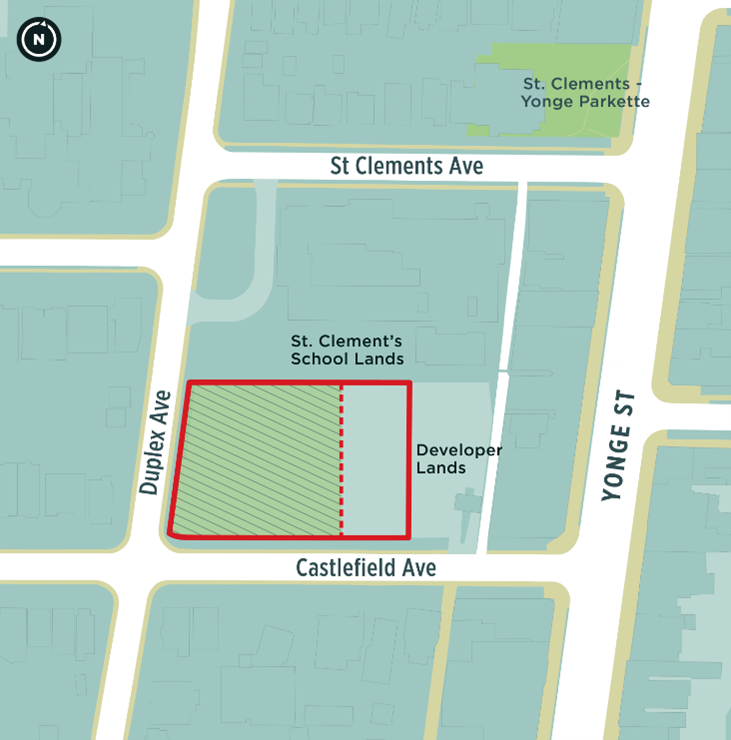
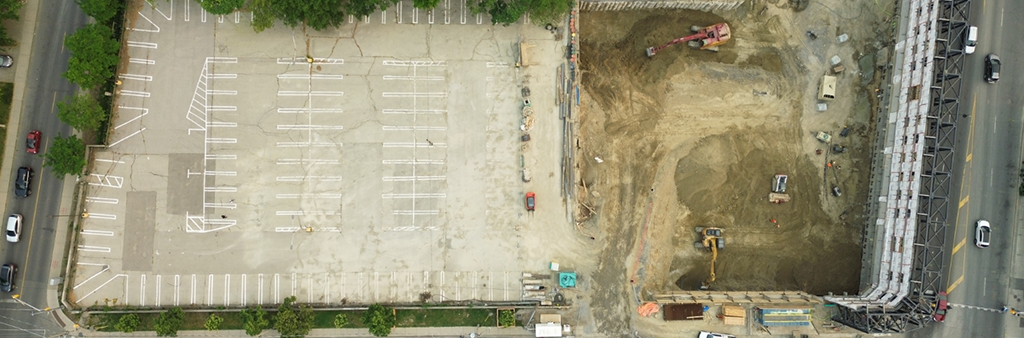
The new park is located at the northeast corner of Castlefield Avenue and Duplex Avenue, one block west of Yonge Street just south of St. Clement’s School. The park site is adjacent to a redevelopment project at 2940-2514 Yonge St., which will be temporarily using 934 m2 of the park site for construction staging.
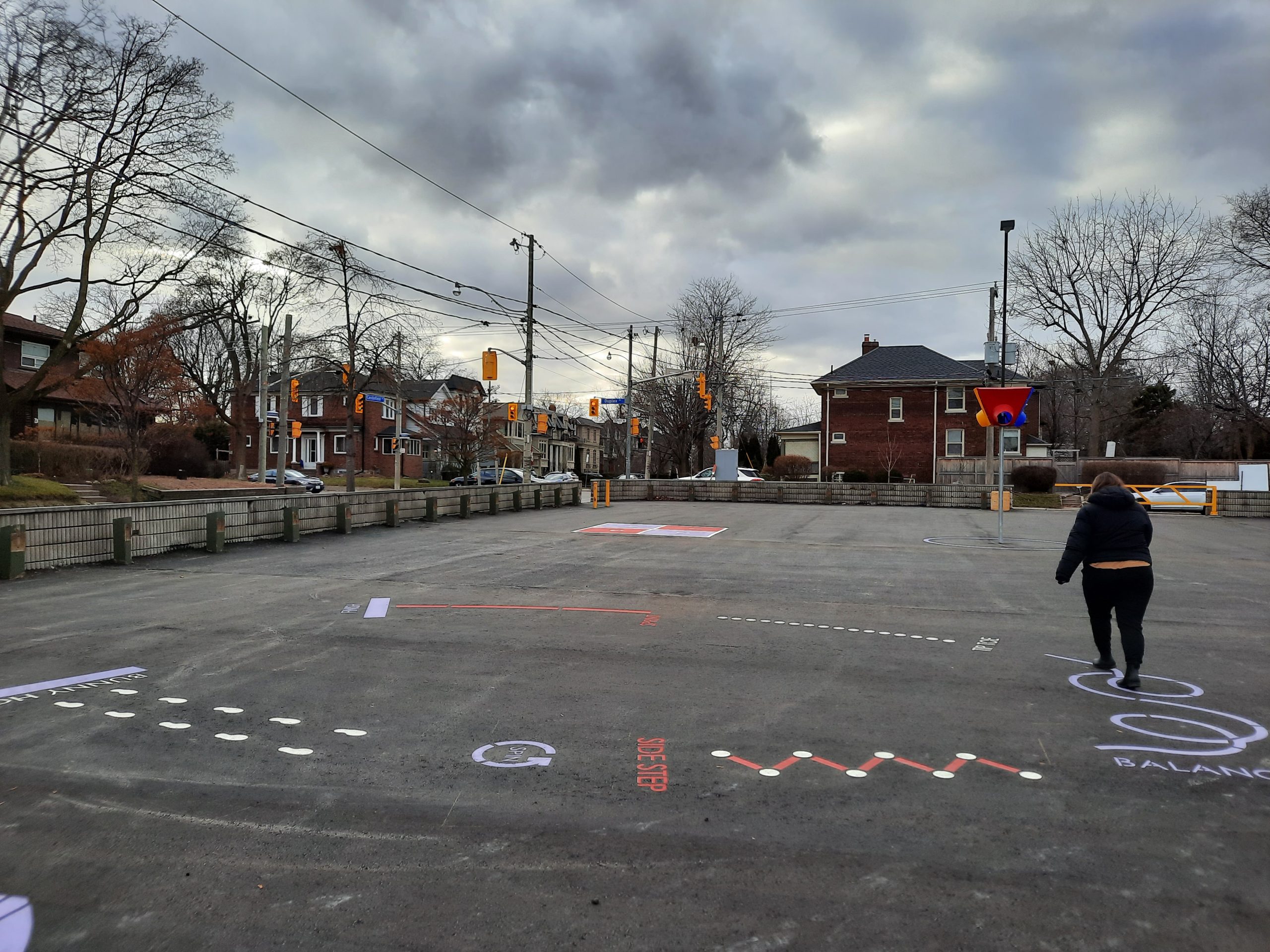
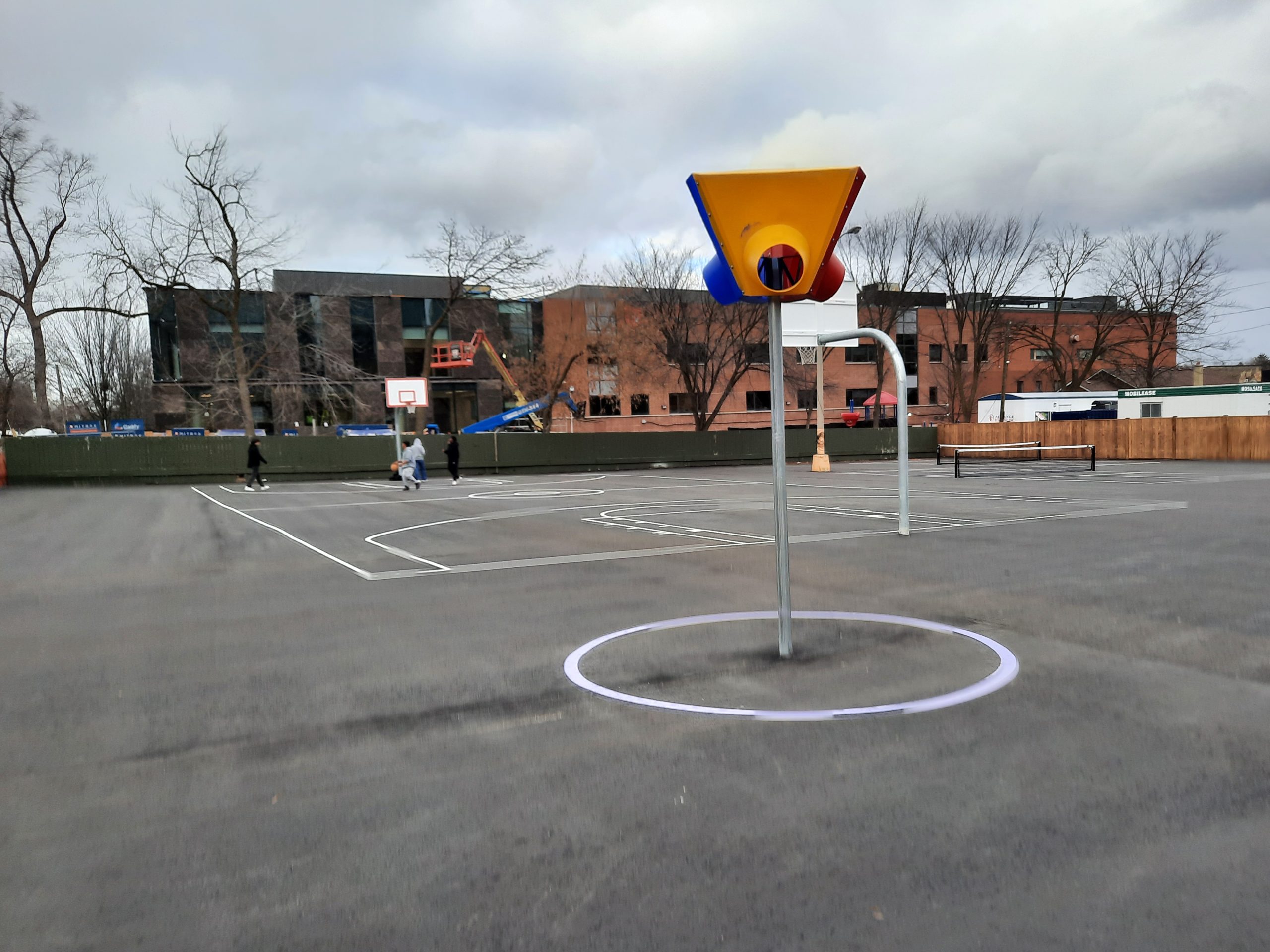
A Park in Progress has been created on a 2,800 m2 of the park site to provide a space for gathering, recreation and leisure while planning and preparations for the future permanent park are underway.
The Park in Progress opened to the public for community use in November 2023 with the following features:
The Park in Progress will remain open until construction for the full park begins in 2027.
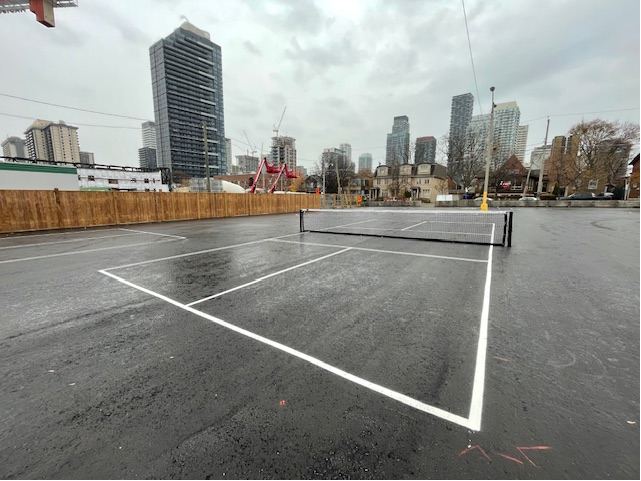
20 Castlefield Ave. was formerly a parking lot operated by the Toronto Parking Authority. In October 2021, City Council redesignated the land at 20 Castlefield Ave., to Parks in the City’s Official Plan. In February 2023, management of the site was transferred to the City. The Midtown Parks and Public Realm Plan, which provides a comprehensive vision for parks and public realm in Midtown Toronto, identifies this location as a space with park opportunity.