Toronto Public Health offers breastfeeding support by telephone, video calls,
eChat and/or in-person breastfeeding clinic appointments. If you would like a Public Health Nurse to contact you to help with breastfeeding and/or coping after having a baby, please complete this
online form.
Try breastfeeding immediately after birth. Your baby is awake and ready to learn how to breastfeed. Breastfeeding early also helps your body to make more milk.
Holding your baby in the first few hours after birth skin-to-skin helps you and your baby bond and get to know each other.
Most babies will breastfeed at least eight times in 24 hours (day and night).
If you experience difficulty with breastfeeding, visit a free breastfeeding clinic.
Skin-to-Skin
Holding your baby skin to skin right after birth helps you bond with your baby and supports breastfeeding. Place your baby belly-down on your chest or tummy immediately after birth. Continue skin-to-skin often in the months after birth. Safe skin-to-skin is also better for babies born prematurely or by Caesarean birth.
Safe Skin-to-Skin is Easy. Here’s How:
- Remove your baby’s blankets and clothing. Leave the diaper on.
- Move your clothing away from your chest and tummy.
- Hold your baby upright, facing you, with their tummy against your chest or tummy.
- Make sure your baby’s nose and mouth are clear—their face should be visible, not covered. Keep their head turned to one side so they can breathe easily.
- Stay awake and watch your baby the whole time.
- Use a blanket over both you and your baby if needed, but keep your baby’s head uncovered.
- Relax and enjoy this special time with your baby.
- If you haven’t held your baby skin-to-skin yet, start now! It’s never too late.
Benefits of Skin-to-Skin
Babies:
- Breastfeed better
- Cry less and are calmer
- Stay warmer
- Enjoy more comfort from you
- Have better blood sugar levels
- Are protected by some of your good bacteria
Parents/Caregivers:
- Breastfeed more easily
- Learn your baby’s early hunger cues
- Feel closer and more connected with your baby
- Build confidence caring for your baby
Breastfeeding
- Your baby is more likely to have a successful first breastfeed
- Your baby may breastfeed sooner and longer
- You will make more breast milk
- Helps your baby stay interested and continue to breastfeed even when sleepy
Family and Skin-to-Skin
- Family members can also enjoy skin-to-skin time with your baby. If you have a partner, plan safe skin-to-skin time together with your baby. It helps everyone feel close and bond with your baby.
Safe Sleep
Babies under six months old should be placed on their back in a crib or cradle close to your bed when you are ready to sleep. It is important that cribs and cradles meet current Canadian safety regulations. Learn more about safe sleep for your baby.
https://player.vimeo.com/video/72285549
Video: Admission to Postpartum. Keeping Your Baby Skin-to-Skin (02:40). Reproduced by permission of Healthy Families BC
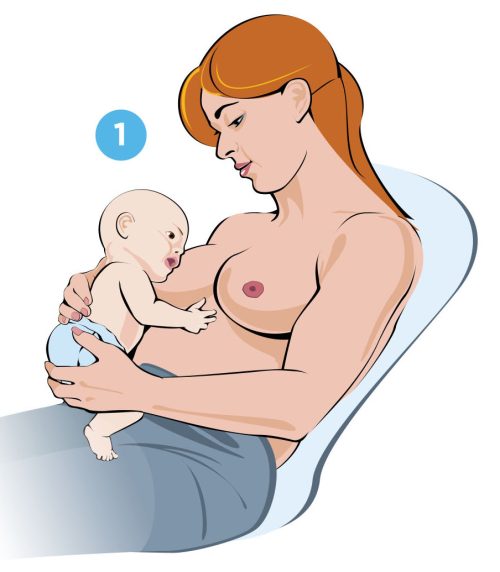
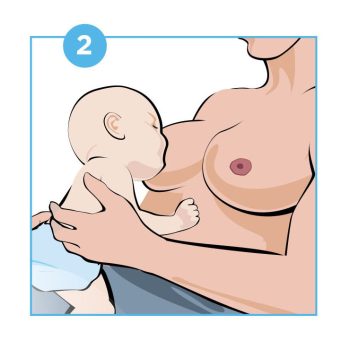
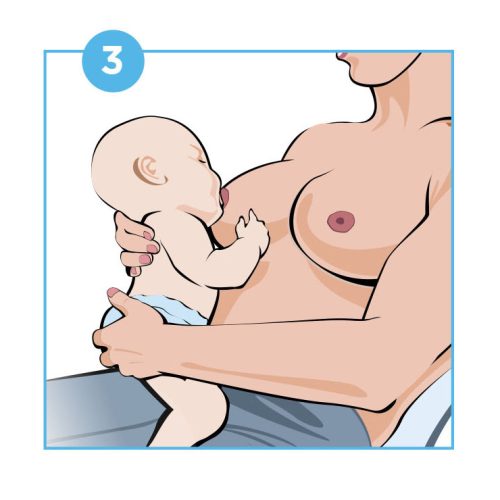
Baby-Led Latching
Baby-led latching is a natural and simple way for your baby to find your breast.
It is helpful when your:
- Baby is learning to breastfeed
- Baby is not breastfeeding well
- Nipples are sore or painful
Here’s How
- Start when your baby is calm.
- Sit comfortably and lean back a little.
- Hold your baby skin-to-skin (tummy to tummy) on your upper chest and between your breasts.
- Your baby will start moving their head up and down looking for your breast (this may look like bobbing or pecking).
- Support your baby’s neck, shoulders, and bottom with your arm and hand while they move towards your breast.
- Once your baby is latched, adjust your position so both you and your baby are comfortable.
- Your baby will:
- find your nipple
- push their chin into your breast
- reach up with an open mouth
- latch onto your breast
- You might find it helpful to bring your baby’s bottom closer to your body and support their back and shoulders.
Your Baby's Latch
A good latch helps your baby get enough milk and makes breastfeeding more comfortable for you. It can also help prevent sore or painful nipples.
Step 1
Get comfortable. Choose a breastfeeding position that feels right for you.
Step 2
Hold your baby skin-to-skin so their tummy is against your tummy and they are facing you.
Step 3
Support your baby well. Place your hand behind their shoulders, gently supporting their neck, not their head. Baby’s hands can remain free to explore your breasts and assist with latching.
Step 4
Face your baby’s nose to your nipple. Baby can lick and search for your nipple.
Step 5
When your baby’s head is slightly tilted back, bring baby in with their chin touching your breast first and wait for a wide-open mouth.
Step 6
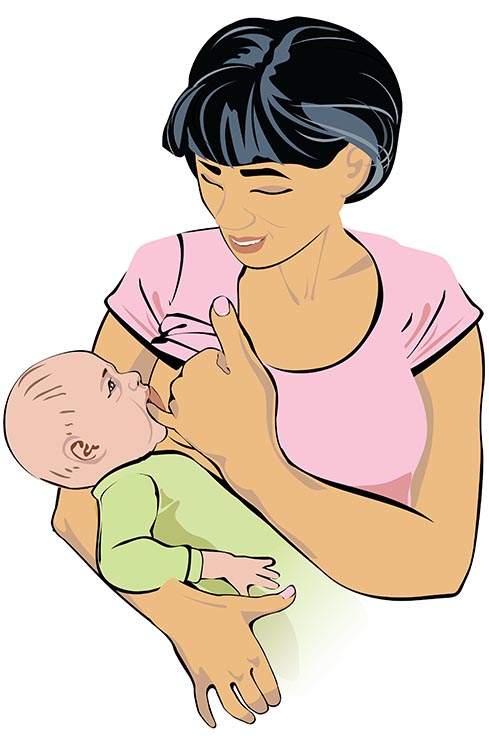
Breast sandwich: You may support and shape your breast by putting your fingers on one side of your breast, thumb on the other and lightly squeeze your breast from top to bottom or side-to-side to get more breast tissue into your baby’s mouth.
https://player.vimeo.com/video/72292451
Video: Latching Your Baby (03:35). Reproduced by Permission of Healthy Families BC
Breast Compressions
Breast compressions can help your baby to suck more effectively. Breast compressions during breastfeeding may be helpful if your:
- Baby is not sucking and swallowing well
- Breasts do not feel softer after feeding
- Baby needs more breastmilk
To do breast compressions, during breastfeeding:
- Hold your breast with fingers on one side, thumb on the other, away from the areola.
- Gently squeeze your breast when your baby’s sucking slows down.
- Do not press so hard that it hurts your breast.
- Release the compression when your baby stops sucking. If your baby does not start sucking again, squeeze a different area of the breast.
Switch Nursing
Switch nursing means gently moving your baby back and forth between breasts during a feeding. This helps keep your baby more alert at your breast and encourages active swallowing and supports more milk flow. It can be helpful in the early days of breastfeeding.
When Switch Nursing Can Help
Switch nursing may help if your baby:
- Is often sleepy at the breast and may gain weight slowly
- Spends a long time sucking without swallowing and is gaining weight slowly
Switch when your baby’s swallowing slows, and offer the other breast to encourage more milk flow.
Unlatch Your Baby
Most babies will come off the breast on their own when they are finished feeding. If your baby does not release your breast and your need to unlatch them, you can do it gently and safely.
How to Unlatch Your Baby:
- Gently insert your clean finger into the corner of baby’s mouth and between their gums.
- You may also gently pull down on your baby’s chin to unlatch.
- Either way, allow your nipple to gently come out of the baby’s mouth. Pulling your nipple out of the baby’s mouth while latched can cause nipple damage.
Breastfeeding Positions
There are many different positions for breastfeeding. What matters most is that both you and your baby are comfortable and well supported. A good position helps your baby, get a deep latch and makes swallowing easier. Choose a position that allows you to be relaxed and comfortable.
Here are some breastfeeding positions that may work for you and your baby.
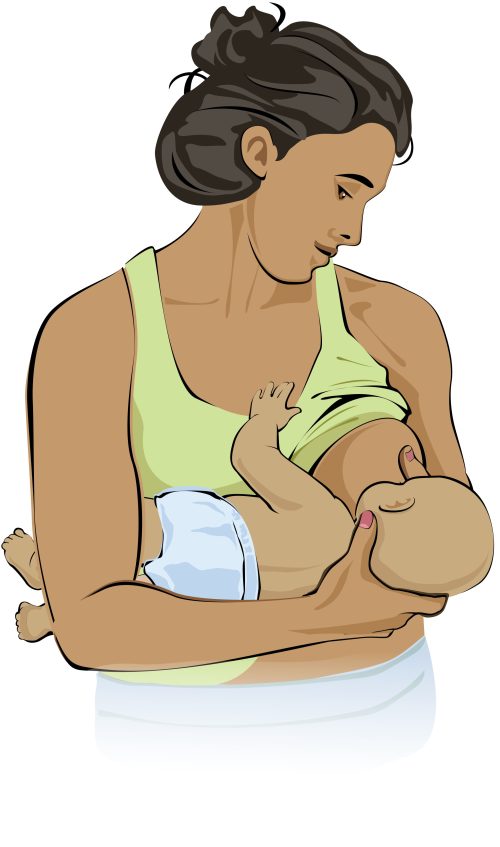
Cross Cradle Position
This position works well if:
- you and your baby are learning to breastfeed
- your baby was born full term, premature and small or has low muscle tone
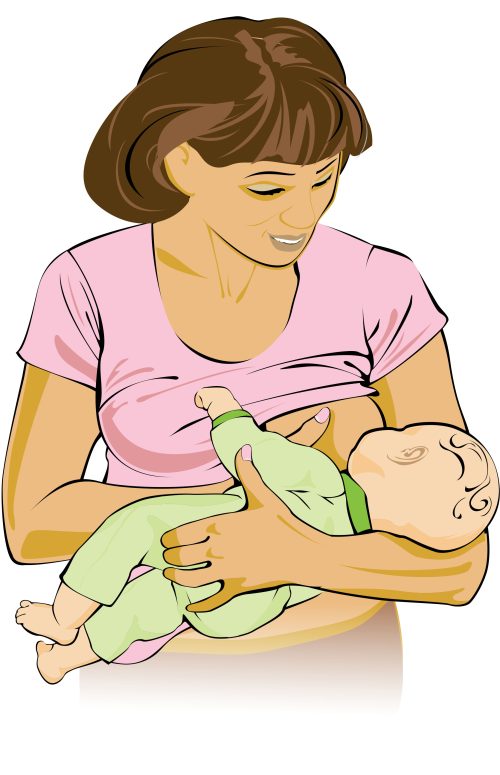
Cradle Position
This position works well if:
- you feel comfortable breastfeeding and baby is latching well
Football Position
This position works well if you:
- have a Caesarean birth
- have difficulty maintaining a latch
- have a premature or small baby
- have a baby with low muscle tone, weak rooting reflex or suck
- have large breast
- have sore nipples
- feeding twins at the same time
Side-Lying Position
This position works well if you:
- find it too painful to sit
- want to rest while breastfeeding
- had a Caesarean birth
- want a position that is easy to learn
Breastfeeding Positions - HealthLinkBC
Video: Breastfeeding Position (04:14). Reproduced by permission of Healthy Families BC
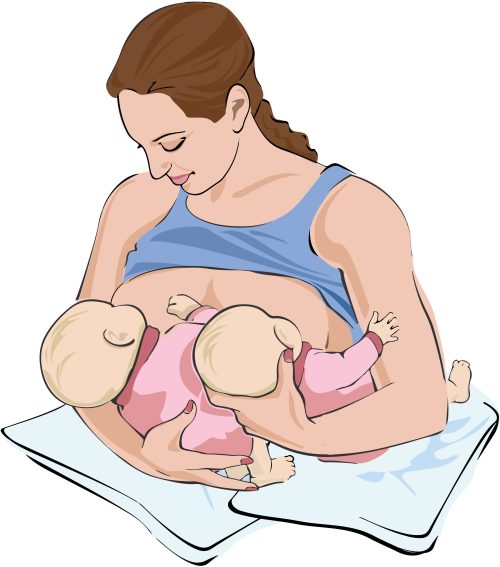
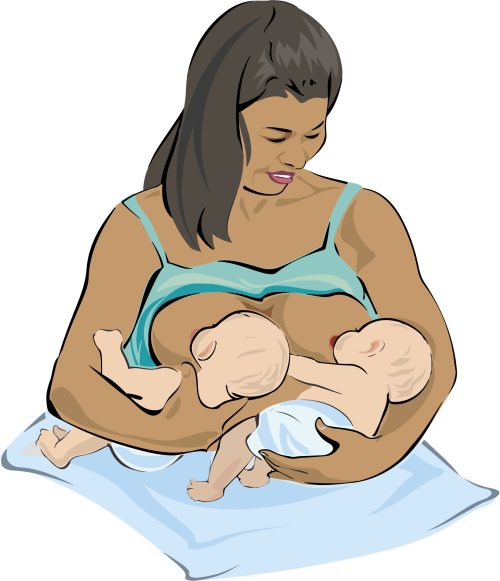
Breastfeeding Positions for Multiples
During your hospital stay, it can be helpful to learn how to breastfeed one baby at a time. This gives each baby a chance to learn how to latch and feed well and helps you build confidence. Once you are comfortable feeding each baby on their own you may choose to breastfeed two babies at the same time. Learning to feed multiples together takes time and practice.
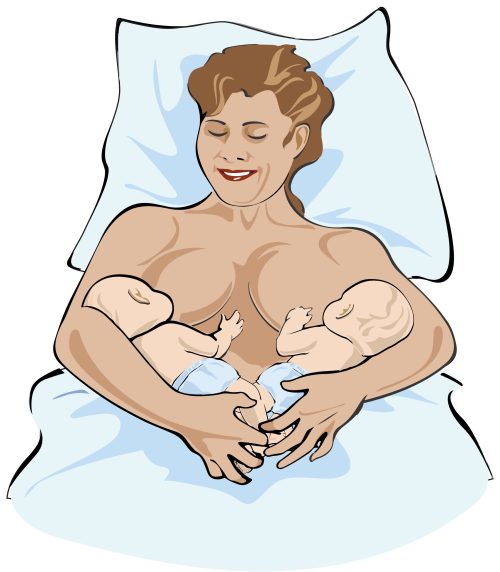
V-Hold
This position works well:
- for nighttime feedings
- anytime to encourage baby-led latching
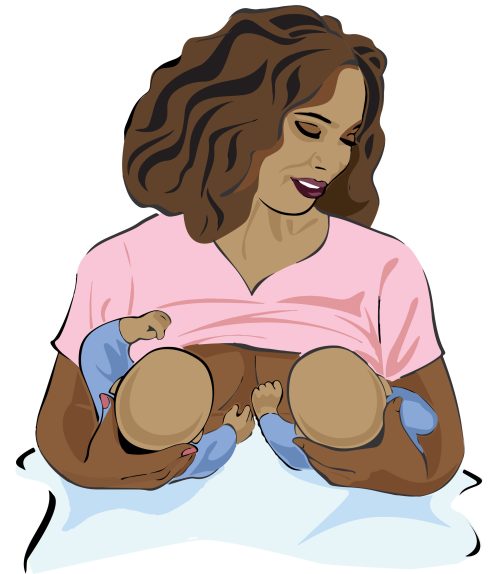
Double Football Hold
This position works well if:
- you had a Caesarean birth and want to avoid pressure on your incision
Combination Cradle/Football Hold
This position works well if:
- one or both of your babies have trouble latching
Criss-Cross or Double-Cradle Hold
This position works well if:
- you are comfortable with breastfeeding
- your babies are latching well
- your babies are alert and awake
Parallel Hold
This position works well if:
- one or both of your babies have difficulty latching
Date modified: October 1, 2026