

Etobicoke York Community Council and City Council approved changes recommended through the Maple Leaf and Neighbourhood Rustic Streets Plan. View the staff reports at 2026.EY31.11, 2026.EY31.12, 2026.EY32.20, 2026.EY33.42., and 2025.EY25.25.
In consultation with the local community, the Maple Leaf and Rustic Neighbourhood Streets Plan identified, prioritized and recommended changes to traffic operations and street design to support road safety for vulnerable road users across the neighbourhood.
July 2026: Staff were requested to report to Etobicoke Community Council about the feasibility of implementing a left-turn prohibition from Jane Street onto Maple Leaf Drive during peak periods. Turn prohibitions were not recommended by staff due to neighbourhood impact. Etobicoke Community Council received the report for information (EY33.42).
May 2026: Etobicoke Community Council approved the installation of traffic calming (speed humps) on Liscombe Road (EY32.20). City Council also adopted additional traffic safety improvements including a new pedestrian crossover on Maple Leaf Drive and changes to Community Safety Zones related to the relocation of St. Fidelis Catholic School (EY31.12).
April 2026: Etobicoke Community Council adopted the Maple Leaf and Rustic Neighbourhood Streets Plan (EY31.11).
September 2025: Etobicoke Community Council approved the installation of traffic calming (speed humps) on Grovedale Avenue (EY25.25).
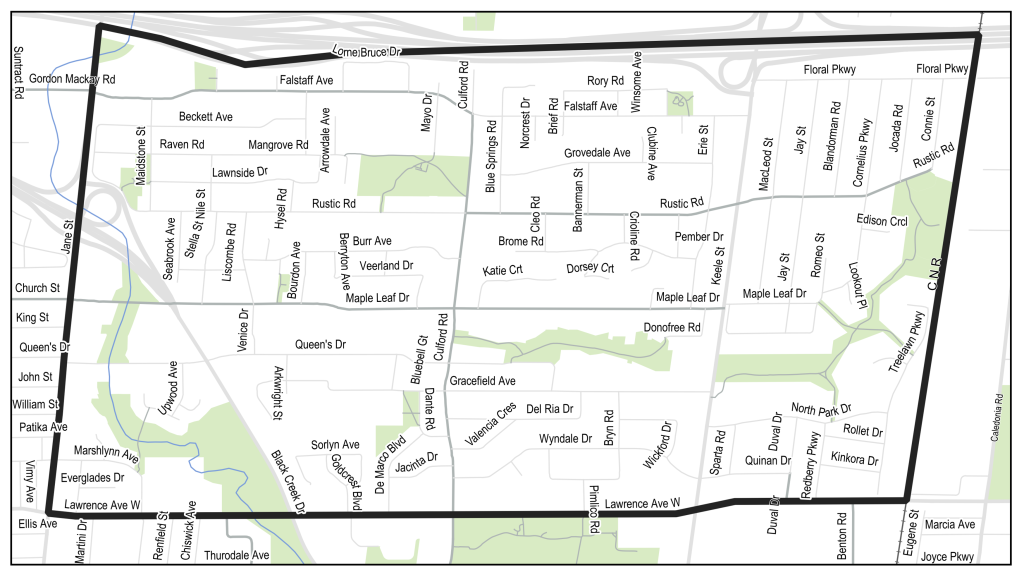
The area studied by the Maple Leaf and Rustic Neighbourhood Streets Plan covered the area located between Jane Street to the west, the rail corridor to the east, Highway 401 to the north, and Lawrence Avenue West to the south.
In 2020, the Etobicoke York Community Council directed City staff to work with the Maple Leaf and Rustic communities to develop a comprehensive plan to address community concerns regarding traffic safety and mobility.
Neighbourhood Streets Plans (NSPs) serve neighbourhoods where traffic and travel patterns challenge the safety and mobility of people using the streets. Through the NSP process, a team of City staff work with communities to identify local issues and opportunities, prioritize the greatest needs, and recommend changes to traffic operations and street designs. NSPs consider the needs of all road users and emphasize the safety of vulnerable road users such as seniors, school children, and people walking and cycling.
Public consultation on the Maple Leaf and Rustic Neighbourhood Streets Plan included two phases of public consultation, a Local Advisory Committee, and a consultation update on how the proposed changes have been revised based on feedback from the Local Advisory Committee.
All previous consultation materials are available under the Public Consultation tab.
The City of Toronto invited local residents, businesses and organizations to learn more and provide feedback on the Maple Leaf and Rustic Neighbourhood Streets Plan. Feedback from the public, along with technical and policy considerations, was used to inform City staff recommendations to City Council.
Consultation took place over three phases between Fall 2023 and December 2025:
Information, reference materials and reports on public consultation activities are posted below.
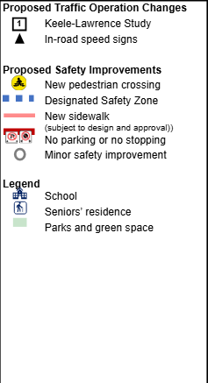
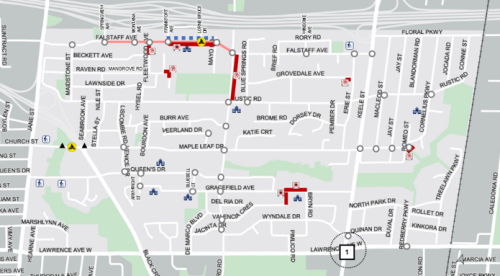
Etobicoke York Community Council and City Council adopted the Maple Leaf and Rustic Neighbourhood Streets Plan (EY31.11) and City Council adopted components of the Streets Plan that require City Council approval (EY31.12). Following that decision, staff will proceed with implementing these changes:
Throughout the project residents raised concerns about traffic delays at the Keele Street and Lawrence Avenue West intersection affecting the rest of the neighbourhood.
A separate detailed study focused on this intersection is underway. The study will investigate signal timing changes, bus stop relocations, changes to intersection layout, and restrictions at nearby intersections and driveways.
Comments received during public consultation and from the Local Advisory Committee will be considered. Potential changes may include:
Residents have raised concerns about east-west traffic infiltration in the area, however, changes to address these concerns would also impact resident access. Previous feedback is clear that residents are not in favour of changes that would limit local resident access. During public consultation, more than half of respondents to the survey indicated that they were very unsupportive of any changes to street direction, turn restrictions or directional closures.
It is not feasible to introduce new restrictions from Jane Street and Keele Street without limiting access for residents.
Traffic calming locations (speed humps and speed cushions) are identified as a future opportunity for consideration to slow speeds and discourage east-west infiltration on specific streets on a case-by-case basis through the Councillor’s Office.