

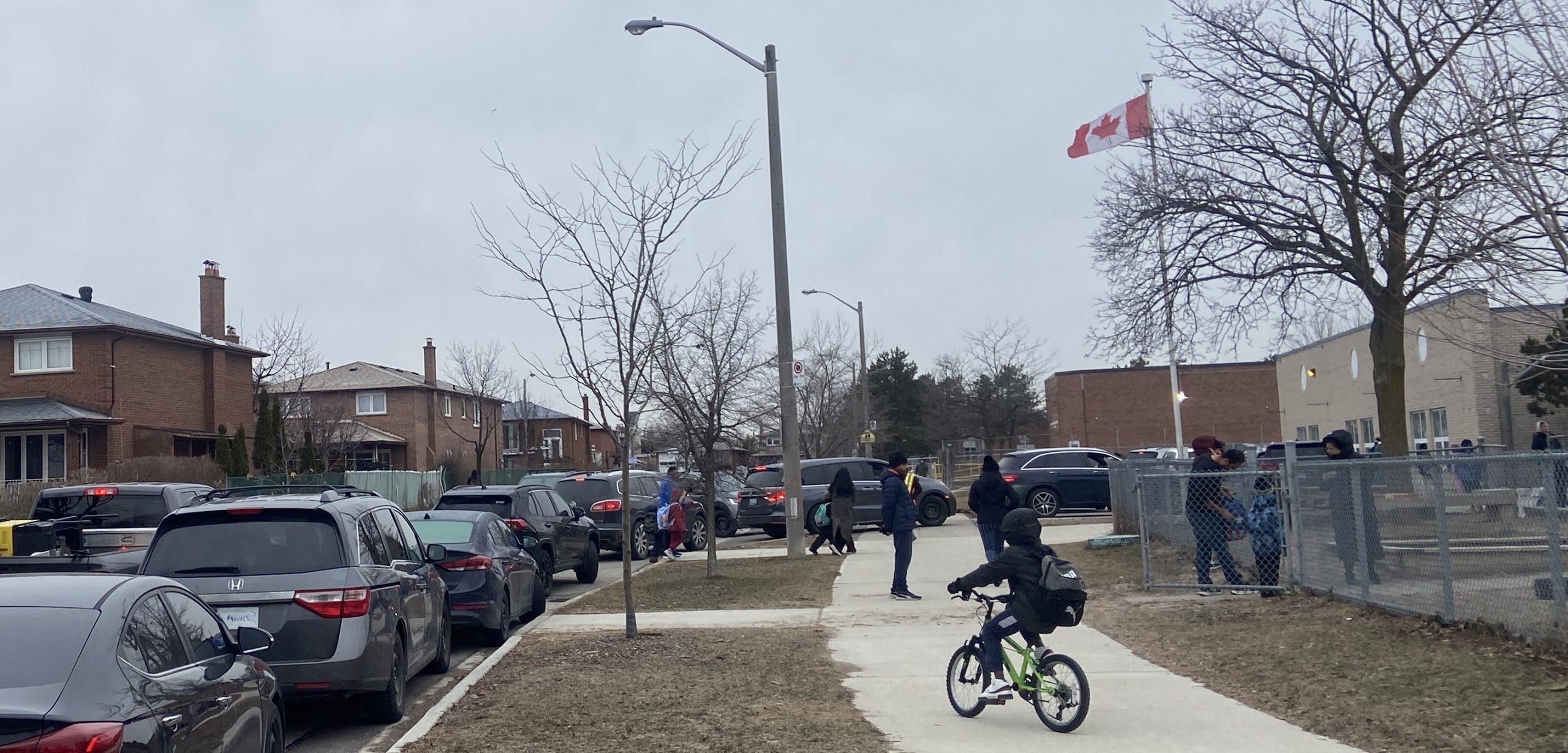
In consultation with the local community, the City is developing a Neighbourhood Streets Plan for the Mount Olive neighbourhood. The Streets Plan will recommend changes to traffic operations and road design to support safety and mobility for everyone using the streets.
The Mount Olive Streets Plan will investigate five main areas of improvement:
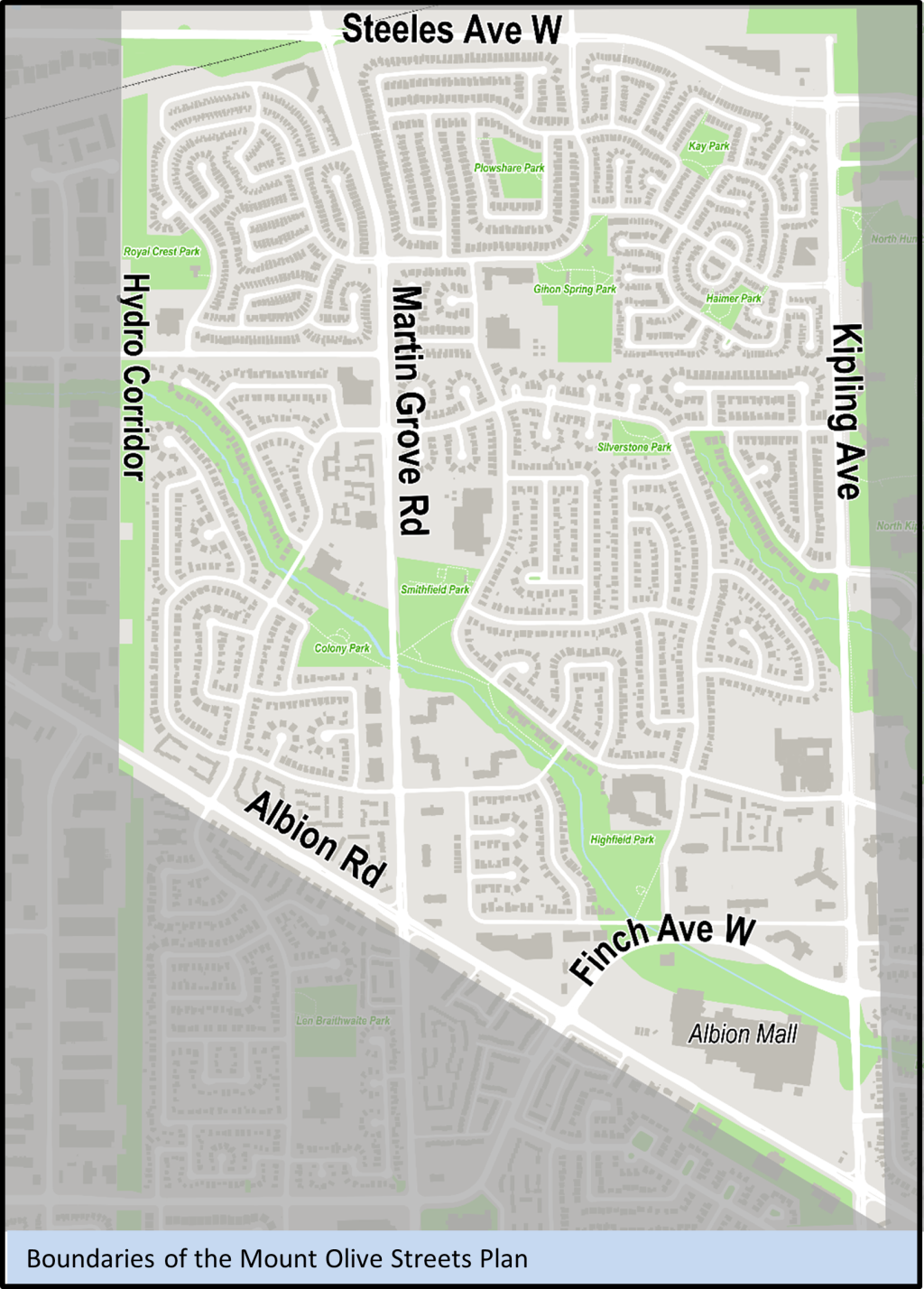
The Mount Olive Streets Plan project area is located between Steeles Avenue West, Kipling Avenue, Albion Road and the Etobicoke Hydro Corridor. The City invites residents to learn more about the project and participate in identifying issues, opportunities, and ideas for the neighbourhood.
The Mount Olive neighbourhood was nominated for the Neighbourhood Streets Plan program by the City Councillor’s Office (Ward 1 – Etobicoke North) and residents. Issues identified in the nomination were:
What is a Neighbourhood Streets Plan?
Neighbourhood Streets Plans (NSPs) service neighbourhoods where traffic and travel patterns challenge the safety and mobility of people using the streets. Through the NSP process, a team of City staff work with communities to identify local issues and opportunities, prioritize the greatest needs, and recommend changes to traffic operations and street designs. NSPs consider the needs of all road users and emphasize the safety of vulnerable road users such as seniors, school children, and people walking and cycling.
Street Plans follow several steps outlined below, and public consultation takes place in two stages.
Street Plans result in short-term actions which can be made using temporary, flexible materials like signs, asphalt, paint, and bollards, and identify longer term changes which can be accomplished alongside future programmed road work.
The outcomes of each Streets Plans are different based on local conditions and the needs of each neighbourhood. Generally, Street Plans recommend actions related to motor vehicle speed and volume management, and traffic safety conflicts on local streets. Street Plan recommendations are informed by the City’s Traffic Calming Guide, Vision Zero Action Plan, and Complete Streets Guidelines.
The City of Toronto is inviting local residents, businesses and organizations to learn more and provide feedback. Consultation will take place in two phases.
Information, reference materials, and reports on public consultation activities will be posted here. Public and interest group opinions, along with technical and policy considerations, are used to inform City staff recommendations and decisions to be made by City Council.
A Public Drop-In Event was held on June 11, 2026, that included an opportunity to speak with project staff and view information panels. View the consultation materials below.
To receive project updates by email, please contact mountolivestreets@toronto.ca to be added to the list.