

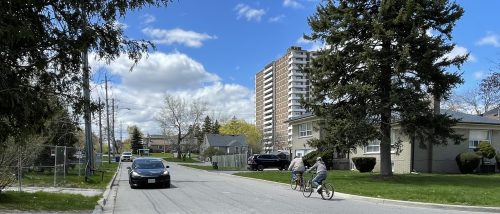
In consultation with the local community, the City is developing a Neighbourhood Streets Plan for the West Agincourt neighbourhood.
The West Agincourt Streets Plan will investigate five main areas of improvement:
The West Agincourt Streets Plan project area is located between Finch Avenue (north), Midland Avenue, the East Highland Creek, and Brimley Road (east), the CPR rail corridor (south), and Kennedy Road (west).
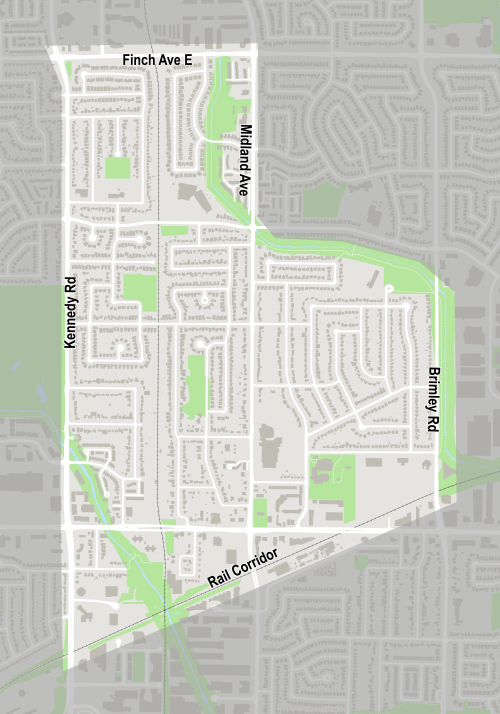
The West Agincourt neighbourhood was nominated for a Neighbourhood Streets Plan (NSP) by members of the local community. It was selected through a process designed to allocate the available resources for NSPs in a fair and transparent manner, considering equity, impact, alignment with planned roadwork, and community support.
As part of the nomination, residents raised concerns about excessive speeding, aggressive driving, excessive traffic volume on local streets, the need for safety improvements for walking and cycling, frequent collisions or near-misses and safety around schools.
What is a Neighbourhood Streets Plan?
Neighbourhood Streets Plans (NSPs) service neighbourhoods where traffic and travel patterns challenge the safety and mobility of people using the streets. Through the process of a Streets Plan, a team of City staff work with communities to identify local issues and opportunities, prioritize the greatest needs, and recommend changes to traffic operations and street designs. Streets Plans consider the needs of all road users and emphasize the safety of vulnerable road users such as seniors, school children, and people walking and cycling.
More information on the nomination and selection process can be found on the program web page.
Streets Plans follow the steps outlined below, and public consultation takes place in two stages.
Streets Plans result in short-term actions which can be made using temporary, flexible materials like signs, asphalt, paint, and bollards, and identify longer term changes which can be accomplished alongside future programmed road work.
The outcomes of each Streets Plan are different based on local conditions and the needs of each neighbourhood. Generally, Streets Plans recommend changes related to road safety for vulnerable road users, motor vehicle speed, cut-through traffic, transportation options and curbside activity. Recommendations are informed by the City’s Traffic Calming Guide, Vision Zero Action Plan, and Complete Streets Guidelines.
The City of Toronto is inviting local residents, businesses and organizations to learn more and provide feedback on the West Agincourt Streets Plan. Consultation will take place over two stages between Summer 2026 and Summer 2027.
Information, reference materials, and reports on public consultation activities will be posted here. Public and interest group opinions, along with technical and policy considerations, are used to inform City staff recommendations and decisions to be made by City Council.
A Public Drop-In Event was held on June 24, 2026 that included an opportunity to speak with project staff and view display boards. View the event materials below:
To receive project updates by email, please contact WestAgincourtStreets@toronto.ca to be added to the list.