City of Toronto  
HomeContact UsHow Do I...? Advanced search Go
Living in TorontoDoing businessVisiting TorontoAccessing City Hall
Get involved
Coordinated Street Furniture
New renderings (PDF)
Background
Public workshops
Consultation report
Design community consultation
Industry consultation
Contact us
   
   
Coordinated Street Furniture


This site was last updated July 20, 2010

Information Pillar
INFOTOGOVisitors to Toronto will now have quick access to information about the city with the touch of a screen as five new INFOTOGO information pillars are rolled out as part of the City’s Coordinated Street Furniture Program.

The INFOTOGO pillars have been installed in high traffic pedestrian areas near popular tourist attractions and shopping destinations. Each pillar features a touch-screen that will allow people to identify their information needs and have the information and or maps to a requested location posted on the screen in front of them.

The five pillars are located at:

  • 40 Dundas St. W
  • 777 Bay St.
  • 750 Bloor St. W
  • 280 Spadina Ave.
  • 220 Dundas St. W.

The touch-screens will also provide general information to help the public navigate the city such as how to access public transit, a water ferry to Toronto Island and requirements for driving and cycling in Ontario. Contact information is also available on the screen, including phone numbers and web addresses because we live in an era where people carry web-enabled cell phones so they can access information and make decisions quickly.


Automated Public Toilet
Mayor David Miller was joined by Councillor Adam Vaughan (Ward 20 – Trinity Spadina) and Luc Sabbatini President of Astral Media Outdoor today to officially open the City of Toronto’s first automated public toilet located at the north-west corner of Rees Street and Queen’s Quay West.

Automated Public Toilet

A total of 20 toilets will be installed across the City over the next 20 years as part of the Coordinated Street Furniture Program.

“The installation of this automated public toilet is a positive development for both residents and visitors to the city,” said Mayor David Miller. “It will improve the basic level of service offered by municipalities, provide comfort and convenience, and promote better public hygiene.”

The automated public toilet is activated by inserting a $0.25 coin or token. Each patron is allocated 20 minutes per use, with the time clearly communicated through a three-step audible warning process and a visual blinking light. After each patron exits, the unit will seal itself and begin a self-cleaning cycle. The unit is equipped with several sensors, and the cleaning procedure will not start if a patron is detected.

The automated public toilet will be regularly maintained, with service personnel visiting the unit three times per day. The public can also request a maintenance call by dialing the phone number posted on the wall of the public toilet.

The public toilet is well lit both inside and out, and offers barrier-free access to fully comply with the City of Toronto’s accessibility guidelines.

One of the public benefits to the City provided through the contract with Astral Media was the provision of free access for homeless people to the street furniture’s new public toilets. Streets to Homes outreach workers will be provided with tokens which they will distribute directly to their clients to be used at the first public toilet at Rees Street and Queen’s Quay West, and at future toilets, as they are installed.

Space on one exterior wall of the unit is fitted with an illuminated advertising window to be used solely by city services. The unit will not feature any advertisements.

Program Status
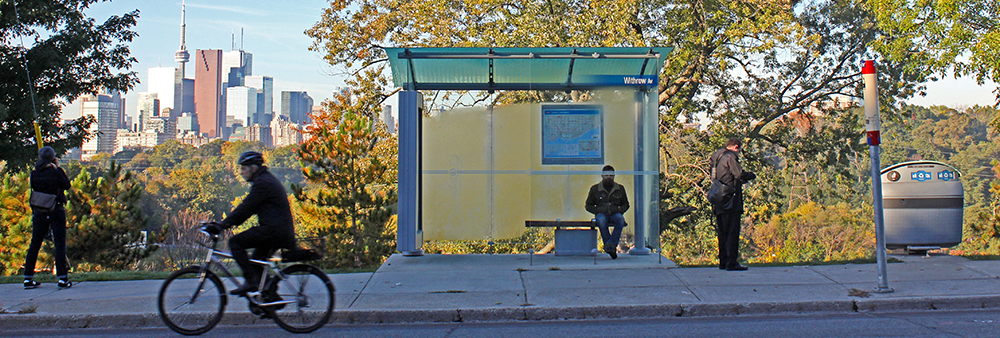
In 2007 the City of Toronto entered into a 20 year Agreement with Astral Media Outdoor LP for the supply, manufacture, installation and maintenance of over 25,000 street furniture elements.  The coordinated street furniture comprises a range of transit shelters, litter/recycling receptacles, tourist/area information pillars, public notice structures, benches, bicycle parking stands, multi-publication boxes and automated public washrooms.

The Street Furniture Management Group within the newly established Public Realm Section, Transportation Services in consultation with a variety of stakeholders including elected officials, community groups, and the public, have installed over 5,000 street furniture elements in the Public Right of Way to date.

June 9, 2008 - Mayor David Miller unveils City’s new street furniture


Introducing Toronto's New Street Furniture (PDF)
You'll need the free Adobe Acrobat reader to view PDF files. Get the Free Acrobat Reader

The City entered into an agreement with Astral Media last fall through a comprehensive Request for Proposals (RFP) process. City staff, with advice from a variety of technical experts, Design Jury members and public input received during the proposal evaluation period last year when Council was considering the bids, have been working with Astral, Jeremy Kramer, Principal, Kramer Design Associates, the award-winning Toronto designer of its street furniture elements, and its chief logistical consultant, the Toronto firm IBI Group.

The renderings follow the evolution of Toronto’s street furniture from its existing state through to the latest design refinements. Emphasis is on how the elements initially proposed by Astral have been developed and refined to the current prototype stage.

The goal is to incorporate refinements which improve the aesthetics, functionality and ergonomics of the various street furniture elements. The coordinated street furniture comprises a range of transit shelters, litter/recycling receptacles, tourist/area information pillars, public notice structures, benches, bicycle parking stands, multi-publication boxes and automated public washrooms (coming in 2009).

Installing New Street Furniture
Installation of the new street furniture on Toronto’s streets will begin this summer and continue over the next 20 years. The elements are of high quality in both design and materials, and for the first time, Toronto will have compatible street furniture elements designed to work together that are functional, adaptable, incorporate sustainability features and will address the City’s varied urban form and scale. By following the “Vibrant Streets” placement guidelines, the street furniture will be installed on the City’s sidewalks and boulevards in a manner that enhances its function and accessibility, and respects the needs of pedestrians of all types.

Project Overview
View Street Furniture Launch Backgrounder (PDF).
You'll need the free Adobe Acrobat reader to view PDF files. Get the Free Acrobat Reader

"Vibrant Streets" – Street Furniture Placement
Equally important to the substantial elevation in design quality of the street furniture elements themselves is the care and attention to detail being applied under this program in locating them on Toronto streets to enhance and improve the overall pedestrian realm. The principles are established in the "Vibrant Streets” document (PDF).

City Council Approvals
City Council, at its meeting of May 23, 24 and 25, 2007, adopted the staff report and the Executive Committee recommendations that authorized award of the contract to Asstral Media Outdoor LP. The City entered into a 20 year Agreement with Astral Media Outdoor LP for the supply, manufacture, installation and maintenance of nearly 26,000 pieces, which took effect on September 1, 2007. In addition, the direct revenues to the City from this program are being applied to enhance and beautify the City’s public places, through such initiatives as increased maintenance of street trees, development of tourist wayfinding, landscaping City boulevards and neighbourhood beautification projects. Previous Council consideration and approvals initiating the program and establishing its design and policy directions are also available.

Learn more about the Program

Contact us
All media questions may be directed to:

Steve Johnston
Senior Communications Co-ordinator
Tel: 416-392-4391
Email: sjohnsto@toronto.ca

For more Information please see the following contacts:

  • Street Furniture Maintenance Issues
    William Janes wjanes@toronto.ca or 416-392-1565

Back to the top


Toronto maps | Get involved | Toronto links | 311 | Comment | Subscribe | Privacy statement
© City of Toronto 1998-2010