

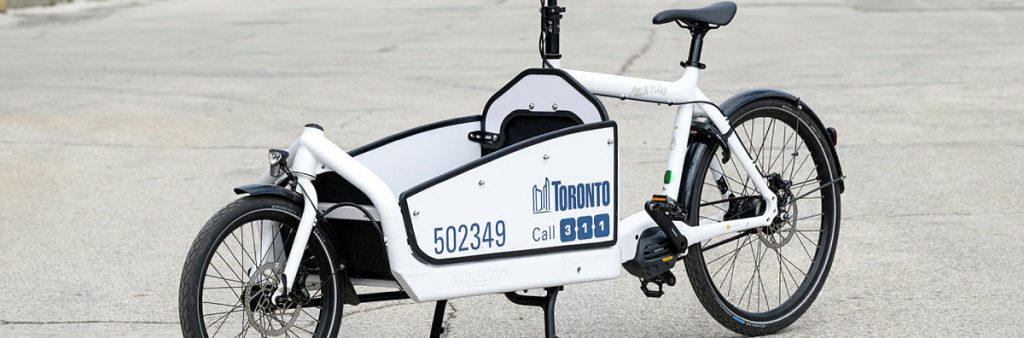
Cargo bikes are bicycles, tricycles and quadricycles that are specifically designed to transport cargo or people. Their purpose-built frames and increased load-bearing capacity distinguish them from conventional bicycles.
There are many different types of cargo bikes. Some cargo bikes are powered by human pedalling alone whereas others have electric assist capabilities to supplement human pedalling (these are referred to as ‘cargo e-bikes’ or ‘cargo power-assisted bicycles’). Many different configurations exist with cargo or passengers being carried either in front of the rider or behind the rider in buckets, containers or on specially designed racks.
Cargo bikes can be used for a range of different purposes from completing last-mile deliveries to transporting children to school to carrying groceries home from the store, and many more. Many people – in Toronto and around the world – have found cargo bikes to be a viable alternative to a car for meeting their urban mobility needs.
All people using cargo bikes in Toronto must adhere to rules that govern their use.
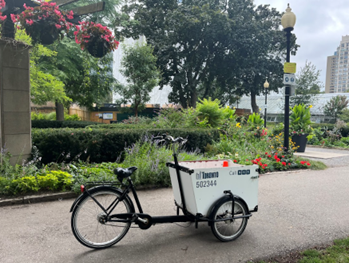 In March 2021, the Ministry of Transportation of Ontario launched a pilot program for cargo e-bikes which allows Ontario municipalities to choose where and how these vehicles can be used. In June 2021, the City opted into the pilot program permitting the use of cargo e-bikes in Toronto for personal or business use. In December 2021, the City expanded its participation in the pilot to include large cargo e-bikes that weigh more than 120 kg (unladen) and outlined principles and conditions for companies deploying large cargo e-bikes in the City (see Attachment 1 of the December 2021 Council report).
The provincial pilot will run for a 5-year period and is due to conclude on March 1, 2026. The City of Toronto is monitoring the use of these vehicles throughout the pilot period.
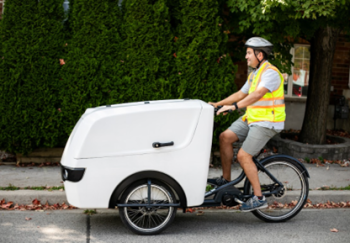 The Ministry of Transportation of Ontario has established rules around the use of cargo bikes in the province, including the vehicle’s weight and size limits, rider age, ability to carry passengers, number of wheels and electrical output – among others.
The City of Toronto has also incorporated a number of by-laws that govern cargo e-bike use within the City. Complete information can be found in each of the City of Toronto Municipal Code chapters linked below. Several highlights are also included for ease of reference.
Municipal Code 950: Traffic and Parking
Municipal Code 886: Footpaths, Pedestrian Ways, Bicycle Paths, Bicycle Lanes and Cycle Tracks
Municipal Code 743: Streets and Sidewalks, Use of
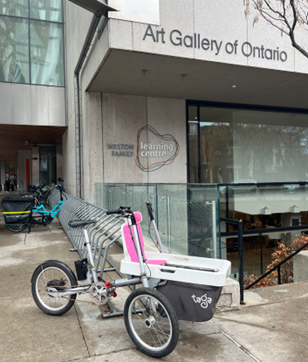
Cargo bikes, like all other bicycles, cannot be parked in a manner that interferes with the use of City property. This includes ensuring that the pedestrian clearway – the portion of a sidewalk that is intended for pedestrian travel – is not blocked when parking a cargo bike. Cargo bikes can only be parked in a manner that allows for all pedestrians, including pedestrians using a wheelchair, mobility device or white cane, to easily traverse the surrounding sidewalk.
 Cargo bikes can have a variety of benefits when being used for personal or commercial purposes:
 Since 2022, the City of Toronto has been supporting parcel delivery companies switch from gas-powered vehicles to cargo e-bikes when making last mile deliveries.
Currently three parcel delivery companies use e cargo bikes in Toronto:
As part of the City of Toronto’s efforts to encourage parcel delivery companies to replace gas-powered delivery vans with electric assisted cargo bikes, the City has launched a Toronto’s on-street mini hub program that allows for couriers to operate mini logistics hubs.
Learn more about the Toronto Parking Authority’s off-street mini-hub program.
Courier / delivery companies interested in learning more about the City’s mini-hub or cargo bike initiatives can contact: mini-hubs@toronto.ca.
Cargo bikes can currently be parked on sidewalks, provided they do not create a barrier for pedestrians (see “Regulations Regarding the Use of Cargo E-Bikes” for more details) or otherwise interfere with the use of City property or permitted encroachments. Due to the larger size of cargo bikes relative to conventional bicycles and the narrow sidewalks that exist in many parts of the City, it may not be possible to park a cargo bike at all locations where conventional bikes can be parked. Cargo bike riders must exercise discretion in determining where to park their cargo bike.
Cargo bikes are also able to park in on-street parking areas including, Delivery Vehicle Parking Zones and Commercial Loading Zones, subject to the regulations governing these zones. On-street parking does not however, offer anything to lock a cargo bike to and the City is not responsible for bikes that are stolen or damaged.
Cargo bikes are not permitted to park overnight in permit parking areas. Residents who live on streets with permit parking can request a cargo bike corral to be installed on their street to enable cargo bike parking. Installation of these corrals is not guaranteed and is reviewed on a case-by-case basis. Residents interested in having a cargo bike corral installed in a permit parking zone on their street can contact their local Councillor or cycling@toronto.ca.