Up to $6,650 per property is available for eligible flood protection work that helps safeguard your home from basement flooding. Learn about the Basement Flooding Protection Subsidy Program.
Every home is at risk of basement flooding, even if it has not happened before. Basement flooding can occur during a heavy rainfall, or when snow and ice is melting.
The good news is that you can take steps to help prevent it from happening.
Outside the House
Keep water out
Seal cracks or leaks in walls, floors, windows, window wells and your home’s foundation.
Keep snow melt away
Keep melting snow away from your home so that water does not seep in through cracks in the foundation, basement walls or windows.
Shovel the snow away from your home’s foundation and onto a lawn (not the road), if able to do so.
If it is safe to do so, clear debris from roadside catch basins — the square sewer grates on the road — to help melting snow enter the storm sewer.
Maintain eavestroughs and downspouts
Clear eavestroughs and downspouts of leaves, snow, ice and other debris that prevent drainage.
Disconnect your downspouts from the sewer system, where feasible (without negatively affecting neighbouring properties or creating an area where water will pool on a sidewalk or driveway).
Make sure your disconnected downspouts are draining properly, ideally two metres from your foundation walls.
Improve drainage around your home
Ensure the grading around your home slopes away from the foundation wall to help drain water away from your home (without negatively affecting neighbouring properties).
Increase the green space around your home with native plants and shrubs and install porous pavement to help absorb rainwater and melted snow.
Inspect and maintain weeping tiles
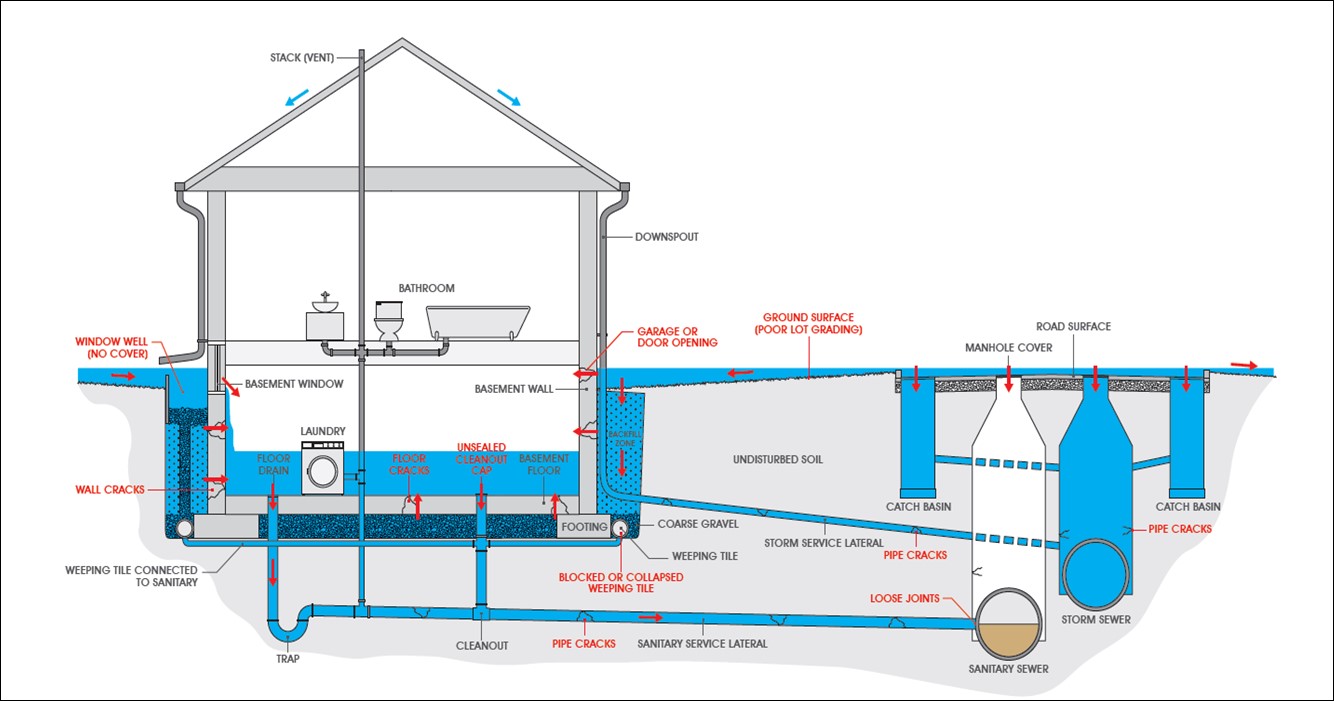
Weeping tiles (also known as drain tiles) are pipes located underground around your home’s foundation. They have small holes that collect groundwater and rainwater to keep it from entering your home. They carry away the water through a solid pipe or send it into a sump pit in your basement, where a sump pump removes it.
Repair or replace damaged weeping tile systems.
Check the corners of your basement regularly and if the floor is damp/wet, your weeping tiles may not be working properly and may need to be repaired or replaced.
If your weeping tiles are connected to the sewer system, it is recommended that you disconnect it and install a sump pump and/or backwater valve (see ‘Maintain your plumbing system’ under the Inside the House for more information).
If you are not sure if you have weeping tiles or whether they are connected to the sewer system, contact a licensed plumber for help.
Keep drainage routes clear
Safely clear debris from roadside catch basins (grates) to help water enter the storm sewer.
Ensure drainage swales (shallow ditches) between properties are maintained and clear of obstructions.
Inside the House
Understand your plumbing
Homeowners are responsible for plumbing from the property line to inside the home. You can hire a licensed plumber to assess your property and help you identify the location and condition of key features of your household plumbing system, including:
the sewer service line (connects the plumbing in your home to the main sewer on the street)
your backwater valve or sump pump, how to maintain these devices and keep them operational during storms and power outages
Maintain your plumbing system
Ensure that your plumbing and drainage systems are in good working condition and understand how they function and how to maintain them.
Fix cracks, blockages or other condition problems.
Avoiding creating clogs:
Never pour fats, oils and grease down the drain.
Do not flush dental floss, Q-tips or other personal care products (such as “flushable” wipes, condoms or tampons).
Learn more about what not to flush and how to dispose of these items.
Hire a City-licensed plumber to:
inspect the full length of the sanitary pipe under the basement floor for weeping tile connections
install a backwater valve or sewage ejector pump*, ensuring the weeping tile/foundation drain, if present, is connected downstream of the backwater valve
install a properly-sized sump pump and piping.
Ensure proper and regular maintenance of the above devices in your home, including:
annual cleaning of the backwater valve via the clean-out ports
consider installing a back-up power source for your sump pump.