Properties have a lifetime maximum subsidy amount for each type of eligible work. If you’re unsure whether your property has already received subsidies, you can check its subsidy history by contacting the City at BasementFlooding@toronto.ca or 416‑338‑7668.
Disconnecting the downspouts from your property’s eavestrough system is not eligible for a subsidy.
The following maximum subsidy amounts apply to the eligible work below if completed on or after November 12, 2025. You can apply for these expanded subsidies starting May 1, 2026.
The City offers a subsidy of up to 80 per cent of the invoiced cost, up to a maximum of $500, for a one-time home plumbing assessment.
During the assessment, a professional plumber will provide information about issues with the home’s internal plumbing that could contribute to basement flooding.
You will need to have your licensed plumber complete the Home Plumbing Assessment Form. You are not required to implement any of the plumber’s recommendations to receive a subsidy for the home plumbing assessment.
The City offers a subsidy of up to 80 per cent of the invoiced cost, to a maximum of $1,600 per device (maximum two devices), to help offset the cost of the following:
The subsidy only covers up to two new devices (new installation or replacement), even if additional devices are installed. Eligible costs include labour, materials and taxes.
The City offers a subsidy of up to 80 per cent of the invoiced cost, to a maximum of $2,250 (maximum one device), to help offset the cost of the following:
If installing a battery backup for your sump pump, an additional subsidy is available for up to 80 per cent of the invoiced cost, to a maximum of $300.
If installing a sump pump and a built-in or separate battery backup, your contractor must itemize the cost of each component separately on the invoice.
The subsidy only covers up to one new device (new installation or replacement), even if additional devices are installed. Eligible costs include labour, materials and taxes.
The City offers a subsidy of up to 80 per cent of the invoiced cost, to a maximum of $400 including eligible labour, materials and taxes, to help offset the cost of disconnecting foundation drains (weeping tiles) from the City’s sewer system by severing and capping the underground sewer connection.
The following maximum subsidy amounts apply to the eligible work below if completed before November 12, 2025.
The City offers a subsidy of up to 80 per cent of the invoiced cost, to a maximum of $1,250 (maximum one device), to help offset the cost of the following:
The subsidy only covers up to one new device (new installation or replacement), even if additional devices are installed. Eligible costs include labour, materials and taxes.
The City offers a subsidy of up to 80 per cent of the invoiced cost, to a maximum of $1,750 (maximum one device), to help offset the cost of the following:
The subsidy only covers up to one new device (new installation or replacement), even if additional devices are installed. Eligible costs include labour, materials and taxes.
The City offers a subsidy of up to 80 per cent of the invoiced cost, to a maximum of $400 including eligible labour, materials and taxes, to help offset the cost of disconnecting foundation drains (weeping tiles) from the City’s sewer system by severing and capping the underground sewer connection.
Before work starts, verify that your contractor and any sub-contractors have a valid City of Toronto business licence using the Business Licence Lookup tool or by calling 416-392-6700.
If installing a sump pump and a built-in or separate batter backup, your contractor must itemize the costs of each component separately on the invoice.
If you experience any technical issues with the online form, email BasementFlooding@toronto.ca.
Homeowners are strongly encouraged to conduct due diligence before hiring a contractor. It is recommended you obtain a minimum of two quotes as well as references before hiring a contractor.
Before work starts, verify that your contractor has a valid City of Toronto business licence using the Business Licence Lookup tool or by calling 416-392-6700. If your contractor does not have a valid City of Toronto licence, you will be denied funding for the work completed.
Different types of contractors are licensed to perform different types of eligible work:
| Contractor Licence | Home Plumbing Assessment | Backwater Valve | Sump Pump | Pipe Severance & Capping |
|---|---|---|---|---|
| Plumbing Contractor (T94) | x | x | x | x |
| Plumbing and Heating Contractor (T92) | x | x | x | x |
| Drain Contractor (T87) | x | x | x | x |
| Building Renovator (T85) | x | x |
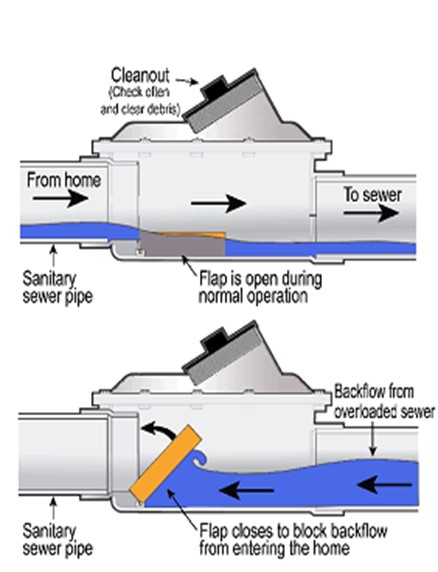
Backwater valves are designed to close the sewer line during periods of heavy rain to prevent water from entering your home. When the valve is closed, do not use any plumbing fixtures (such as toilets, sinks, dishwashers and washing machines) as water will not drain and will back-up into your home. You may wish to install an alarm so that you know when the valve is closed. To keep your backwater valve in good working order, it is important to maintain and regularly inspect it according to the manufacturer’s directions.
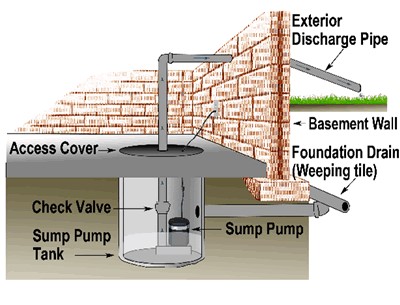
Sump pumps help pump water collected by the weeping tile system to an area outside. Make sure the sump pump empties onto a permeable surface (such as a lawn, garden or gravel surface) at least two metres from the foundation wall. Sump pumps can lose power during severe storms, so you may wish to consider a battery back-up. To keep your sump pump in good working order, it is important to maintain and regularly inspect it according to the manufacturer’s directions.