City of Toronto   *
HomeContact UsHow Do I...? Advanced search Go
Living in TorontoDoing businessVisiting TorontoAccessing City Hall *
*
* * * * * * *
Urban ForstryCity Forester's Office
blue bullet Forest Health Care
blue bullet Tree Planting
blue bullet City Owned Trees
blue bullet Private Trees
blue bullet Ravines and Natural Features
*  
Forestry operations
blue bullet North District
blue bullet South District
blue bullet East District
blue bullet West District
*  
Documentation & resources
blue bullet By-laws & Policies
blue bullet Forms
blue bullet Links
blue bullet FAQ
*  
* *
  * Urban Forestry  
  * * * * *
       
    Gypsy Moth Gypsy Moth European Gypsy Moth
The European Gypsy Moth (Lymantria dispar) is an introduced defoliating insect that is considered a major pest in North America.The caterpillar, or larva stage of the insect, eats the leaves of trees making them more susceptible to disease and damage from other insects. Learn more.


Sustaining and Expanding the Urban Forest: Toronto's Strategic Forest Management Plan


Toronto's Strategic Forest Management Plan was approved by City Council on February 20, 2013.

Toronto's urban forest includes all the trees within the city's boundaries that provide a wide range of environmental, ecological, social, cultural and economic benefits. Currently, Toronto has approximately 17,000 to 18,000 hectares of urban forest canopy cover provided by approximately 10.2 million trees that are a valuable resource to the city and the people who live, work and play here.

Being coined "a city within a park", the City of Toronto recognizes its extensive parks, treed and natural areas. This plan identifies the efforts required to achieve a healthy, sustainable urban forest with the goal of providing 40% canopy cover. Over the next 10 years, the plan will provide direction for actions to be taken to achieve the following goals:


Toronto's Strategic Forest Management Plan Cover
 
  • Increase canopy cover
  • Achieve equitable distribution
  • Increase biodiversity
  • Increase awareness
  • Promote stewardship
  • Improve monitoring.

    Learn More


High Park Prescribed Burn 2011
 

High Park Prescribed Burn

A prescribed (or controlled) burn is planned to take place in High Park sometime early to late April 2013.  The area proposed for the burn is 4 ha of High Park's natural areas.

Learn more
 
           
    Emerald Ash Borer Emerald Ash Borer (Photograph courtesy of the Canadian Food Inspection Agency)  

Emerald Ash Borer
The Emerald Ash Borer (EAB) which has devastated ash trees in southwestern Ontario and parts of the United States since its discovery in Detroit, Michigan in 2002, has been detected in the City of Toronto. The EAB is an introduced insect pest from Asia that attacks and kills all species of ash (genus: Fraxinus) trees. Learn more.


What you nee to Know about the Management of the emerald Ash Borer (EAB) Cover
 

Emerald Ash Borer – What you need to know

The Ontario Ministry of Natural Resources, Ontario Commercial Arborist Association and the City of Toronto partnered to develop an educational resource for people who will be impacted by the emerald ash borer. This booklet aims to help you determine if you have ash trees on your property, if they have been infested by the emerald ash borer and advise of options for management

Learn more


    How to Hire an Arborist?  
    Arborist Trimming a Tree  

What is an arborist?

An arborist is a professional that is knowledgeable about tree biology and physiology and has experience in the practice of arboriculture, which is the cultivation, management and study of individual trees.

Learn More...


    What is the Urban Forest?  
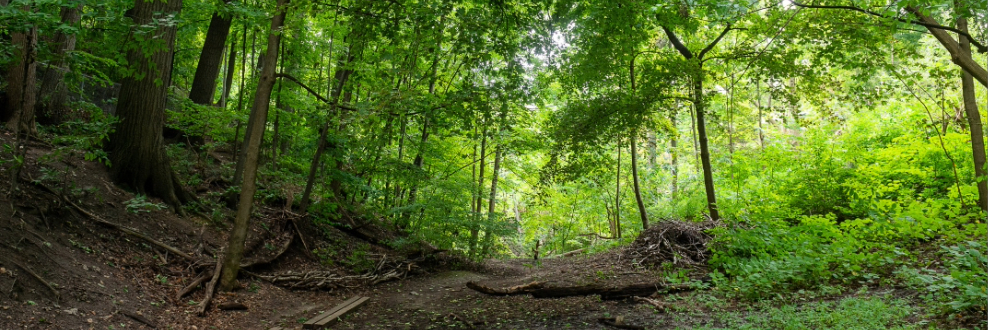
    Toronto is a city of trees. More than four million trees dominate our ravines, line our boulevards and beautify our parks. Six million more trees are located on private property.
Learn More .
Canopy over Brickworks
 
           
    Toronto's Urban Forest for now and forever!  
   

The goal of Toronto's Urban Forestry Branch is to ensure that the urban forest we have remains healthy and to help the urban forest grow.

Learn More

Planting in The Stream
 
           
    Toronto's Urban Forestry branch has three main areas of focus  
   
  • Planting for forest renewal
  • Maintaining trees and managing the forest
  • Protecting the forest, through planning, policies, programs, by-laws and public education

Public education is a key part of our urban forestry management program. Urban Forestry actively works and encourages partnerships with community groups, residents and other forestry professionals to keep Toronto’s urban forest green and healthy.Learn more ..


    Every Tree Counts: A Portrait of Toronto's Urban Forestry  

Every Tree Counts: A Portrait of Toronto's Urban Forest
For the first time, a comprehensive forestry study quantifies the contribution of the City’s trees to reducing air pollution, conserving energy and mitigating climate change effects. It also maps the urban tree canopy and provides a preliminary look at how our forest is changing over time. Learn more.


    High Park Oak Woodland Restoration  
    Urban Forestry initiated restoration of a degraded hillside in the south area of High Park on May 18, 2011. Urban Forestry assessed the site in consultation with Park staff, concluding that continued use of the site as a BMX skills park was not sustainable. Learn more.   High Park - Woodland Restoration Signage  
           
       
    Asian Long-Horned Beetle Asian Long-Horned Beetle (actual size 2-3.5 cm) Click for larger image  

Asian Long-Horned Beetle
The Asian Long-Horned Beetle (ALHB) which has devastated the tree canopies in parts of New York City and Chicago since the late 1990's was discovered September 2003 in parts of the City of Toronto and the City of Vaughan.


The Canadian Food Inspection Agency (CFIA), the City of Toronto, the City of Vaughan and other partners, are implementing an aggressive campaign to identify infested locations and eradicate the ALHB. This is the first confirmed infestation of Asian Long-Horned Beetle attacking trees in Canada. Click here for more information on the Asian Long-horned Beetle in Greater Toronto.

The regulated place includes the area bordered in the north by Rutherford Road; in the east by Dufferin Street and Allen Road; in the south by Hwy. 401 and Hwy. 409; and in the west by Hwy. 27. Maps of the regulated and generally infestated areas can by viewed by the following links (Regulated Area Map / Generally Infestated Area Map).

There are now prohibitions or restrictions of movement on nursery stock, trees, leaves, logs, lumber, wood, wood chips and bark chips from certain deciduous trees identified as hosts of the ALHB and firewood of all species. Unless authorized by a Movement Certificate issued by the CFIA, their movement out of or through the regulated area is prohibited. This is necessary to prevent the spread of the ALHB throughout Toronto and the rest of Ontario and Canada.

The CFIA and the City of Toronto are also asking the public's help in watching for the insect and signs of infestation. If you find a live insect, please do not remove it from the area and call the CFIA immediately at 1-800-442-2342. Please call the CFIA at this number if you have any questions.

For more information about the ALHB, including pictures of the insect and signs of infestation, visit the CFIA Web page at http://www.inspection.gc.ca or here for a direct link to ALHB update.


    Why are large shade trees important?  
  * * * * *
   

"The City of Toronto has implemented by-laws to protect trees on both public and private lands in recognition of the multitude of social, economic and environmental benefits trees provide and as a means of protecting and enhancing the City's natural heritage. Through its Official Plan policies and various tree protection by-laws, the City of Toronto has demonstrated its desire and intent to protect healthy trees. In particular, the City recognizes that long-lived, large-growing, tree species are an important component of a healthy, diverse urban forest. These trees are, therefore, regarded and recognized as a priority for protection and staff will work in communities to encourage responsible development that protects these and other significant trees."

Adopted by City Council on July 25, 26 and 27, 2006.


How to Contact Us:

Phone within Toronto city limits: 311
Phone outside city limits: 416-392-CITY (2489)
(can be used within Toronto if you can't reach 311)

E-mail: 311@toronto.ca
E-mails are usually responded to within 48 hours.

 
* *
* * *
Director, Urban Forestry * Director, Urban Forestry
*
Urban Forestry Services Operations * Urban Forestry Operations
*
Trees Accross Toronto - Logo * Trees Across Toronto
*
Community Volunteer Events * Natural Environment Volunteer Opportunities
*

Highlights
blue bullet European Gypsy Moth
blue bullet Trees for Toronto, Royal Ontario Museum
blue bullet Tree Seed Diversity Project
(PDF file size 1.2MB)
blue bullet Tree Protection Zones for trees located in Ravine and Natural Feature Areas
blue bullet Decorative Lighting in City-Owned Street Trees
blue bullet Endangered Species - Butternut
blue bullet Trees Need Water
blue bullet Termite - Fact Sheet
(PDF file size 41KB)
blue bullet Tree Roots (Flyer)
(PDF file size 5.2MB)
blue bullet Private Tree By-law
blue bullet Pesticide By-law
blue bullet Asian Long-Horned Beetle
blue bullet Tar Spot
(PDF file size 74KB)
blue bullet Trees Across Toronto
blue bullet Urban Forestry Brochure
(PDF 2.1MB)
 
Get Adboe Acrobat
You will need to have the latest version of the FREE Acrobat Reader on your computer to view this PDF document.
 
*Toronto maps | Get involved | Toronto links | 311 | Comment | Subscribe | Privacy statement
*
©City of Toronto 1998-2013