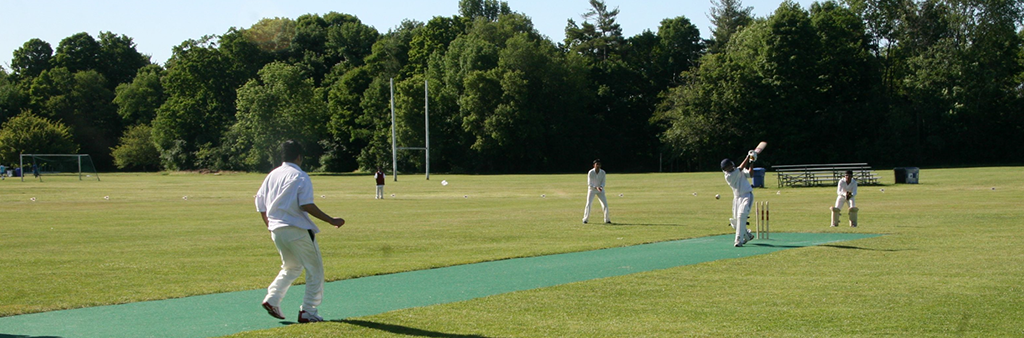
The new cricket facilities at Centennial Park are under construction.
Cricket is one of the fastest-growing sports in Toronto, with growing demand for places to play across the city. In response, the City is developing a Cricket Strategy to guide the future of cricket in parks and recreation spaces. At the same time, new and improved cricket facilities are being planned at parks across Toronto to support everything from casual play to tournaments.
While we aim to provide fully accessible content, there is no text alternative available for some of the content on this site. If you require alternate formats or need assistance understanding our maps, drawings, or any other content, please contact Matt Bentley at 416-392-3949.
Get Involved
Subscribe for Updates
Type (don’t copy and paste) your email into the box below, check the box next to the e-update description and then click “Subscribe”. You will receive an email with instructions to confirm your request.
Cricket Strategy
The City is developing a Cricket Strategy to help:
Better understand the needs of the cricket community, including types of facilities, field design, locations, informal play options and supporting amenities.
Build relationships with the cricket community and partners, and ensure community members are meaningfully involved in the process.
Support the growth of cricket across Toronto through new programs and partnerships.
As part of the Parks and Recreation Facilities Plan, City staff reviewed Toronto’s existing cricket facilities to determine if improvements or new facilities were needed to keep up with demand. The 2019 Plan recommended the following actions over the next 20 years:
Upgrading three existing cricket pitches, which will help existing fields support more cricket play
Improvements may include better field conditions and amenities
Build up to five new cricket pitches
New pitches may be shared with other sports and activities
To make space for new pitches, the City may need to explore land use partnerships, acquire new land or redesign existing parks
Timeline
2020 to 2026: Background review, cricket needs assessment, partnership building and public and stakeholder engagement to inform the Cricket Strategy
2026: Draft Cricket Strategy shared online for comment
Since 2020, the City has been engaging communities and stakeholders across Toronto to inform the development of the Cricket Strategy. Engagement activities are ongoing and will continue through 2026.
To date, this has included:
Nine meetings with the Cricket Reference Group, a group of cricket community members and stakeholders,
A virtual public meeting and an online mapping tool to gather early input,
And a city-wide online survey in spring 2024, which received over 2,100 responses.
Feedback on cricket facilities collected through City-wide community engagements to inform updates to the Parks and Recreation Facilities Plan, collect between 2024 and 2025.
Site-specific engagements from 2024-2026 to design new cricket facilities at sites across the city (see accordions below for details)
Cricket Reference Group
Documents are listed from least recent to most recent.
Responding to direction from City Council, a City-School Boards Cricket Working Group was established. The City and School Board staff from all four public met 7 times from late 2024 through 2025. The Working Group provided a forum for the City of Toronto and School Boards to collaborate and develop partnerships to advance cricket facility location and programming.
Outcomes include:
Infrastructure
Information sharing about existing and planned cricket facilities and cricket facility design
Established site selection criteria for potential co-located cricket facilities
Established a list of properties to further explore the potential for new cricket facilities
Programs and Equipment
Information sharing about the current state of cricket programing, best practices, and existing partnerships with Cricket organizations
Established relationships and new contacts for future cricket program coordination
Moving forward, the working group will meet annually to provide updates and coordinate. Meetings between individual School Boards and the City will take place as funding for new facilities and programming opportunities arise.
Design Standards
As part of the Cricket Strategy, the City is developing design standards for new cricket facilities. Draft standards have been created for three types of pitches. All designs include a concrete base with an artificial turf surface and white field markings
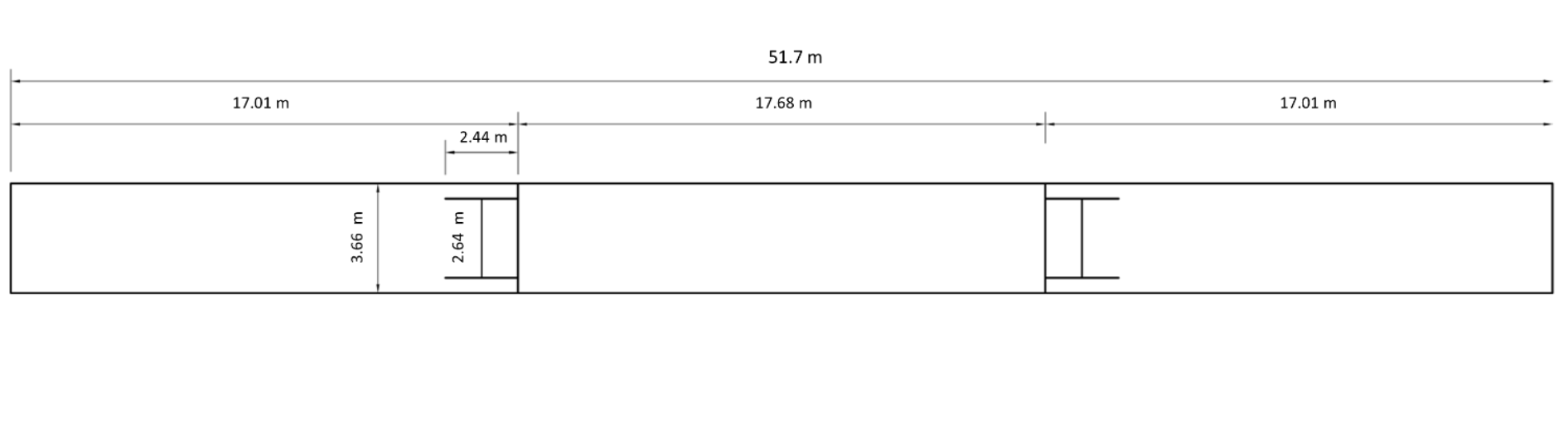
Standard Pitch
A standard cricket pitch is 51.7 metres long and includes two wickets.
Runups are 14.57 metres long and wickets are 2.44 metres long. The distance between the two wickets is 17.68 metres. The total pitch is 3.66 metres wide.
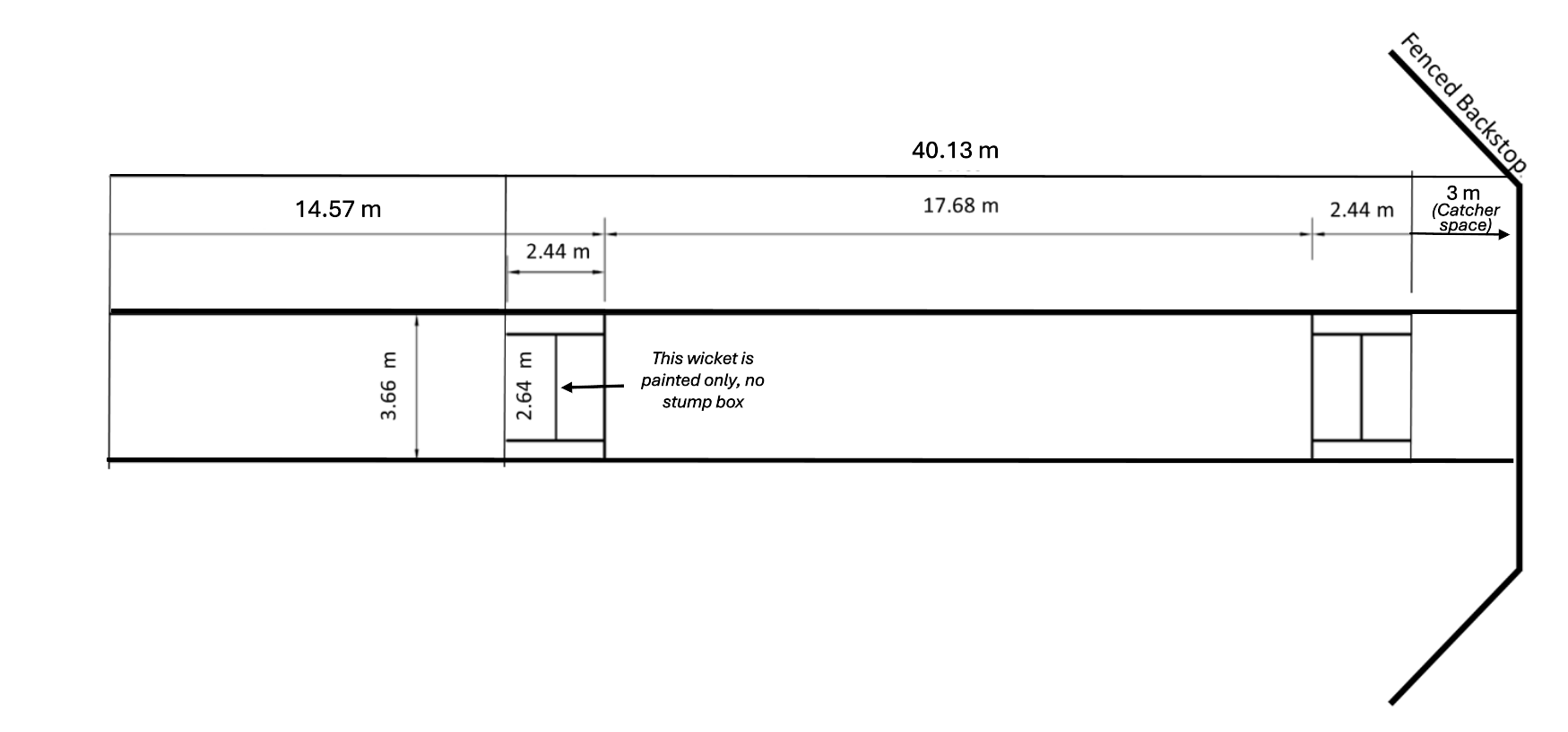
Single-Direction Pitch with Backstop
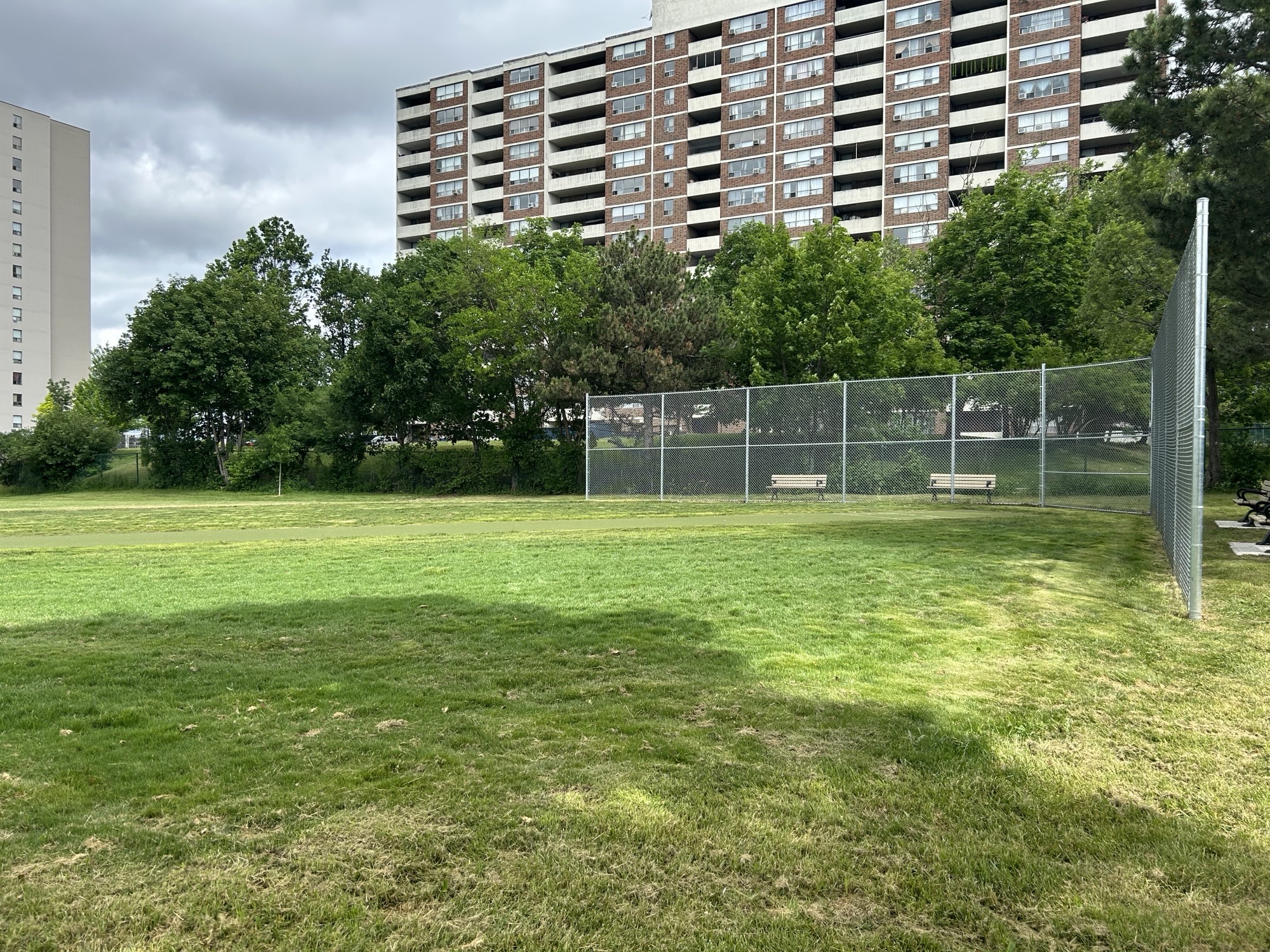
Installed in locations with local demand for cricket but limited space, single-direction pitches include a backstop and are a smaller alternative to a standard-size pitch. Single direction pitches are approximately 40.1 metres long and include one standard wicket, one painted wicket (by the bowler) and a fenced backstop.
A single runup is 14.57 metres long, and wickets are 2.44 metres long. The wicket near the outfield is painted on. The distance between the two wickets is 17.68 metres. The distance from the back wicket and the backstop is three metres. The total pitch is 40.13 metres long and 3.66 metres wide.
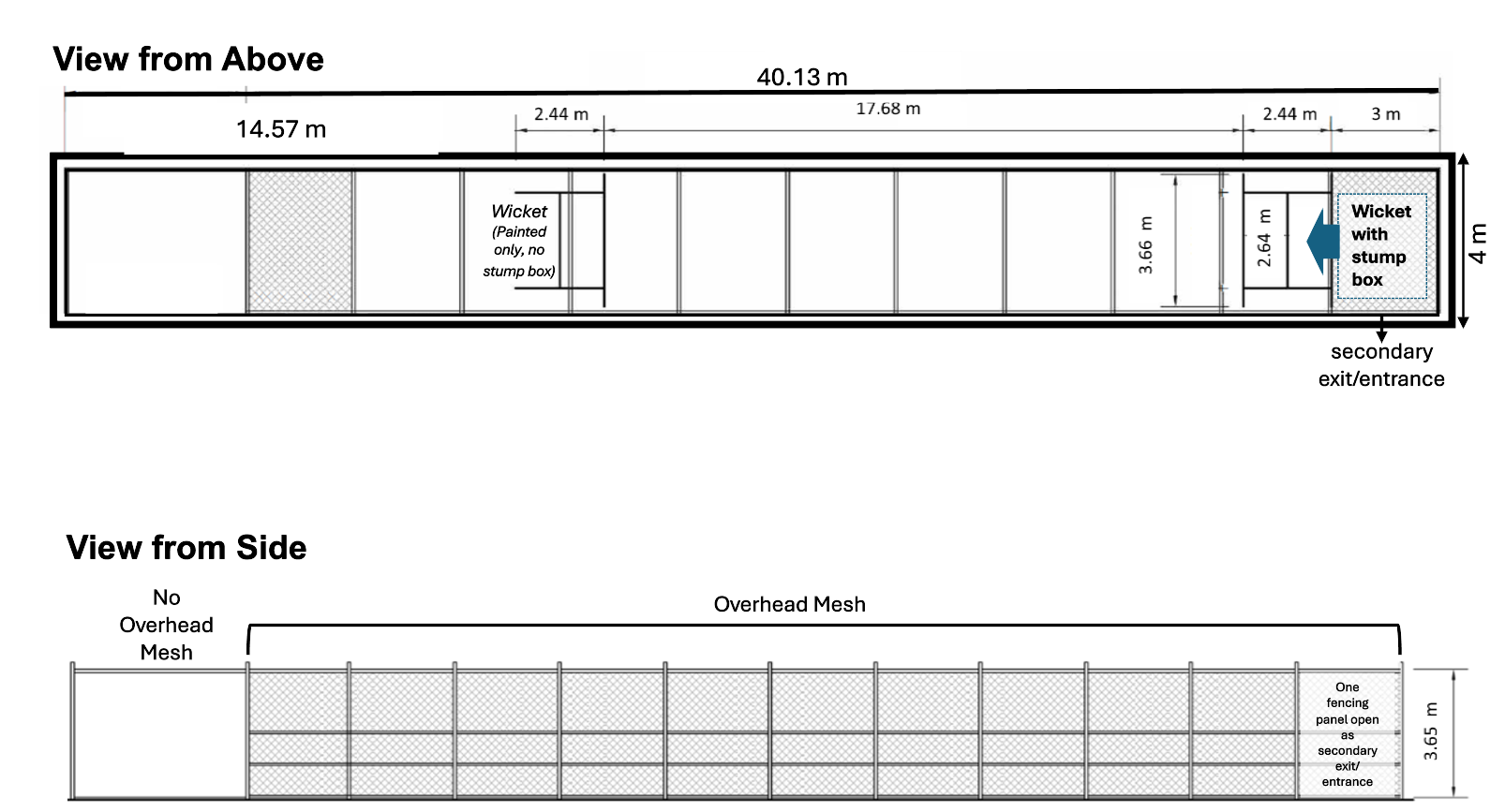
Batting Cage
Batting cages provide space for casual practice. A single batting cage lane is approximately 40.1 metres long, four metres wide, fenced and with overhead mesh. There is an exit/entrance at both ends. Multiple lanes of batting cages can be grouped together.
A single runup is 14.57 metres long, and wickets are 2.44 metres long. The wicket near the bowler is painted on. The distance between the two wickets is 17.68 metres. The distance from the back wicket to the backstop is three metres. The total pitch is 40.13 metres long and 3.66 metres wide. The side fencing is 3.65 metres tall with overhead mesh.
Cricket in Toronto
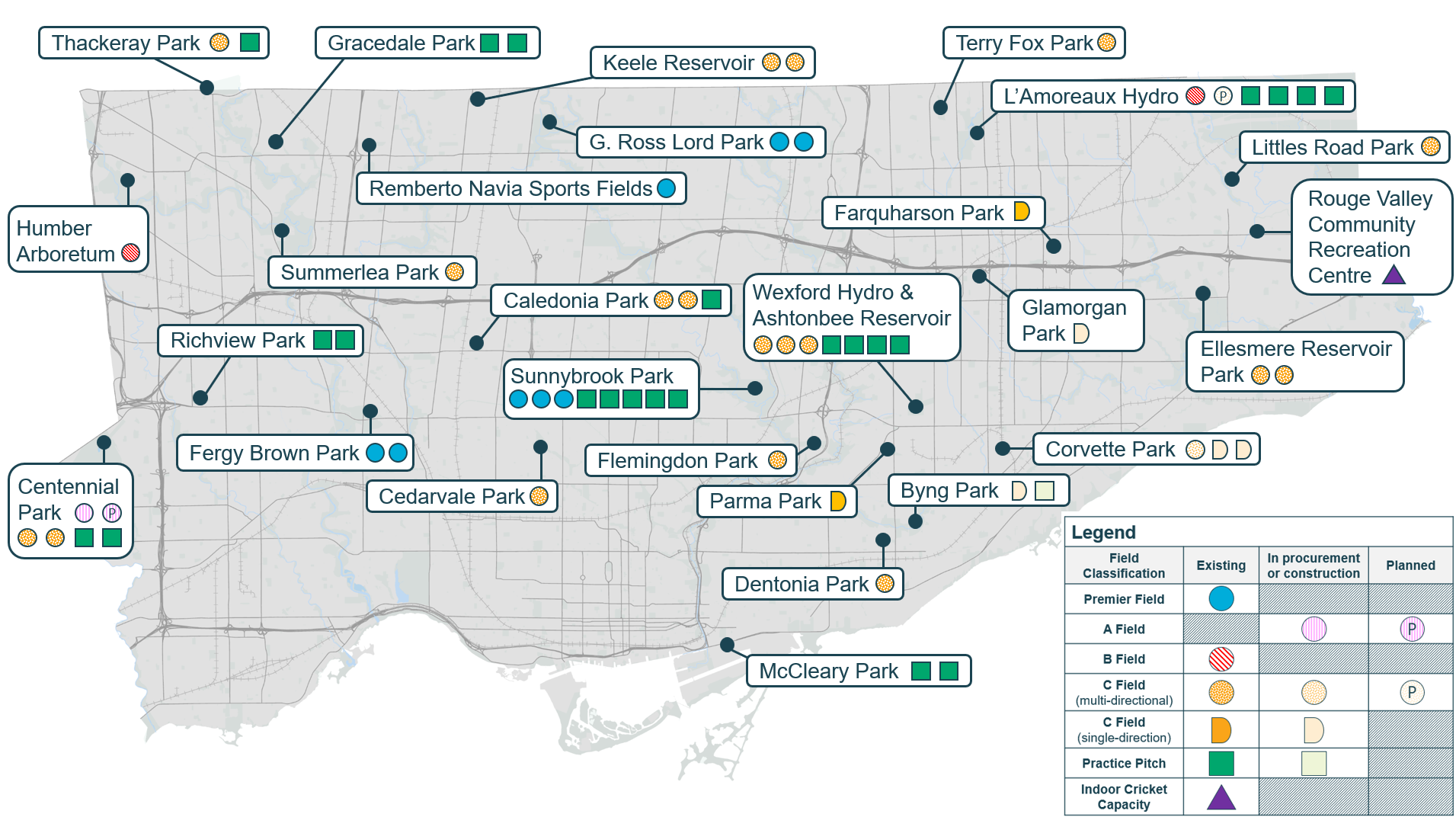
TheCityhas30cricket pitches (some of which are shared with other activities)and 23 practice pitches (batting cages).
There are 6additionalnewcricketfacilitiessettoopen in 2026atCorvette Park, Byng Park,and Centennial Park.There are threefacilities planned for construction in later years, including at Centennial Park (another new pitch)(2027), Glamorgan Park(2027) and L’Amoreaux Hydro(2028-2030).
There are two new cricket fields planned for Centennial Park, as part of the new Cricket Hub. The Centennial Park Master Plan Update included the creation of an expanded cricket hub to meet the demands of the growing sport in the city. The Master Plan Update identified the park’s hydro corridor as a location to create a centralized area of cricket play, with two new cricket pitches being added to the existing two, as well as a new field house with a year-round washroom building.
Both new fields will be the first lit City cricket pitches.
Project Timeline
Summer 2023: Hire a design team
Winter 2023/2024: Community engagement and design development
Fall 2025: Construction begins
Late Summer/Fall 2026: Construction of the new south field complete
Fall 2027: Construction of the new north field complete
The Parks and Recreation Facilities Plan and the developing Cricket Strategy both identified a city-wide need for more cricket facilities. Parma Park was selected because:
There is demonstrated local demand for cricket.
The existing ball diamond is underused.
The park includes support amenities such as parking, washrooms (at O’Connor Community Recreation Centre) and drinking fountains.
The nearby recreation centre creates opportunities for youth cricket programming and camps.
The Parks and Recreation Facilities Plan and the developing Cricket Strategy both identified a city-wide need for more cricket facilities. Corvette Park was selected because:
There is a high demand for cricket in Scarborough
Corvette Park is already used for casual cricket games, cricket permits and cricket tournaments.
The park offers a large, flat area – an uncommon opportunity for a large cricket field.
The park already includes support amenities such as washrooms.
The nearby school creates opportunities for youth programming.
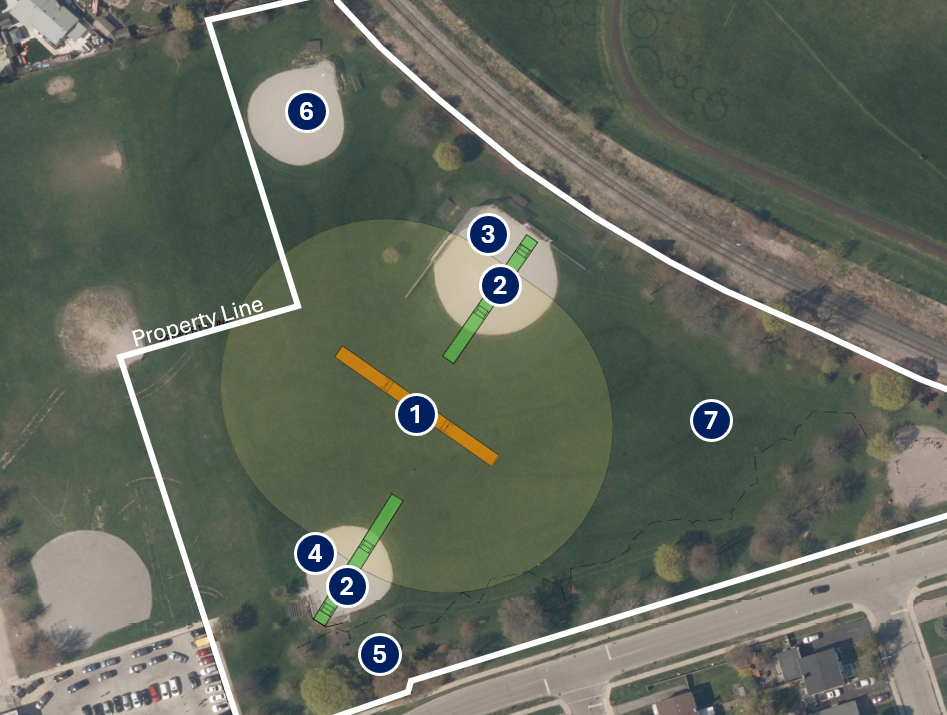
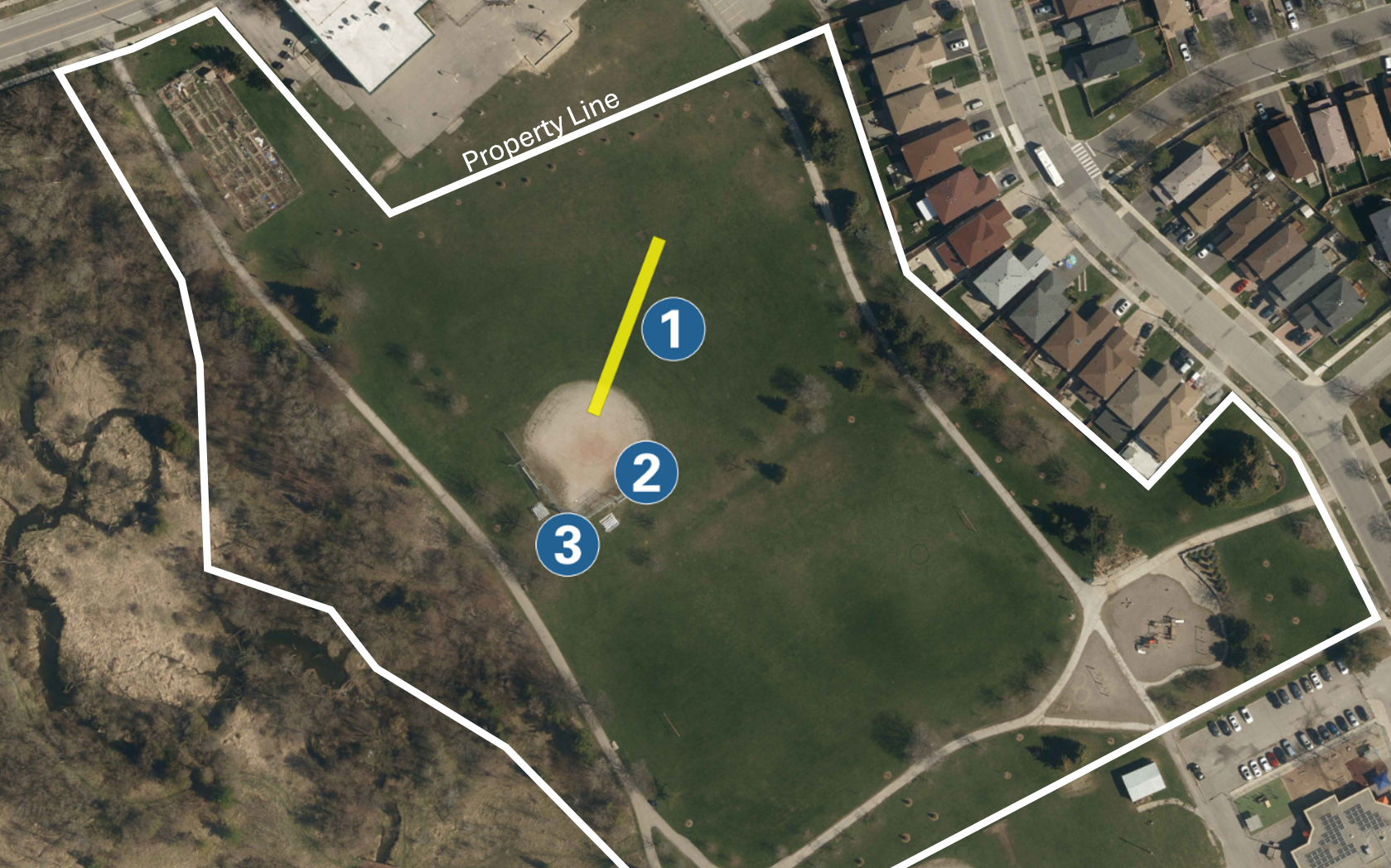
One new standard cricket pitch (51.7 by 3.66 metres), oriented to allow for the flattest playing surface. The playing field (identified in yellow) measures 110 by 90 metres.
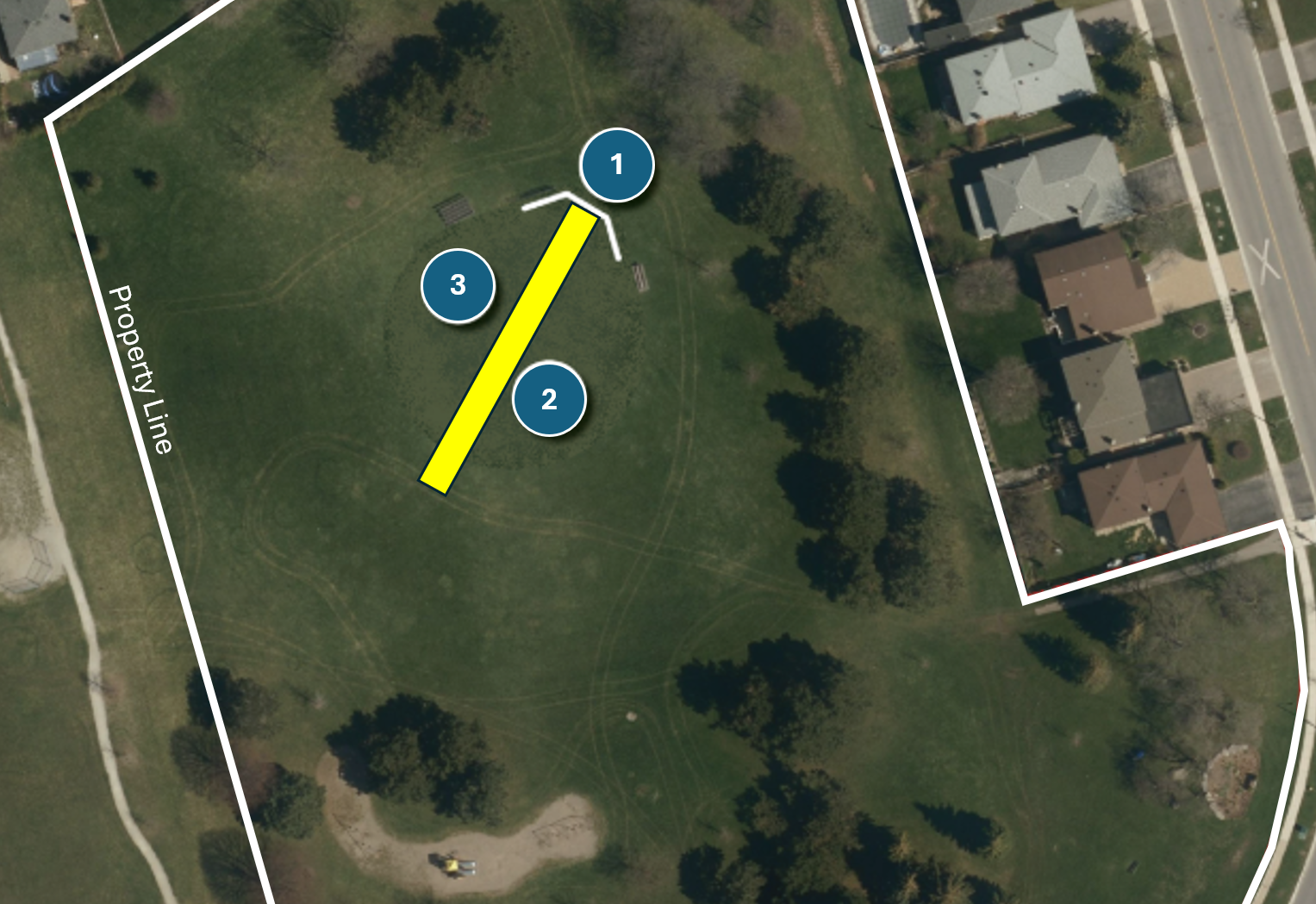
Two new, single-direction cricket pitches (40.1 by 3.66 metres) with backstops.
Existing ball diamond removed, with only a portion of the backstop remaining. Bleachers will be maintained and repositioned.
Existing ball diamond removed, with backstop and bleachers maintained.
New bottle filler and drinking fountain.
Existing ball diamond maintained.
Area remaining open for potential future construction of a pedestrian bridge over the rail line to the north.
The Parks and Recreation Facilities Plan and the developing Cricket Strategy both identified a city-wide need for more cricket facilities. Byng Park has been selected as the site for a new single-direction cricket pitch and batting cage because:
There is a high demand for cricket in Scarborough.
The existing mini-soccer fields are underused.
The park already includes support amenities such as parking and drinking fountains, with washrooms nearby.
The nearby community recreation centre creates opportunities for youth programming and camps.
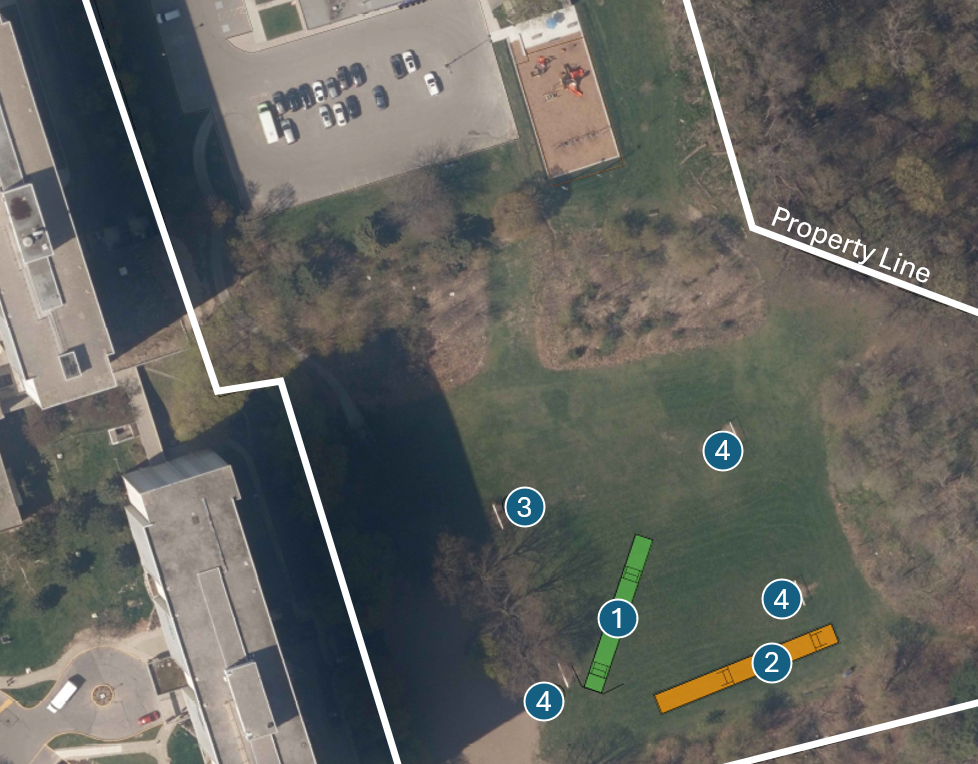
New single-direction cricket pitch (40.1 by 3.66 metres) with backstop.
New cricket batting cage (40.1 by 3.66 metres, with 3.7 metre fencing)
Single north-west mini-soccer net maintained for casual play.
The Parks and Recreation Facilities Plan and the developing Cricket Strategy both identified a city-wide need for more cricket. Littles Road Park was selected because:
There is high demand for cricket in Scarborough and local interest at this location.
The existing ball diamond is underused.
The park already includes support amenities such as a portable toilet and drinking fountain.
The nearby school creates opportunities for youth programming.
The Parks and Recreation Facilities Plan and the developing Cricket Strategy both identified a city-wide need for more cricket facilities. Farquharson Park was selected because:
There is high demand for cricket in Scarborough and local interest at this location.
The existing ball diamond is underused.
The nearby school creates opportunities for youth programming.
Chain link fence backstop (existing)
Artificial turf cricket pitch (40.1 by 3.66 metres) for single-direction play (new)
Grass field (clay removed)
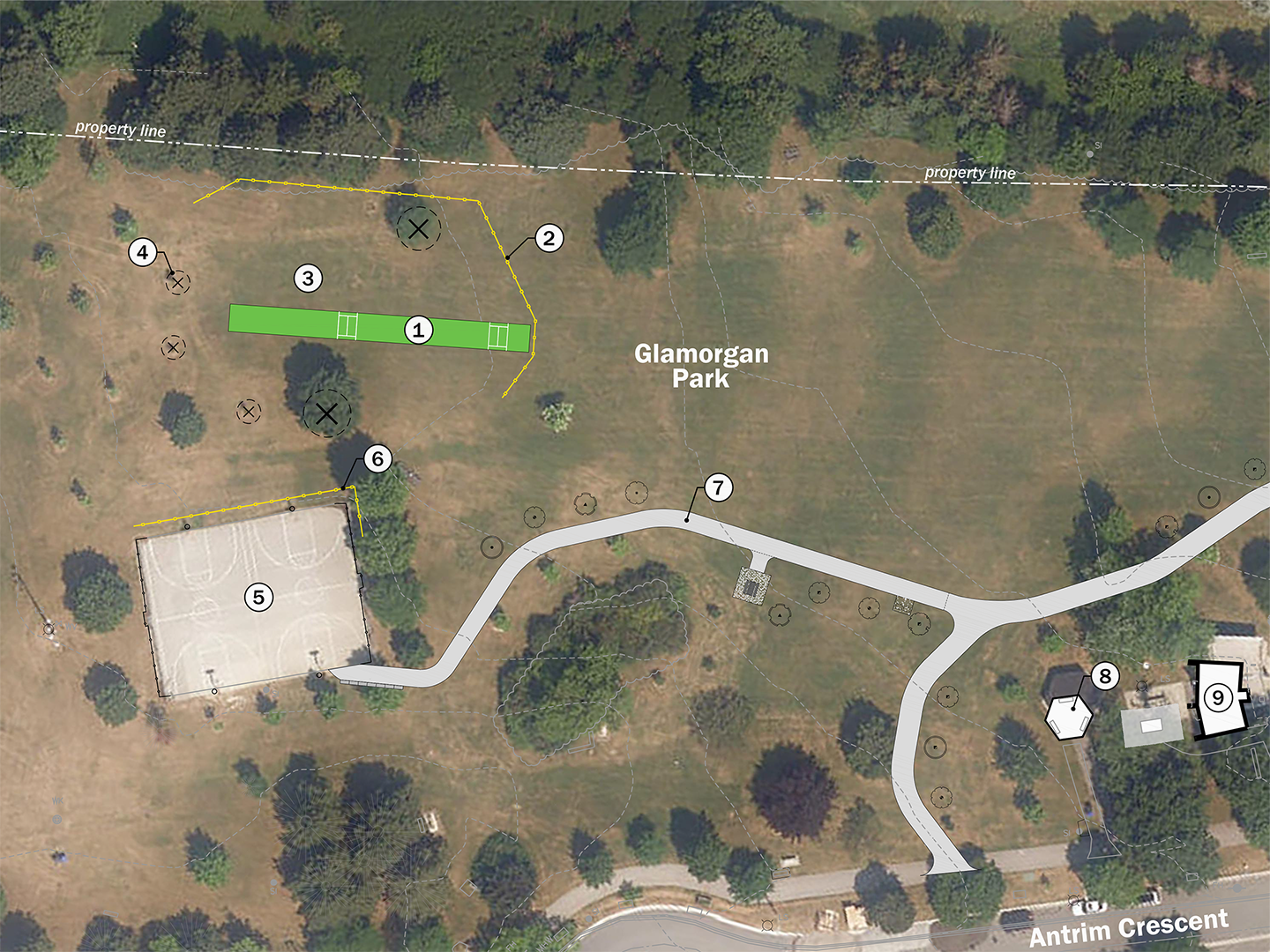
New Cricket Facility at Glamorgan Park
To meet local demand for cricket, the City is installing a single-direction cricket pitch with backstop and fence at Glamorgan Park. Glamorgan Park was selected because:
There is demonstrated local demand for cricket
The park includes support amenities such as washrooms and other sports facilities, such as basketball courts and a baseball diamond
Nearby schools create opportunities for youth programming