

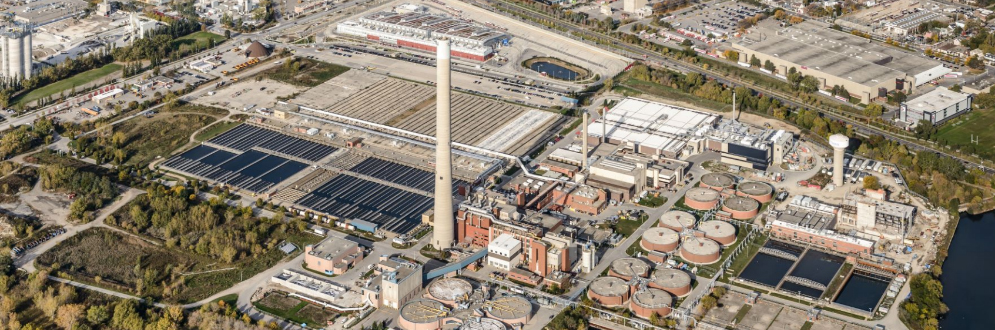
Located at 9 Leslie Street in Toronto’s east end on about 94 hectares of land, the Ashbridges Bay Treatment Plant is one of Canada’s largest and oldest wastewater treatment plants.
The plant, originally called the “Main Sewage Treatment Plant”, began operating in March 1913 and was designed to treat up to 150 million litres a day.
Today, the plant serves almost 1.4 million people across the city and can treat up to 818 million litres of wastewater (about 325 Olympic-sized swimming pools) each day.
The plant provides complete wastewater treatment, which includes:
The plant processes organic solids to generate sustainable biofuel and stabilized biosolids which are used as fertilizer. The Ashbridges Bay facility also processes organic solids transferred from the Humber and North Toronto treatment plants.
Learn more about how we collect and treat wastewater.
The plant is the site of over $2 billion worth of wastewater and stormwater upgrade projects that are part of the City’s 10-year Capital Plan and Wet Weather Flow Master Plan.
Projects that are underway include:
Learn more about these projects and their progress on Don River and Central Waterfront & Connected Projects.
Odours or unpleasant smells near wastewater treatment plants are common and typically short-lived. Local and major sewers can also cause similar temporary odours. Weather conditions, including wind direction, temperature and humidity can make normal treatment-related odours more noticeable at times.
Since 2012, the City has invested more than $305 million in the Odour Reduction Program to reduce odour at and beyond plant property. The program included six state-of-good-repair construction projects with a focus on reducing odours at the Ashbridges Bay Treatment Plant, all of which have been completed and are operational.
Between 2028 and 2031, the City will also refurbish six primary tanks at the plant, including replacement of all mechanical and electrical equipment. These upgrades are essential in maintaining uninterrupted wastewater treatment service, while modernizing key infrastructure. This work will also help reduce the risk of equipment failures that may contribute to local odour issues.
Report an unpleasant smell or odour that you suspect is coming from a wastewater treatment plant.
All odour complaints are taken seriously and will be investigated by staff. Identifying the source can be complex, as conditions may change between the time an odour is reported and when staff are able to complete a site investigation.
During heavy rain and snow melt, the volume of stormwater can overwhelm the capacity of the plant’s secondary treatment process (biological treatment using microorganisms).
A bypass is when the plant diverts wastewater around the secondary treatment process. The wastewater still goes through all other treatment processes to ensure treated water always meets federal and provincial regulations.
Visit Wastewater Treatment Plant Bypass Reports for lists of bypasses at Ashbridges Bay Treatment Plant.