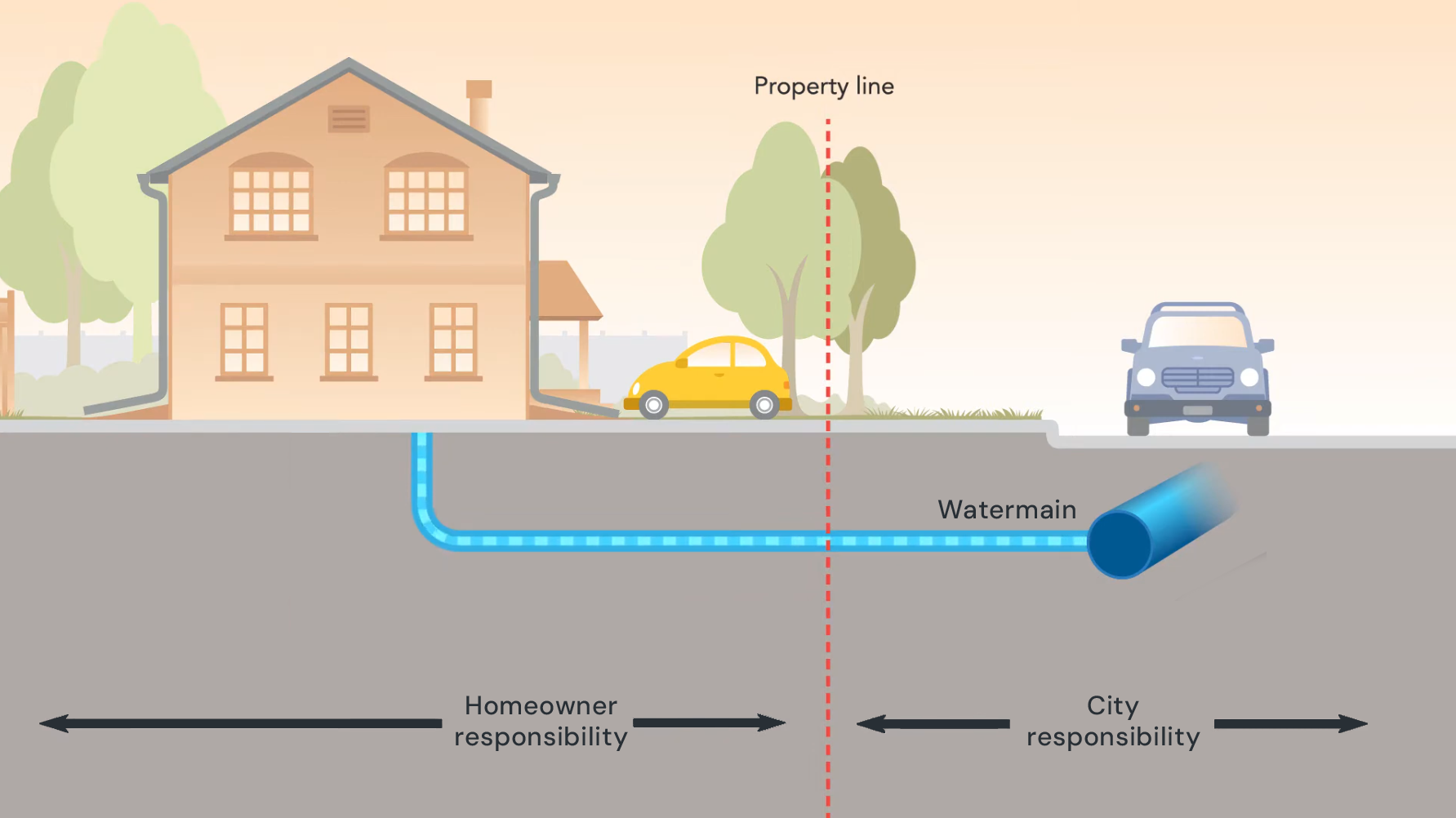
The water service pipe connects your home to Toronto’s water distribution system. Knowing where it enters your home can help you identify and respond to frozen pipes more quickly.
The City is responsible for the part that runs from the watermain on the street to the property line.
Property owners and landlords are responsible for the part that runs from the property line into the home.
Prepare Before Cold Weather Arrives
Seal drafts around windows, doors, vents, wiring and pipes to stop cold air from getting in.
Disconnect outdoor hoses, turn off the outdoor water supply if there is a separate shut-off valve and open outdoor taps to drain remaining water.
Insulate exposed pipes in basements, crawl spaces, garages and attics. You can use foam pipe covers available from building supply or home improvement stores.
Find the main water shut-off valve and make sure it works.
Ask a plumber for advice if indoor pipes often freeze.
Report drafts around windows, doors, vents, wiring and pipes to your landlord or property manager.
Ask your landlord or property manager who is responsible for outdoor taps, plumbing and shut-off valves.
Find out who to contact during and after business hours.
Protect Your Pipes During Cold Weather
Keep areas with water pipes above 8°C, especially near the water meter.
Keep garage doors closed if there are water pipes inside.
Keep your home or unit warm, including overnight and when you are away. If you control the thermostat, raise it by one or two degrees overnight.
Open kitchen, bathroom and laundry cabinet doors so warm air can circulate around the plumbing.
When nighttime temperatures drop below -15°C, you may choose to run a pencil-thin stream of water from vulnerable taps. You will be charged for the water used if you choose to do so.
Keep drains clear if water is left running.
If You Have No Water – How to Thaw Frozen Pipes
If you rent, report if you have no water to your landlord or property manager.
Check likely spots for frozen pipes, such as pipes along exterior walls or where the water service pipe enters through the foundation.
Open the basement cold water tap, preferably in the laundry room, so water can flow as ice melts.
Thaw pipes using a heating pad, hair dryer or warm towels. Do not leave heating devices unattended.
Never use a blowtorch, propane heater or any open flame. These are dangerous fire and carbon monoxide hazards.
Thawing can take one to six hours, depending on the weather and how frozen the pipe is.
You may wish to contact a licensed plumber if you still have no water after trying to thaw the pipe.
You can also contact 311 and City staff will come investigate. If the frozen pipes are on private property, staff will advise you to contact a plumber.