

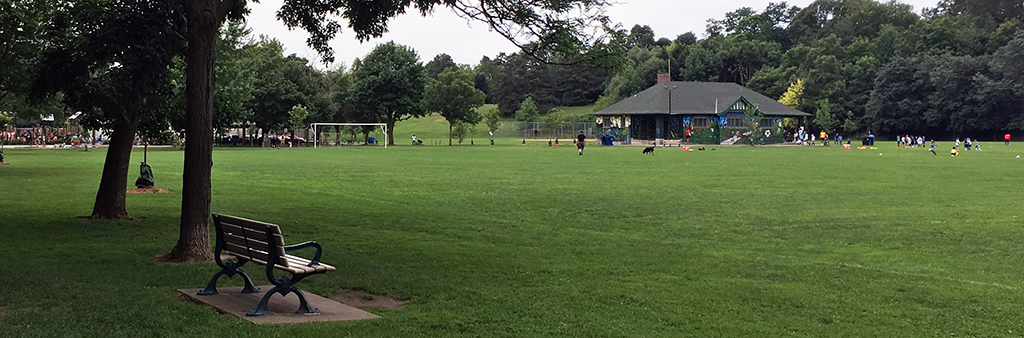
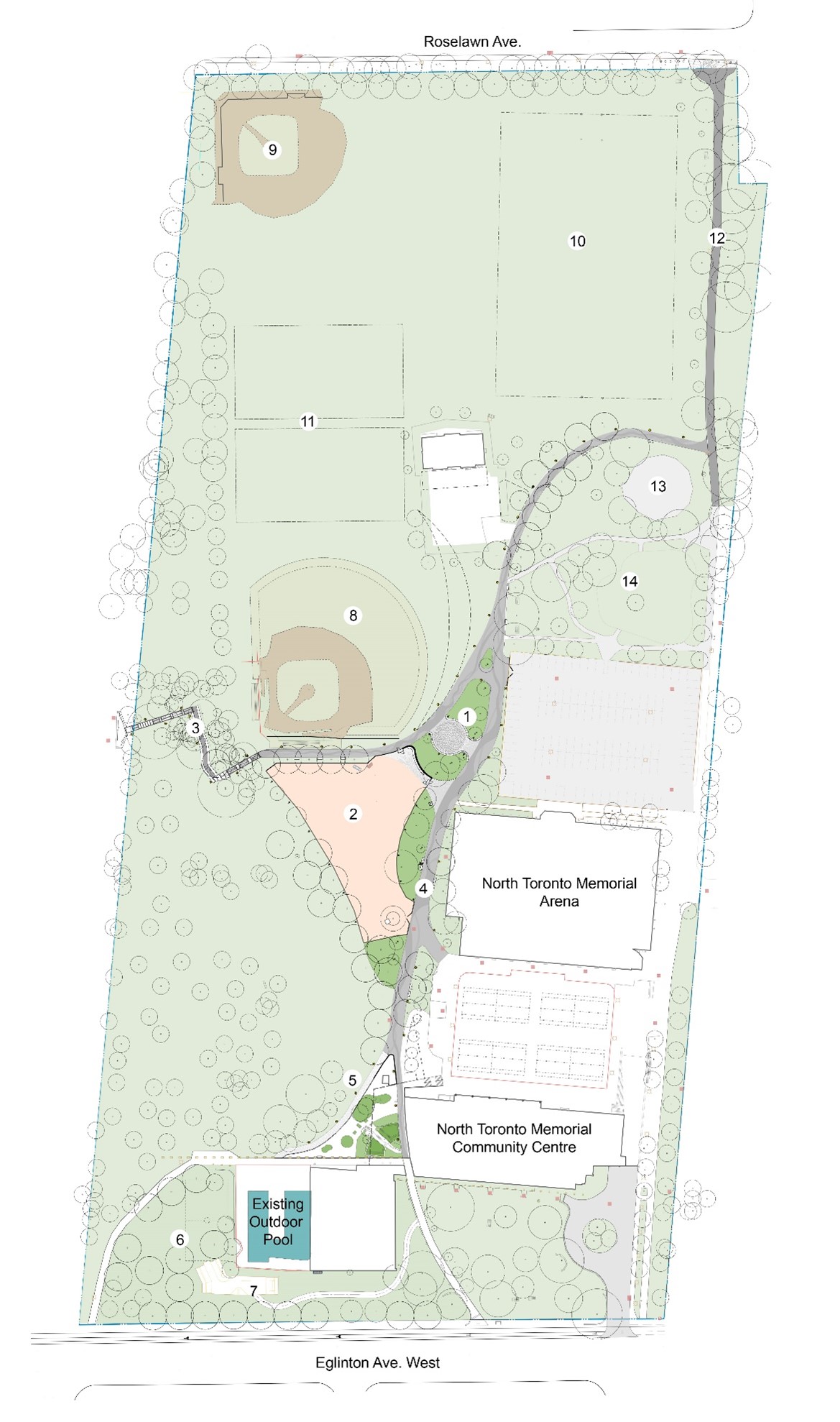
The City is revitalizing Eglinton Park in phases, guided by four priority areas identified in the 2019 Master Plan. With Priority Area 1 now complete, work is moving forward on Priority Area 2, which includes improvements to the Eglinton forecourts, retaining walls, historic themed gardens, basketball court and park signage. Construction for Priority Area 2 is expected to begin in late spring 2027.
A focused project to improve the north ball diamond, wading pool and fieldhouse plaza is also underway, with community engagement planned for fall 2026.
While we aim to provide fully accessible content, there is no text alternative available for some of the content on this site. If you require alternate formats or need assistance understanding the following content, please contact Hakima Hoseini at 416-395-0242.
Sign up for or unsubscribe from updates related to the Eglinton Park Revitalization.
The projects currently being consulted on as part of the Eglinton Park Revitalization are classified as a Consult-level project based on the International Association of Public Participation Spectrum. This means we will seek feedback from the public on proposed park improvements, which will help inform the final design.
The final design for Phase 1 Implementation: Priority Area 1 was developed through a three-phase community engagement process.
The practice of Indigenous Placekeeping honours the peoples who have been the traditional stewards of the land where Toronto is situated. Creating space for Indigenous representation, ways of knowing and sustainability practices in our parks and recreation facilities benefits the local ecology and supports the safety and well-being of Indigenous community members. It is also an important way the City responds to actions identified in the Reconciliation Action Plan.
Indigenous Placekeeping at Eglinton Park was shaped through collaboration with the Indigenous Advisory Circle, a local Indigenous Gardening Group and the Wendat Nation. Together, they guided the integration of Indigenous knowledge, values and land-based practices into the final design. Key elements include:
The new pathway is inspired by the historic and buried Mud Creek with its wave-like decorative concrete paving and will connect to existing and new park features and amenities.
21 Memory Stones will be placed along the path. Each smooth concrete river stone is engraved with meaningful text inspired by Bob Joseph’s 21 Things You May Not Know About the Indian Act. These stones are designed for park users to engage with – whether by touching, reading, sitting or simply resting on them – while learning about the Indian Act.
The centralized gathering area features a proposed pollinator garden circle surrounded by curved benches, creating a welcoming space for groups to gather. The garden is highlighted by a sunflower-inspired paved pattern.
Along the western edge of the garden, an interpretive panel is proposed to showcase important plants and animals, with a focus on pollinator species native to the Don Valley region. The metal panel will include laser-cut patterns of native flora and fauna accompanied by their respective names in Anishinaabemowin, celebrating Indigenous language and connection to the land.
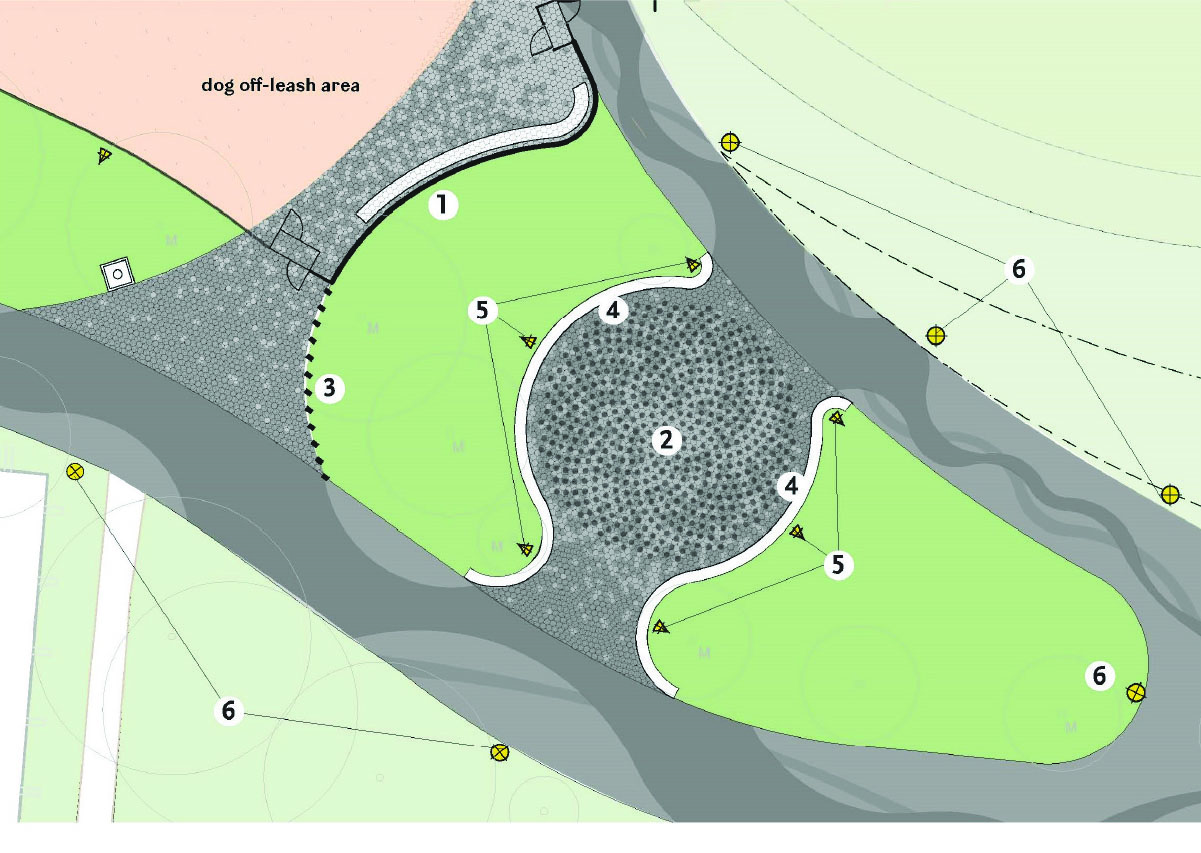
The new off-leash area for dogs will feature a wood mulch surface, a wood post fence, a unit-paved seating area, lighting and dog exercise equipment, such as a ramp. The perimeter of the off-leash area will be surrounded by planting beds and trees, creating a more inviting and shaded environment.
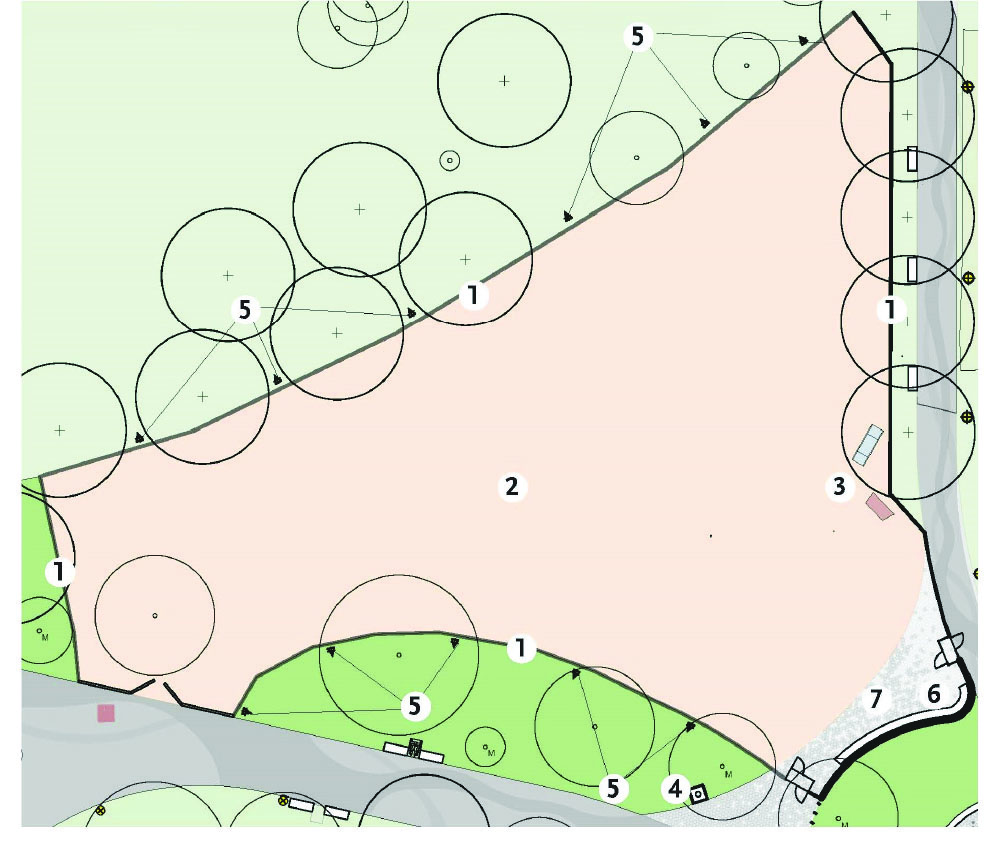
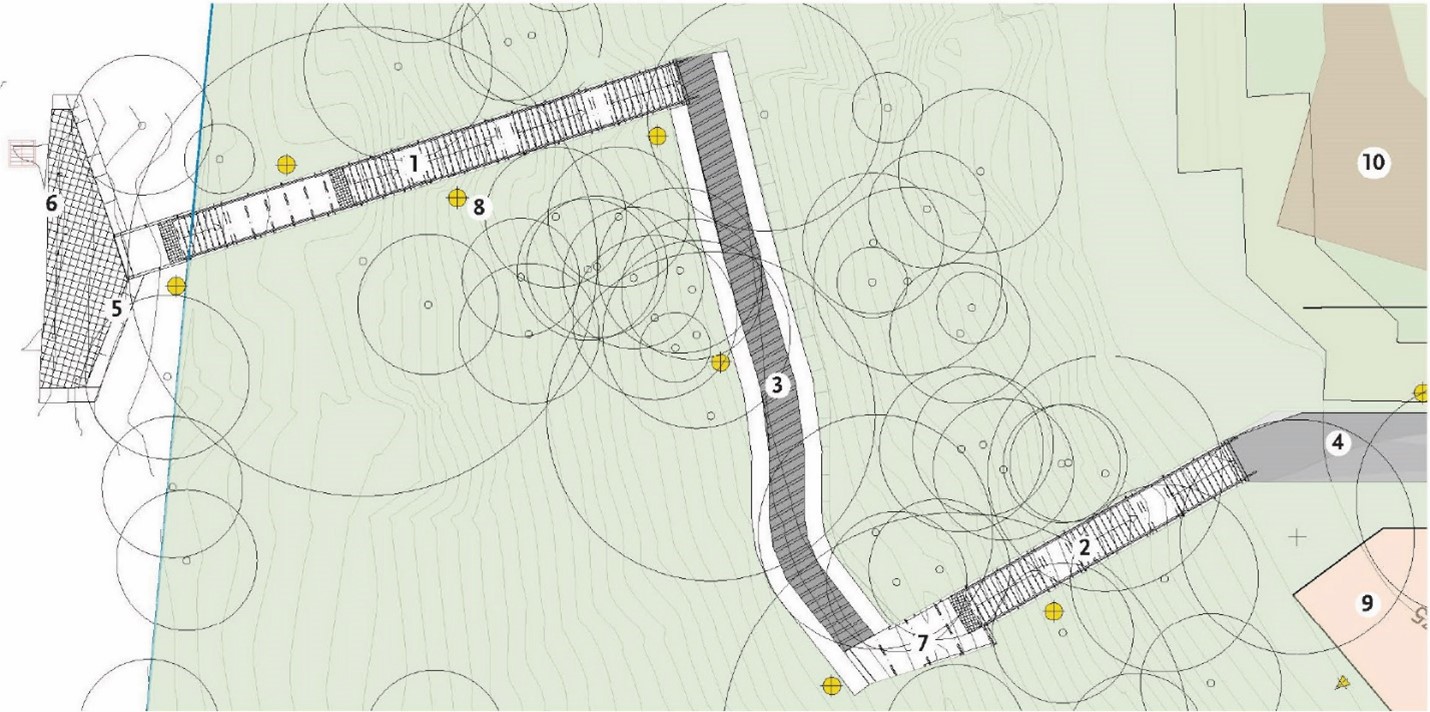
The existing west stairs will be replaced with open tread metal stairs and will include lighting. The stairs will connect to the new west path in the park to improve park circulation.
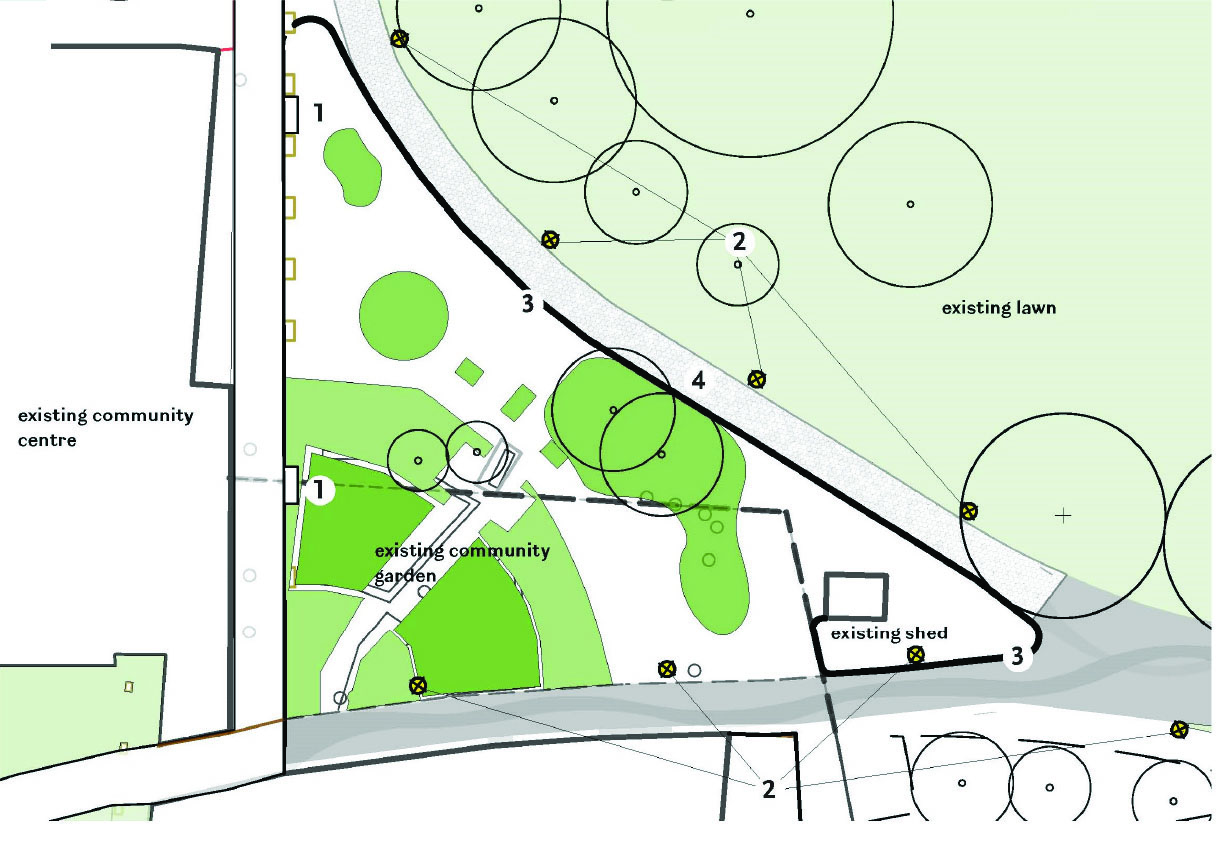
Improvements to the existing community garden will include path lighting, new planters and a wood fence featuring decorative metal panels with laser-cut maize motifs, honouring corn as one of the Three Sisters plantings.
Along with the corn imagery, the Wendat Nation has contributed traditional text that expresses gratitude: “We give thanks to all that feeds and sustains us. We give thanks to Corn”. This addition strengthens the cultural significance of the garden and reflects ongoing collaboration with Indigenous communities.
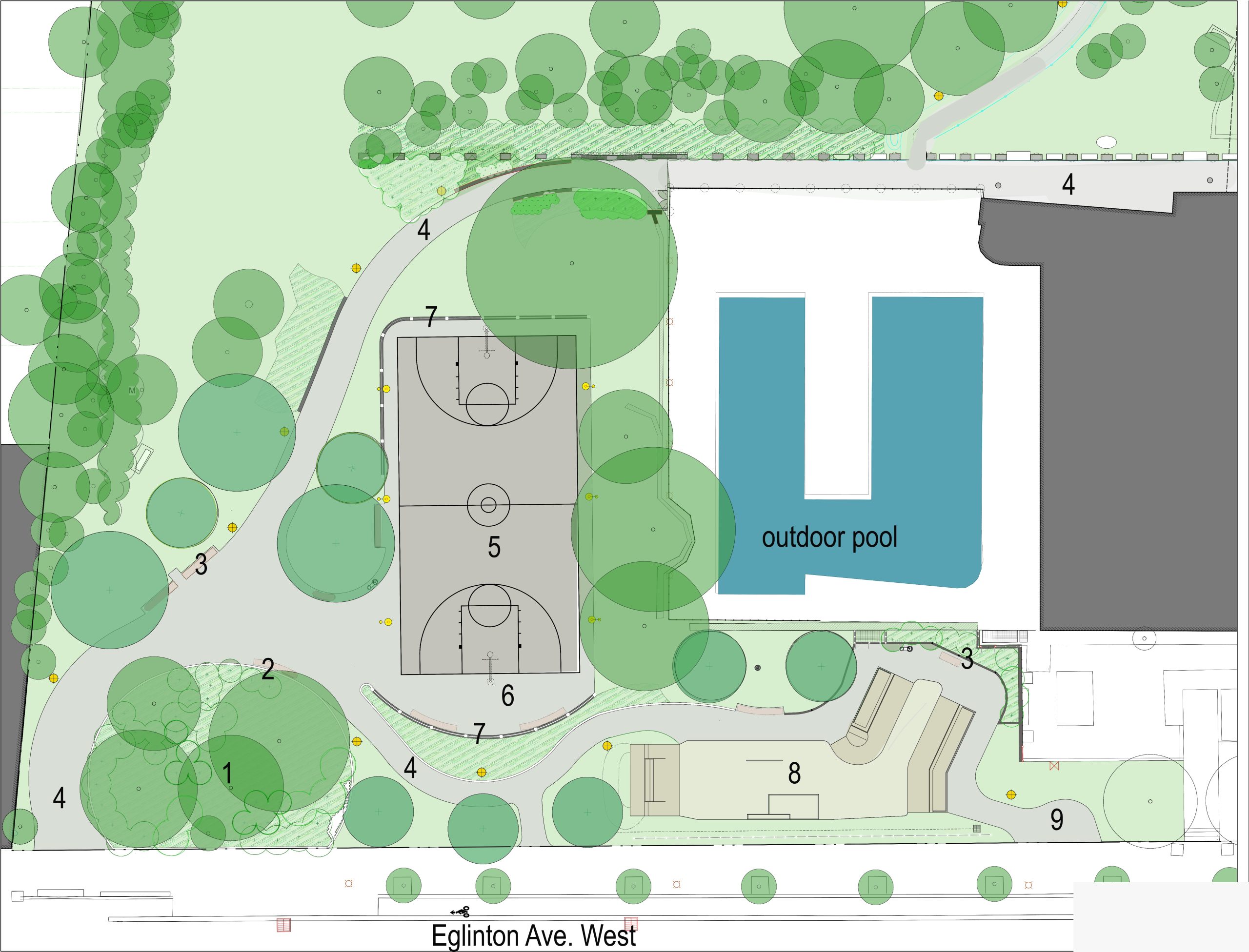
Improvements to the southwest area will include a standard basketball court, a skate spot, new accessible pathways, lighting, site furnishings and planting. The design of this space was developed through the Master Plan and Phase 1 Community Engagement. Construction of the southwest area is scheduled for 2027.
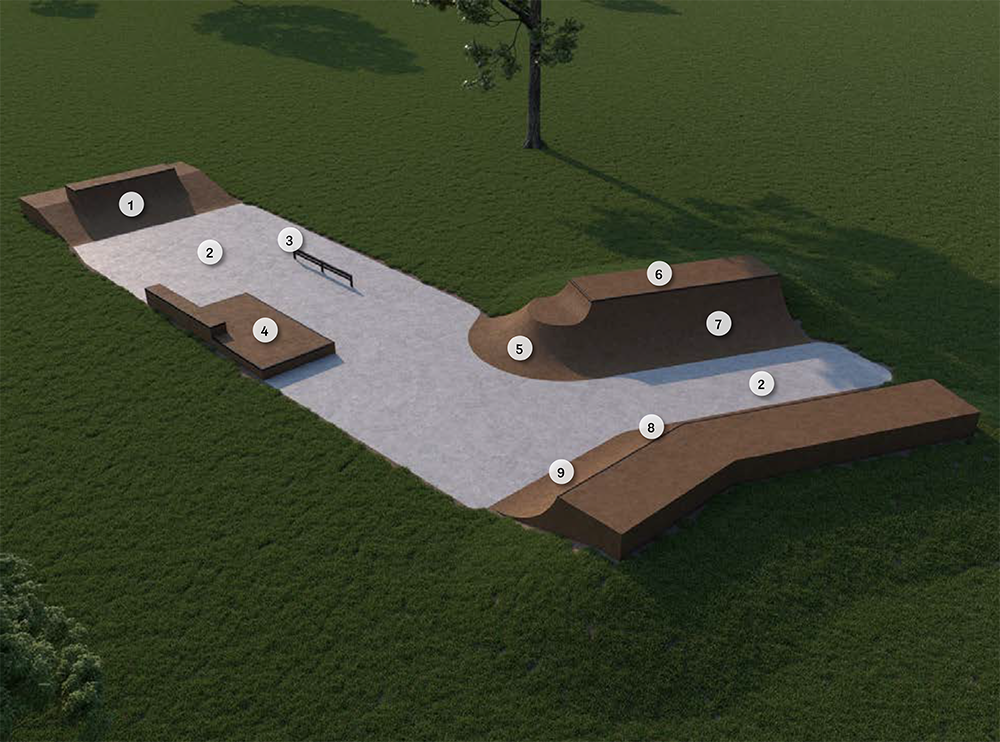
A skate spot is a small-scale skatepark that includes several skateable features for activities like skateboarding and scootering. The final design of the Eglington Park skate spot was developed through several rounds of community engagement and includes a bank ramp with grind box, a quarter pipe, a halfpipe and a flat area. Benches and a drinking fountain will be located close to the skate spot for users to rest and people-watch.
Construction for Priority Area 1 is complete. The improvements included:
An additional project to improve the north ball diamond, wading pool and fieldhouse plaza is underway outside of the Master Plan priority areas. In fall 2026, the City will engage the community through an online survey and pop-up event in the park to gather input on design options.
The timeline is subject to change.
From September 3 to 21, an online survey collected feedback from 186 respondents on design options for the fieldhouse plaza and new splash pad.
A summary of the results will be shared on this page.
This section is organized as follows:
In 2019, the City completed the Master Plan with the help of a professional design consultant, various internal stakeholders, user groups, and the public. The plan has since been revised to incorporate feedback from the public and Community Advisory Group (CAG) in late 2022/early 2023 during the ongoing community engagement process.
The revisions made to the Master Plan include:
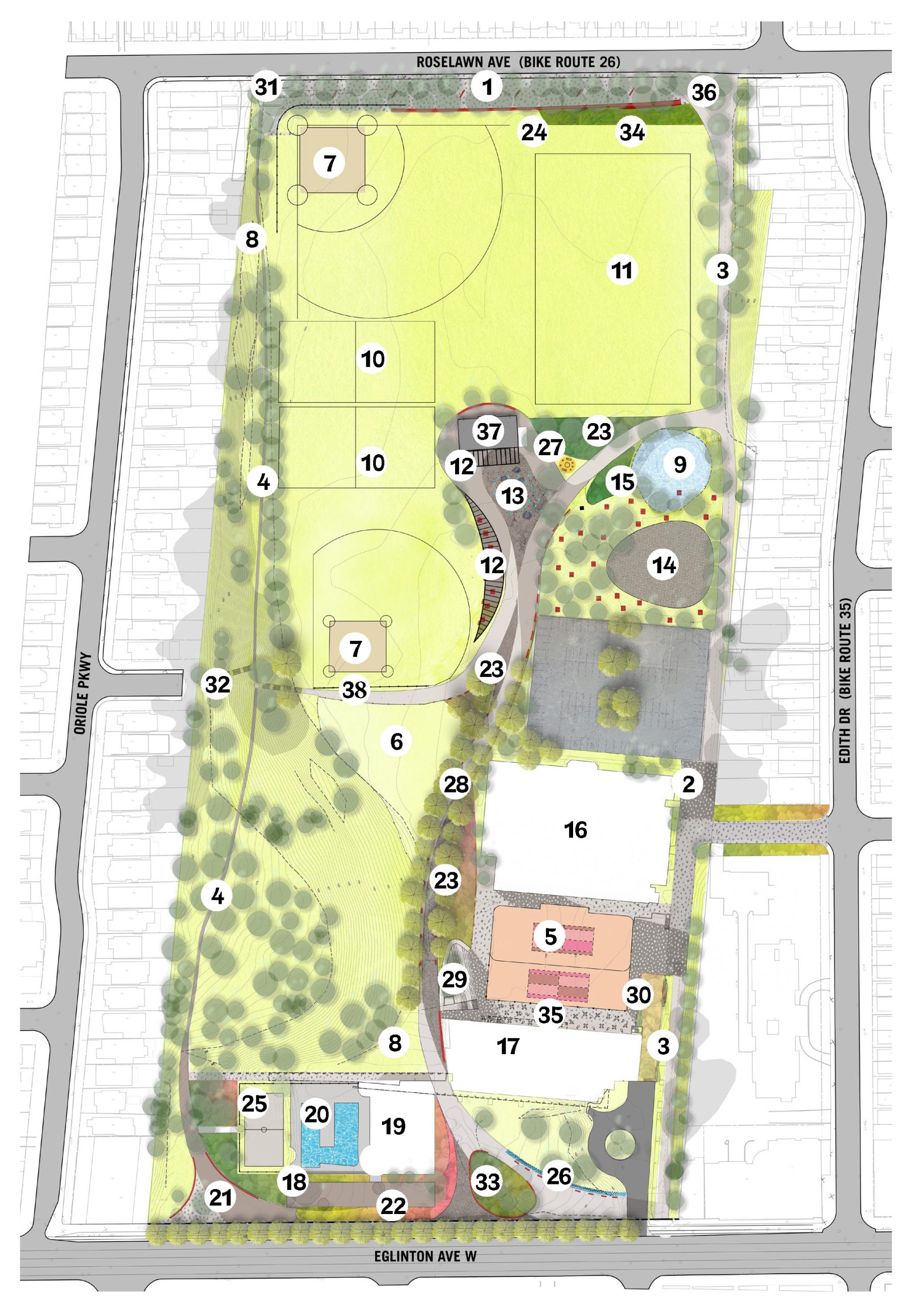
The Master Plan identifies four priority areas that will help guide implementation, pending current and future budget availability.
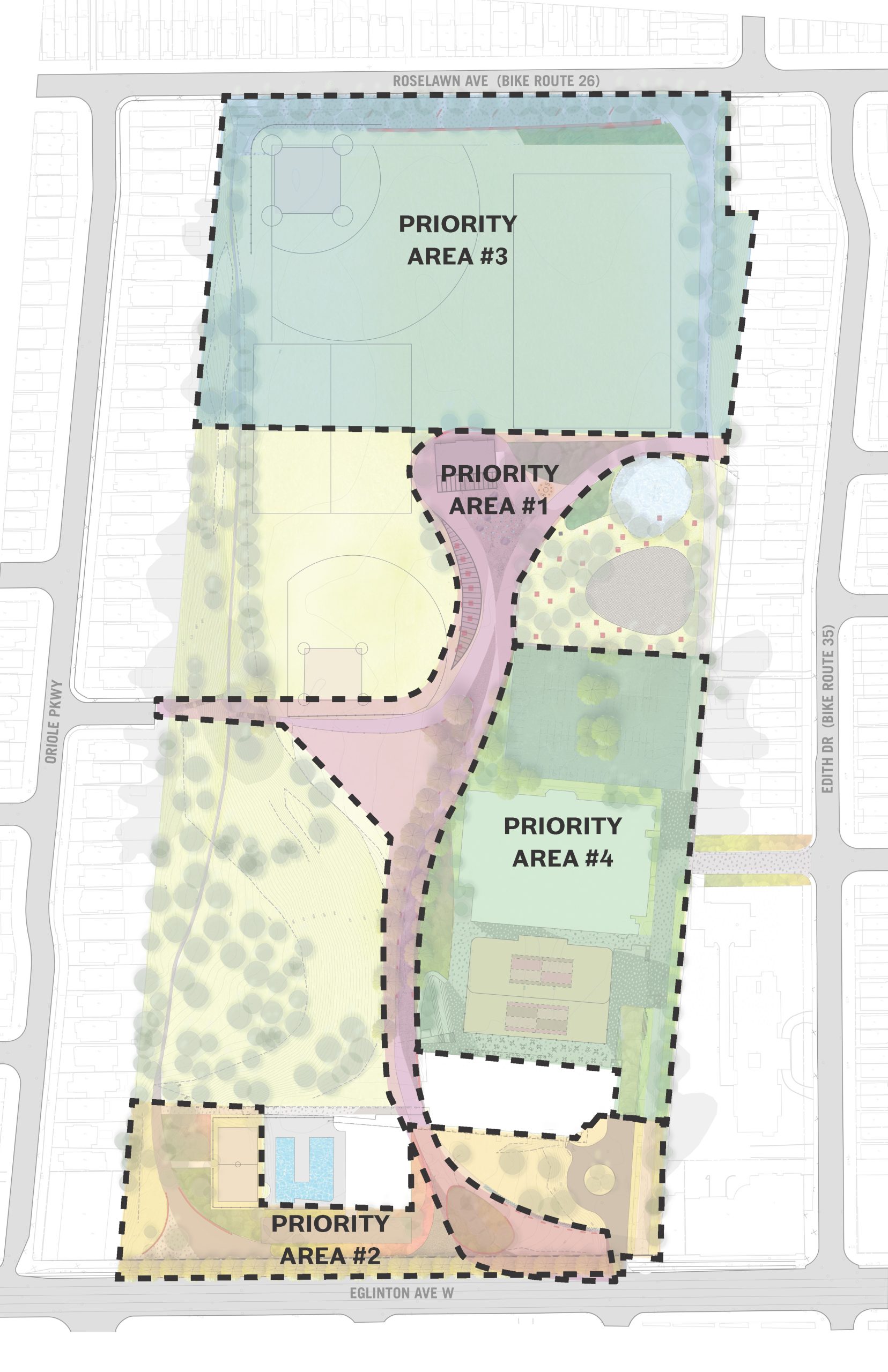
A three-phase community engagement process helped inform the implementation of Priority Area 1 of the Master Plan. This included engagement with local Indigenous community members and First Nations Rights Holders through the development of an Indigenous Advisory Circle, engagement with a local Indigenous Gardening Group and collaboration with the Wendat Nation.
Community Engagement Phase 1 Reports:
Community Engagement Phase 2 Reports:
Community Engagement Phase 3 Reports:
From 2018 to 2019, the City developed a Master Plan for Eglinton Park through an extensive process involving a design consultant, internal stakeholders, user groups and the community. Community engagement included three public meetings: a meeting and workshop in February 2018 at the Northern District Toronto Public Library to gather early feedback, a concept plan presentation in June 2018 at Oriole Park Junior Public School, and a preferred plan presentation in June 2019 at North Toronto Memorial Community Centre. The Master Plan was completed in 2019.
Download the Master Plan Summary.