

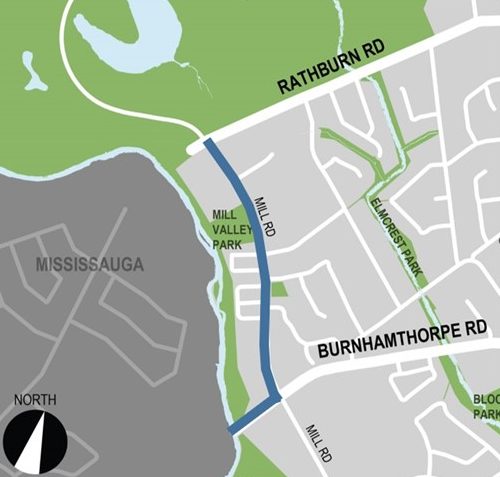
The City of Toronto has installed bikeways on Burnhamthorpe Road and Mill Road. These changes include an extension of an existing multi-use trail, new on-street cycle tracks and intersection improvements, and are part of a plan to improve road safety and build connected cycling routes between the new multi-use trails in Centennial Park and Rathburn Road.
City Council approved the project in June 2025 (IE14.4), and the project was installed between August and November 2025.
Beginning October 22, 2025, the City began making road safety improvements to the Burnhamthorpe Road/Mill Road and Mill Road/Rathburn Road intersections. View the construction notices below for more information:
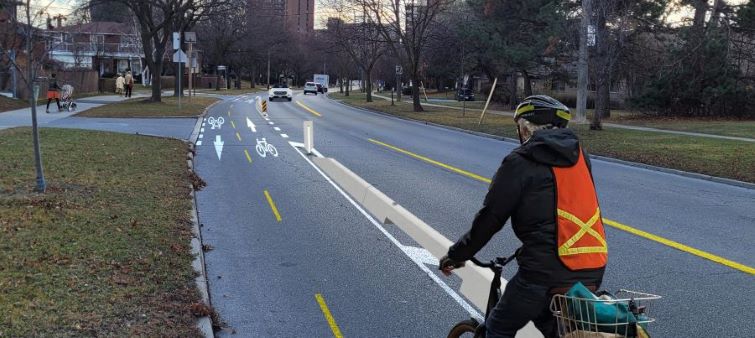
In this section, the City has installed a temporary multi-use trail, which will be made permanent pending the completion of the development at 340 Mill Road. Changes include:
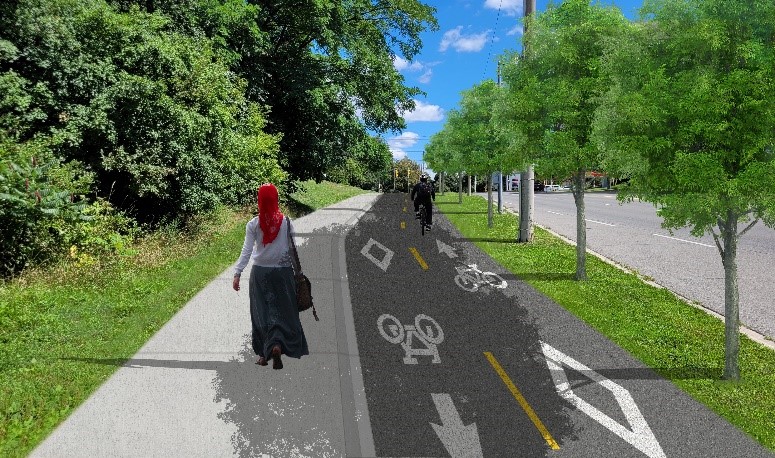
In this section, the City installed a bi-directional cycle track on the east side of the street. Changes include:
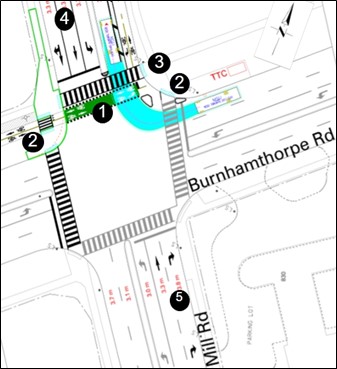
In this section, the City installed a bi-directional cycling crossing with bicycle signals on the north leg of the intersection. Changes include:
Public consultation on this project took place in 2024. The public consultation report below provides a detailed summary of all activities that took place, proposed changes and feedback received.
The City considered potential changes to the proposed design through review of feedback from community representatives, businesses and the public, alongside technical information, policies, guidelines and site observations.
Following consultation, the following changes were made to the proposed design and recommended to City Council for approval:
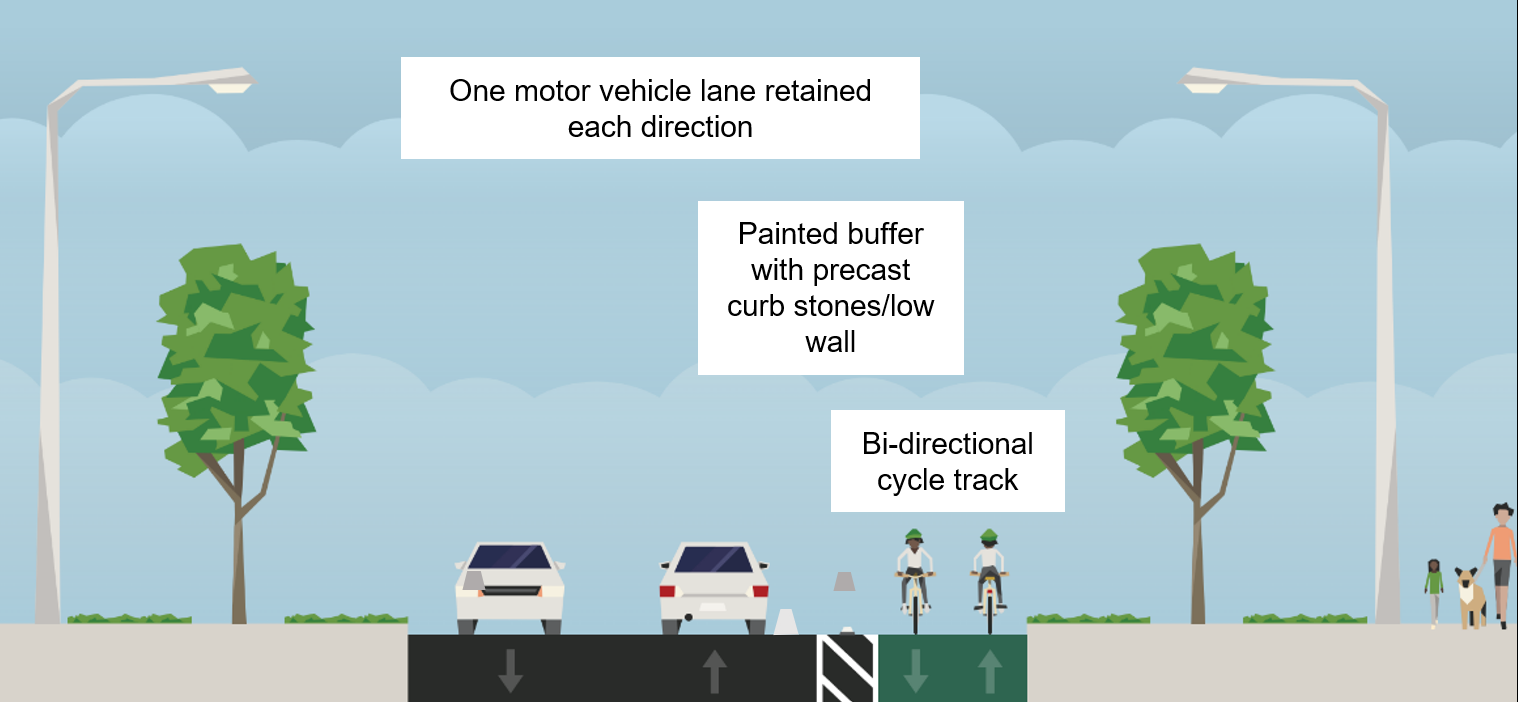
A bi-directional (two-way) cycle track on the east side of Mill Road was chosen because Mill Road does not have enough roadway width to accommodate uni-directional (one-way) cycle tracks in each direction. Mill Road is 10 m wide, and installing uni-directional cycle tracks would not provide enough physical space for the buffers and physical protection required for the safety of people cycling.
A bi-directional cycle track fits within the available space while still providing a safe, comfortable and fully protected bikeway for all users.
The east side provides a direct connection to the multi-use trail on Centennial Park Boulevard, eliminating the need for people cycling to cross the stop-controlled intersection at Rathburn Road and Mill Road.
The east side has fewer large driveway entrances than the west, reducing potential conflict points between people cycling and motor vehicles.
Installing the bikeway on the east side avoids making additional signal changes and helps maintain a more efficient flow of traffic than the alternatives. For example, a uni-directional cycle track on both sides of the road or a west-side bi-directional cycle track would require a dedicated right-turn traffic signal phase at the Mill Road and Burnhamthorpe Road intersection, because of the high number of southbound right-turning vehicles.
Permanent bikeway construction is most common when combined with other construction activities, such as road rehabilitation, for cost saving opportunities. No road rehabilitation projects are planned for the next five years on Mill Road. Therefore, to implement and improve safety on the roadway, the City uses quick-build materials for new cycling infrastructure and safety improvements. These quick-build materials allow the City to deliver projects faster and at a lower cost, while still providing clear separation between people cycling and motor vehicles.
When full road work is scheduled on Mill Road in the future, the current quick-build installation may be upgraded to a permanent design, such as a raised bikeway.
Toronto builds and upgrades bikeways to improve road safety for all. New and enhanced bikeways help to reduce speeding and provide a buffer between pedestrians and motor vehicle traffic. Expanding the cycling network also aligns with other City policy objectives, such as TransformTO, which aims for 75% of all school and work trips under 5 km by walking, cycling and transit by 2030, and the Vision Zero Road Safety Plan which strives to reduce traffic-related deaths and injuries to zero by prioritizing the safety of our most vulnerable road users.
Cycling on sidewalks is prohibited in Toronto for individuals aged 14 and older, as sidewalks are designated for pedestrians and those using mobility aids. The implementation of on-street cycle tracks will provide safer cycling spaces while keeping sidewalks unobstructed for pedestrians.
Prior to construction, Mill Road consisted of one 5.0 m wide vehicle lane in each direction, which exceeds the City’s minimum lane widths guidelines of 3.3 m for a curb lane. Following the quick-build project, the vehicle lanes were reduced to 3.3 m from Burnhamthorpe Road to Rathburn Road.
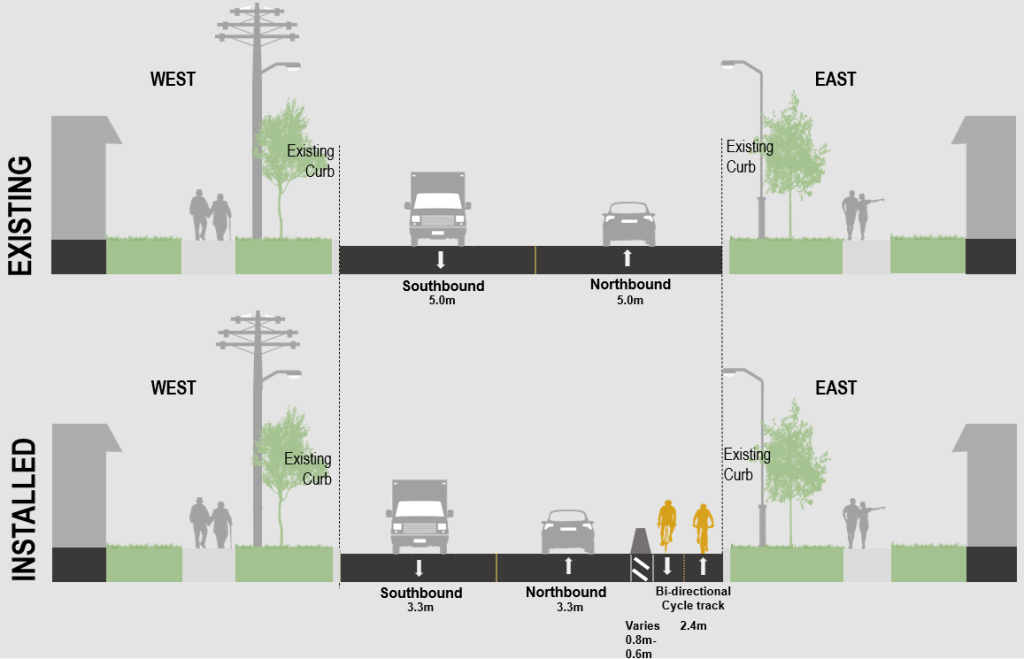
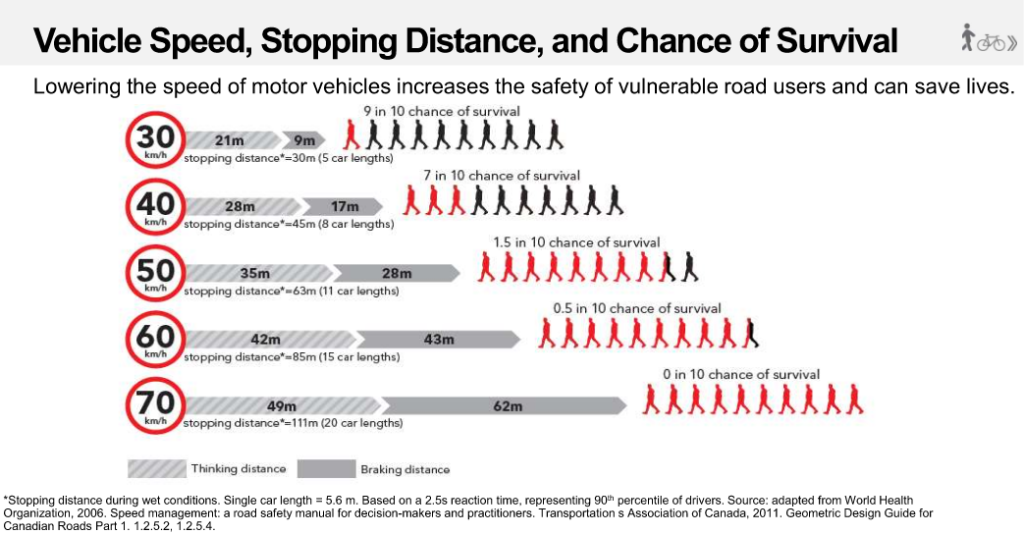
The benefits of reducing lane widths include encouraging people driving to travel within the speed limit. Studies in Toronto and other cities have shown wider vehicle lanes lead to speeding. Narrow lane widths achieve the following:
During the project’s design phase, consultation was conducted with the City of Toronto’s Operations and Maintenance, Solid Waste and Emergency Services to ensure City maintenance and emergency vehicles can still manoeuvre. Safe access for emergency vehicles is a fundamental part of the design process.
The City will service the bi-driectional cycle track on Mill Road during the winter using snowplow equipment. Visit toronto.ca/snow to learn more about winter maintenance of bikeways.
Bi-directional cycle tracks have been implemented in various locations across the city and have shown to improve safety for all road users. The Mill Road design has been employed successfully on similar streets and is intended to improve safety of all road users.
The City is implementing changes on Burnhamthorpe Road and Mill Road as part of the Cycling Network Plan near-term implementation plan for 2022-2024 and to fulfill the City’s commitment to the Vision Zero Road Safety Plan. This project is part of the Council-Approved Cycling Network Plan and advances the goals of several City of Toronto Strategies including Vision Zero Road Safety Plan and TransformTO: Net Zero Strategy. Vision Zero’s goal is to eliminate traffic-related fatalities and serious injuries by making our roads safer for everyone, especially for seniors, school children, pedestrians and people cycling.
From 2018 to 2022, there were 59 reported vehicle collisions involving four pedestrians and one serious injury on Mill Road between Burnhamthorpe Road and Rathburn Road. All changes are focused on reducing future collisions.
This project was approved in June 2024 as part of the Cycling Network Plan – 2024 Cycling Infrastructure and Missing Sidewalk Installation – Third Quarter Update (2024.IE14.4).
To receive construction updates by email, please contact cycling@toronto.ca and indicate that you would like to be added to the mailing list.