

Care lives here, and all are welcome.
We understand that you have many questions about your new home. This information will guide you around some of the important procedures we have in place to benefit and support all who live, work and visit.
This video is for families who have a loved one living as a resident in one of the City of Toronto long-term care homes.
The fundamental principle to be applied in the interpretation of Fixing Long-Term Care Act, 2021 and anything required or permitted under this Act is that a long-term care home is primarily the home of its residents and is to be operated so that it is a place where they may live with dignity and in security, safety and comfort and have their physical, psychological, social, spiritual and cultural needs adequately met.
Seniors Services and Long-Term Care (SSLTC) fully respects that the following rights of residents are fully respected and promoted:
All long-term care home residents are members of the Residents’ Council, enshrined in legislation and upheld in the Residents' Bill of Rights. Active Residents’ Councils give residents a voice and create a welcoming space where they can contribute and support one another.
The theme for Residents’ Council Week in 2026 is “Ready, Set, Engage!” and here are a few of the Residents’ Council executives leading the charge.
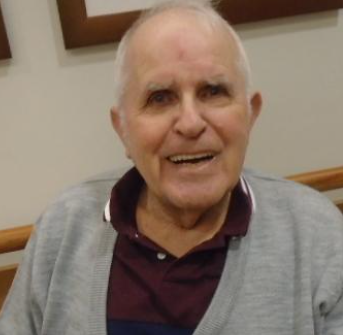
At Kipling Acres, Peter serves as the President of the Residents’ Council, a role he carries out with dedication and pride. He works hard to represent fellow residents and is well respected for his leadership and commitment to the community.
Peter particularly enjoys the trivia, music and entertainment programs at Kipling Acres. He is known for his exceptional knowledge of music from the 1950s and 1960s. With his remarkable memory, Peter can often identify a song by its title, artist and even the year it was released.
Peter enjoys dancing with his wife, and the two frequently spend weekends listening to music and dancing together. Their shared love of music brings them many happy moments.
When it comes to food, Peter’s favourite is poutine. Whether he is spending time with family, enjoying music, watching sports or sharing a meal with loved ones, Peter brings warmth, kindness and enthusiasm to everything he does.

Emelia Murphy is a caring leader who speaks up for other residents as the Residents’ Council President. She also raises money for resident programs and services by selling puzzles. A life-long puzzler, Emelia continued her traditions after moving into Lakeshore Lodge. Before moving into long-term care, she worked at Sears preparing packages for sale and was also a bartender. Her experience with customer service, sales and packaging has helped her build strong relationships, support other residents and raise funds for her community.

Stephen was born in Toronto. He got his love of sports from his parents who were big Toronto Maple Leafs fans. Stephen played many different sports like hockey, baseball and soccer. He worked as a roller skating and ice-skating guard. He also worked as a driving instructor and a bowling center manager. Stephen feels privileged to represent the residents of Seven Oaks.
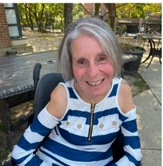
Doreen Bible has been a valued member of the Castleview Wychwood Towers community for 20 years. She is a dedicated advocate for the residents as the President of the Residents’ Council and also serves on the Home Advisory Committee. Known for her warm smile and friendly nature, Doreen can often be found sitting outside in the sunshine, socializing with residents and brightening everyone’s day.
Seniors Services and Long-Term Care (SSLTC), a division of the City of Toronto, is the Health Information Custodian for the City’s 10 long-term care homes.
We are committed to protecting the privacy and confidentiality of personal health information in accordance with the Personal Health Information Protection Act, 2004 (PHIPA) and other applicable laws.
Personal health information may be collected, used, disclosed, retained and securely disposed of as permitted or required by law. SSLTC takes reasonable steps to protect personal health information from unauthorized access, use, disclosure, theft, loss or modification.
Access to personal health information is limited to authorized individuals who require the information to provide care and services or to perform their duties.
SSLTC collects personal health information from residents, substitute decision-makers, health care providers and other authorized persons or organizations. This information may be used or disclosed to support the delivery of care and services in our long-term care homes, including to:
Personal health information is collected, used and disclosed with consent where required by law, or as otherwise permitted or required under PHIPA.
Under PHIPA, individuals have the right to:
Individuals who wish to access or request a correction of their personal health information, or who have questions about how their information is handled, are encouraged to contact the management team at the applicable long-term care home.
Requests for access to or correction of personal health information may also be submitted in writing in accordance with PHIPA.
SSLTC is committed to addressing privacy concerns in a timely and respectful manner. Individuals are encouraged to first raise concerns with the long-term care home or program involved so that issues may be reviewed and resolved as quickly as possible.
Questions or concerns regarding privacy practices may also be directed to the SSLTC Privacy Office at SSLTCPrivacy@toronto.ca.
Individuals may also file a complaint about privacy or access matters with the Information and Privacy Commissioner of Ontario (IPC).
Information and Privacy Commissioner of Ontario
2 Bloor St. E., Suite 1400, Toronto, Ontario, M4W 1A8
Phone: 416-326-3333
Email: commissioner@ipc.on.ca
For questions about SSLTC’s information handling practices or privacy program, please contact:
Manager, Privacy and Clinical Information Management
Metro Hall, 8th Floor, 55 John St., Toronto, Ontario, M5V 3C6
Phone: 416-392-8490
Fax: 416-392-8457
Email: SSLTCPrivacy@toronto.ca
SSLTC values the trust residents, families and care partners place in us. We are committed to handling personal health information respectfully, securely and in accordance with applicable privacy legislation.
We are committed to providing exemplary care and service. If we do not meet your expectations, we want to know about it so that we can quickly make it right. Our priority is to accomplish this in a supportive and transparent way that ensures there is no fear of reprisal.
If you have a question, concern or complaint:
In line with Ministry guidance, caregivers /essential visitors may visit, even if the long-term care (LTC) home is in outbreak, to provide essential support for a resident to maintain good health and well-being.
Caregivers / essential visitors:
All general visitors are welcome to visit.
Sometimes there may be a need to limit the number of visitors at a time, depending on the physical structure of the LTC home and based on Toronto Public Health direction, please follow staff guidance.
In some circumstances, general visitors may need to wear a mask and PPE for indoor visits. If required, these items will be provided.
In line with the CARE values, the presence of family, friends and the community support a home-like environment and contribute to a high quality of life for those residing in long-term care.
Unacceptable behaviour on the part of a visitor such as loud and disruptive behaviour, verbal abuse, physical abuse, violence, interference with the care of a resident and infringement of the guidelines for visitors will not be tolerated and may result in visiting restrictions or visiting prohibition.
Please do your part to prevent infections and help keep everyone safe by adhering to these infection prevention and control (IPAC) tips:
Each long-term care home has an Infection Prevention and Control (IPAC) Manager to lead, plan and oversee infection monitoring programs, identify and mitigate risk factors, prevent disease outbreaks and improve resident outcomes.
Should an outbreak occur, Seniors Services and Long-Term Care immediately implement outbreak management protocols. The long-term care home’s Infection Prevention and Control team collaborates with Toronto Public Health to plan the best ways to respond and resolve the outbreak as quickly and safely as possible. Depending on the nature of the outbreak, visitors may be restricted.
In line with Ministry direction, the City will support, monitor and record all resident non-emergency absences from the home, without requiring discharge.
Absences from the home include:
To ensure the safety and security of all residents, policies for private sitters, hired to provide companionship for the resident, include the requirement for a police reference check to be completed and submitted prior to the resumption of duties.
Zero Tolerance for Abuse applies to any person who has contact with a resident or client, including staff, agents, volunteers, family members, substitute decision makers (SDMs), visitors, paid trainees and paid companions. Seniors Services and Long-Term Care adheres to and enforces zero tolerance of abuse by any person.
Seniors Services and Long-Term Care strictly adheres to and enforces zero tolerance of abuse of residents and clients by any person.The policy Zero Tolerance for Abuse applies to any person who has contact with a resident or client, including staff, agents, volunteers, family members, substitute decision makers (SDMs), visitors, paid trainees and paid companions.The definition of zero tolerance for abuse is defined by the Ministry of Health and Long-Term Care as:
“Zero tolerance” means within this policy, that the Long-Term Care Home Operator shall:
For the purpose of this policy, staff includes any permanent, part-time and contracted:
This definition does not imply or create an employer/employee relationship where none exists, and it is used solely in the context of this policy to clarify that abuse will not be tolerated from any source.
Abuse can take many forms. Seniors Services and Long-Term Care will not condone any resident abuse. The Standards of Employee Conduct, Standard Respect for Others, 6.1 Resident Abuse, clearly defines staff expectations regarding resident abuse.
Abuse is defined as:
“Abuse” of a resident means any action or inaction, misuse of power and/or betrayal of trust or respect by any person against a resident, that the person knew or ought to have known, would cause (or could reasonably be expected to cause) harm to the resident’s health, safety or well-being.
Abuse includes, but is not limited to:
Residents have the right to dignity, respect and freedom from abuse and neglect. Seniors Services and Long-Term Care has a zero tolerance for abuse; therefore, abuse will not be tolerated by any person entering the Home and corrective action will be taken in all instances of resident abuse.