

Fort York National Historic Site
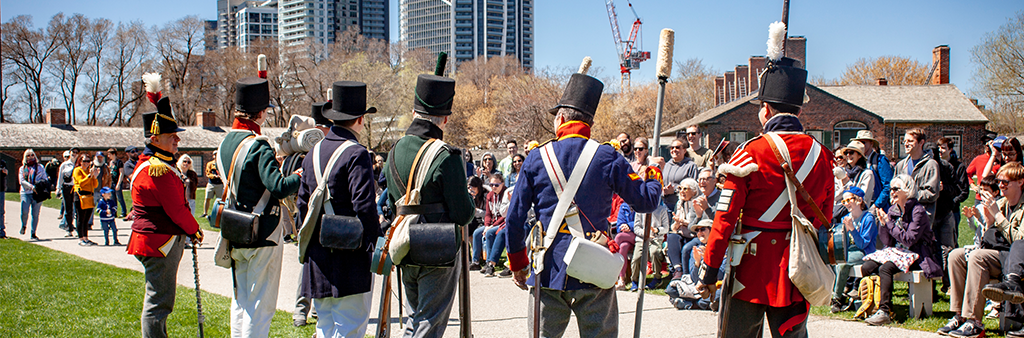
Experience Toronto’s Hidden History
Before Toronto’s waterfront was reshaped by land reclamation, Fort York stood guard on the water’s edge. Listen to the stories behind the first British garrisons built to defend the growing Town of York and the dramatic events and battles of the War of 1812 that forever shaped the city we know today. Long before the fort was built, Indigenous Peoples had lived on and gathered along these lands for thousands of years. Uncover the often-overlooked stories of First Nations warriors, Black communities and the many individuals whose lives shaped Toronto’s history.
Admission
General admission is free.
Some exhibitions and events may carry a separate charge where noted. Groups of 15 people or more will be charged a fee. See group visits.
Hours of Operation
Wednesday to Sunday: 11 a.m. to 4 p.m.
Free Guided Tours
45-minute tours are offered on the hour starting at 11 a.m. The last tour starts at 3 p.m.
Group Visits
Groups of 15 people or more will be charged a fee for their visits. This fee includes a reserved time for your group and a dedicated tour guide to ensure an enjoyable and engaging experience.
For more information on group tours, fees or to book your group visit, email fortyork@toronto.ca. Please contact us 14 days in advance of your preferred visit date. Groups without an advanced booking may not be accommodated.
School Trips
Explore the Fort York's offerings and book.
Fort York is mainly an outdoor site with walking required between locations. Some structures and exhibits require walking up or down stairs. Fort York is committed to providing access for visitors to as many areas of the site as possible.
Strollers are welcome at Fort York and are easy to navigate throughout most of the site.
All walkways within the seven-acre walled site are asphalt surfaced and are accessible for visitors who use mobility aids. Some exhibits require walking up or down stairs. The Stone Magazine and the Brick Magazine are not wheelchair accessible. The pathway in the Strachan Avenue cemetery is a packed gravel surface with limited accessibility for people using mobility aids. Restored fortification features such as walls, ditches, and dry moats may not be accessible for visitors using mobility aids.
Portable ramps will be provided for any edges that need to be negotiated through doorways and assist visitors with ramp placement. In cases where a visitor cannot access a space, an interpretive overview will be provided upon request (person to person).
Service animals are welcome. Seating can be found in a number of exhibits, outside many of the structures, and in the picnic table area. All washrooms are accessible. Public access washrooms are located in the Visitor Centre, South Soldiers’ Barracks, on the lower floor of the Blue Barracks. The Blue Barracks washroom is accessible via elevator. Water fountains are located outside and only available seasonally.
Please call 416-392-6907 or email Fort York at fortyork@toronto.ca for specific accessibility questions.
Location
By Car
From Gardiner Expressway eastbound: Take the Jameson exit off the Gardiner Expressway to Lake Shore Boulevard. Continue eastbound on Lake Shore Boulevard, past Exhibition Place, turning left on Fort York Boulevard. North on Fort York Boulevard past Fleet Street. The parking lot is in front of the Visitor Centre, under the Gardiner Expressway, located at 250 Fort York Blvd. Metered parking is $1 per half hour.
From Gardiner Expressway westbound: Take the Spadina exit off the Gardiner Expressway and continue westbound on Lake Shore Boulevard. Turn right at Fort York Boulevard and continue north past Fleet Street. The parking lot is in front of the Visitor Centre, under the Gardiner Expressway, located at 250 Fort York Blvd. Metered parking is $1 per half hour.
Additional Green P parking is available at the corner of Fleet Street and Strachan Avenue. Access this Green P lot via the westbound lane of Fleet Street and turn right onto Garrison Road (Garrison Road is marked by the Old Fort York archway). This parking lot can also be accessed from Strachan Avenue. Once parked, visitors can walk along Fleet Street to Fort York Boulevard to the Visitor Centre entrance.
Carpark 266 – 250 Fort York Blvd – surface parking – 49 spaces
Carpark 271 – 800 Fleet St – surface parking – 132 spaces
By Transit
From Bathurst Station: On Line 2, take the Bathurst 511 Exhibition bus southbound. Exit at Fleet Street and Bastion Street stop. Walk north along Bastion Street to Fort York Boulevard. Cross the Fort York Boulevard and walk west along Fort York Boulevard to the Visitor Centre.
From Union Station: Take the 509 Harbourfront streetcar westbound towards the CNE Exhibition grounds on Fleet Street. Exit streetcar at Fleet Street and Fort York Boulevard stop. Walk north to the Visitor Centre.
From Eglinton West Station: Board the 63 Ossington Bus Southbound. Proceed southbound to Strachan Avenue, south of King Street. Exit the bus at Strachan Avenue and East Liberty Street and walk south towards the Strachan stairs at the west end of Fort York.
For specific TTC route and schedule information call 416-393-4636 (INFO) or visit the TTC website.
From Exhibition GO Station: Take the 509 Harbourfront or 511 Bathurst streetcar and exit streetcar at Fleet Street and Fort York Boulevard stop. Walk north on the west side of Fort York Blvd to the Fort York Visitor Centre. For specific GO train schedule information, visit the GO Transit website.
By Bicycle
Bike parking, as well as a Bike Share Toronto station, are located outside the Visitor Centre.
From King and Bathurst ride south on Bathurst Street towards Lake Ontario. Cross the Bathurst (Sir Isaac Brock) Bridge and turn right onto Fort York Boulevard. Follow the Fort York Boulevard bike lane to the Visitor Centre.
From King and Strachan from King Street ride south on Strachan Avenue towards the lake. Turn left at Fleet Street and follow to Fort York Boulevard. Turn left on Fort York Boulevard and ride north to the Visitor Centre.
From the Martin Goodman Trail at Lake Shore Boulevard and Strachan Avenue exit the trail and ride north on Strachan to Fleet Street. Turn left at Fleet Street and follow to Fort York Boulevard. Turn right on Fort York Boulevard and ride north to the Visitor Centre.
Bicycle parking at special events: Many large-scale events (concerts, festivals) have additional bike parking. Please check with the event for more information on bike parking.
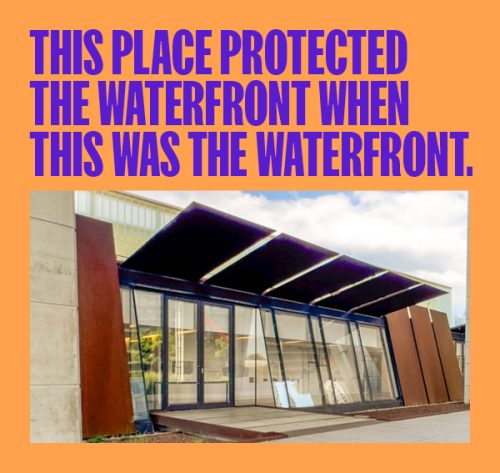
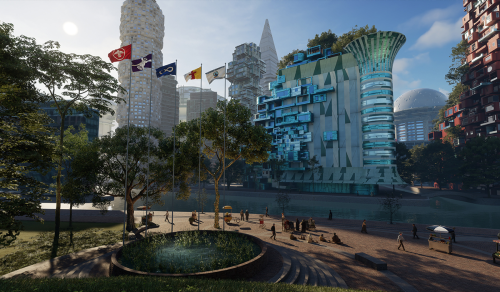
Step into a time-shifting, immersive experience that traces the changing waterlines surrounding two historic sites in the heart of Toronto: Fort York National Historic Site and Spadina Museum.
Reflections from Indigenous and Black writers enrich the 360 degree views, which consider historic landscapes from new perspectives and envision the future of these monumental places.
Many Nations, One Ground
Fort York is perhaps best known as the location where the Battle of York came to its violent climax in 1813 during the War of 1812. Yet, many nations have lived and gathered on this land before the British settlement in 1793. For thousands of years this place has been shaped by Indigenous presence and holds powerful stories
of conflict, community and resilience.
During the War of 1812, independent communities allied together to defend against the shared threat of American invasion. Today, Fort York shares the stories of the service of not only British and Upper Canada militiamen, but also the strategic alliances and service of First Nations and free Black communities that had a lasting impact on the future city of Toronto.
Canada’s Largest Collection of 1812 Buildings
Nowhere else in Canada can you experience a larger collection of original War of 1812 military buildings. Seven of the fort’s eight historic buildings still stand today; all being constructed between 1813 and 1815. The fort’s two blockhouses are among the oldest buildings in Toronto.
The site was designated as a National Historic Site of Canada in 1923. The City of Toronto purchased Fort York in 1909, while continuing to allow the army to use the fort until the 1930s.
Today, visitors can explore these unique buildings, as well as enjoy guided tours and special programs that bringing the history of the site to life.
The Explosion That Changed Toronto Forever: The Battle of York
On April 27, 1813, American forces were advancing on York (now Toronto). After a failing to stop the American landings, the British command made a desperate decision: to evacuate and abandon Fort York and destroy their own gunpowder magazine rather than let it fall into enemy hands.
What followed was one of the most catastrophic moments in Toronto’s settler history. The explosion tore through the advancing American columns, killing and wounding soldiers on both sides, including American General Zebulon Pike. Debris rained down across the battlefield, and shockwaves were felt for miles. This single, devastating blast changed the course of the battle—and the story of Toronto forever.
Among those impacted were First Nations warriors, enslaved and free Black residents, and civilian workers whose lives were upended. Their perspectives, less frequently shared, reveal a complex story of the Battle of York and the American occupation of the town. This conflict was not just a clash of empires, but a moment that shaped the diverse communities of this land.
The fort you experience today is what the British re-built in the aftermath of the devastation of 1813, just west of the site of the original Garrison.