

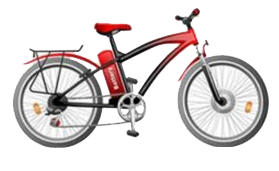
An electric bicycle, also known as a power-assisted bicycle or an e-bike, is a bicycle with an electric assist-motor that makes riding easier, especially when travelling uphill and on longer trips.
E‑bikes are allowed on Toronto’s streets and offer a low‑emission, accessible way to travel for people of all fitness levels.
You must be at least 16 years old to ride an e-bike in Ontario.
Before riding an e-bike, make sure you understand and follow Ontario’s requirements:
E-bike riders must follow the same rules of the road as those that apply to regular cyclists and to motorists.
To help keep yourself and others safe:
Fines and penalties may apply.
The Toronto Police Service may enforce violations of the Highway Traffic Act and Toronto Municipal Code by-laws, including unsafe riding and other offences. For more information please visit: Cycling & the Law page.
Different types of e-bikes are permitted in different locations.
On-road painted bike lanes:
On-road protected (physically separated) bike lanes:
Learn more about where different forms of e-bikes and other micromobility devices are allowed to operate in the City of Toronto.
Motorized vehicles, including power-assisted e-bikes weighing more than 40kg or which do not require muscular power, are not permitted on park trails or multi-use paths.
If a motorized vehicle is used on a park path, the rider may be subject to a fine issued by by-law enforcement officers.
Examples of parklands and park multi-use paths include:
Not all e-bikes are permitted on Toronto ferries or Toronto Island Park.
Only certain e-bikes may be parked on sidewalks and secured to post-and-ring stands.
Under Toronto Municipal Code Chapter 950, section 201B, only bicycles and e-bikes that are capable of being propelled by pedal power alone may be parked on sidewalks and use post-and-ring stands in the same way as a conventional bicycle.
Scooter-style and moped-style e-bikes must be parked on-street, similar to motorcycles.
These e-bikes do not meet the Ontario Highway Traffic Act definition of a bicycle because they are not capable of being propelled solely by muscular power.
If you or someone else has been seriously injured in a collision, call 9-1-1 right away to request emergency assistance.
Collisions involving minor injuries can be reported to the Toronto Police Service Collision Reporting Centre.
If you were involved in a collision as a cyclist or pedestrian and the injuries are minor and do not require immediate medical attention, you can report the collision:
For more information, visit the Toronto Police Service Collision Reporting Centre webpage.
Lithium-ion batteries are found in many common devices, including e-scooters. Certified lithium-ion batteries that are properly charged, used, and disposed of are generally safe. Overcharged, modified, or damaged batteries are not safe and can cause a fire or even explode.
Visit Toronto Fire Services for more for more information on lithium-ion battery safety Lithium-ion Batteries – City of Toronto and Lithium-ion Batteries - Safety Tips - Toronto Fire Services.
Learn more about the Micromobility Strategy for Toronto.