

The City collects organic material from approximately 460,000 houses, as well as most apartment and condo buildings, schools and City-owned buildings.
The Green Bin program helps keep waste out of landfill by collecting and processing organics into material that can be used to create nutrient-rich compost used to feed and nourish soil. Putting food scraps in the Green Bin also means they can be used to create renewable natural gas that the City can use to help power its vehicles and heat its buildings. When you toss food scraps in the garbage, they go to landfill and create harmful greenhouse gases.
Learn how the Green Bin can help create Renewable Natural Gas.
First, your Green Bin scraps are collected and delivered to the processing facilities.
The scraps are then broken down into biogas and digester solids.
The digester solids are turned into high-quality compost used to feed and nourish soil.
The biogas is captured and upgraded into a Renewable Natural Gas (RNG), which creates less greenhouse gas emissions than other fuels.
The RNG is then injected into the grid and is blended with fossilized natural gas to create a lower carbon fuel. This project is one of the first of its kind in North America.
Lastly, the RNG is used to help heat the City’s buildings and fuel its vehicles.
Learn more about how Green Bin organic waste is processed and how the City is creating Renewable Natural Gas (RNG) from Green Bin organics.
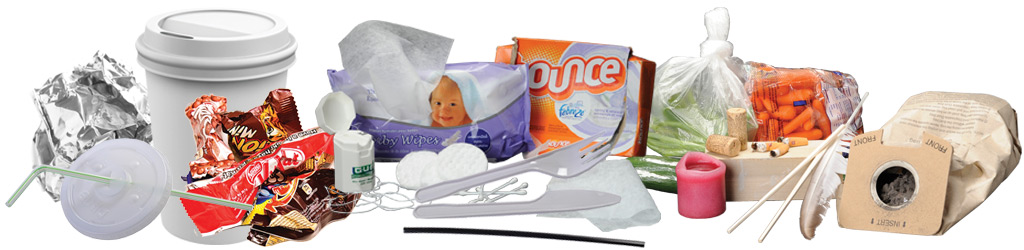
The City does not accept the following items marketed or labelled as compostable or biodegradable in its Green Bin organics program:
These items, which may be made of or lined with a bio-based plastic, must be disposed of in the garbage. Alternatively, products can be returned to retailers/manufacturers that offer take-back programs.
The City commissioned research related to disposal of single-serve coffee and tea pods. The findings include feedback from Toronto residents about use, attitudes and disposal behaviours.
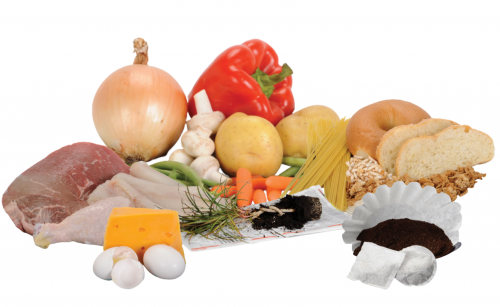
What goes in the Green Bin is very important as the organic material is used to create high-quality compost that can be used to feed and nourish soil. The Green Bin program was designed primarily to handle food waste as well as some fibre/paper products. It was not designed to process packaging.
Instead of traditional composting, the City uses anaerobic digestion technology to process Green Bin waste. Before organic material goes into the anaerobic digesters, it goes through a pre-processing phase to remove any contamination. In this phase, anything that behaves like a plastic, regardless of what it is made of, is removed and sent to landfill. Bio-based plastics, such as compostable plastic bags and cutlery, behave like plastic and as such are removed during the pre-processing phase and sent to landfill.
There are many benefits to using anaerobic digestion to process organics. The City chose anaerobic digestion because it:
Learn more about what happens to organics once they are picked up at the curb.
The City has installed Green Bins for organic waste in all Dog Off-Leash Areas in parks across the city. In parks that do not have a Green Bin, residents are encouraged to dispose of dog poop and other organic waste in garbage bins or take it home and place it in the Green Bin.