

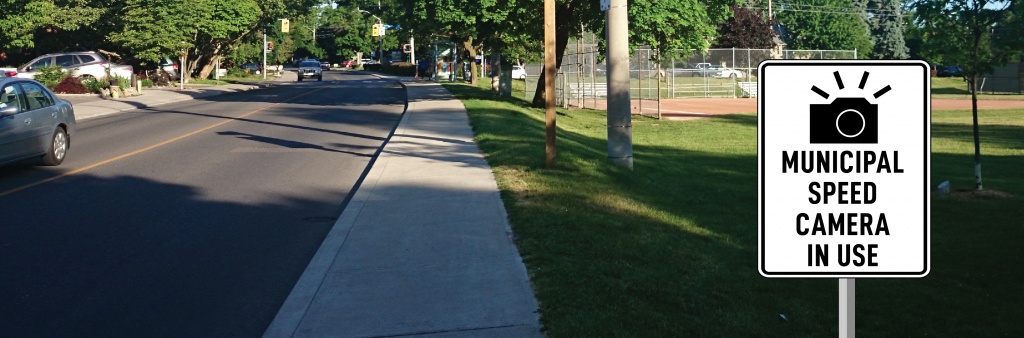
The following information relates to the City of Toronto’s former Automated Speed Enforcement (ASE) program and is provided for reference.
Automated Speed Enforcement (ASE) was an automated system that used a camera and a speed measurement device to detect and capture images of vehicles travelling above the posted speed limit.
It was designed to work alongside other methods and strategies, including engineering measures, education initiatives and traditional police enforcement. ASE focused on influencing driver behaviour to reduce speeding and improve road safety.
As of November 14, 2025, Automated Speed Enforcement (ASE) penalty orders are no longer issued in accordance with provincial legislation. Penalty orders issued for violations that occurred before this date remain valid and must be paid by the due date or disputed within 30 days of issuance.
The following information describes how Automated Speed Enforcement (ASE) penalties were issued when the program was in operation.
If a vehicle was detected by the ASE system travelling above the posted speed limit, the registered owner of the vehicle received a violation notice regardless of who was driving. The total payable amount was determined by Ontario Regulation 355/22 under the Highway Traffic Act and included a set fine, victim fund component and a provincial licence plate access fee. No demerit points were issued by the Ministry of Transportation and driving records were not affected.
Images captured by the system were reviewed by Provincial Offences Officers before violation notices were issued to the registered owner of the vehicle. Upon conviction, a fine was issued under the administrative penalty system, which did not affect driving records or demerit points.
If you received an Automated Speed Enforcement (ASE) penalty notice in the mail, find information about how to pay or dispute your penalty.
 Locations were selected through a data-driven approach that considered vehicle speed and collision data. ASE systems were placed in Community Safety Zones.
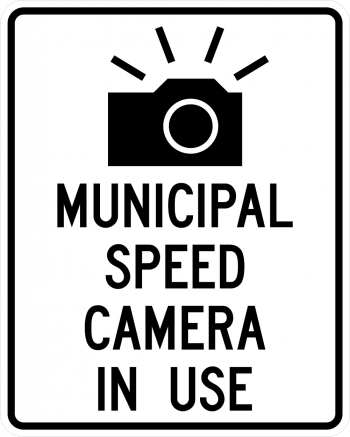
Signs were posted advising motorists when they were in a Community Safety Zone with an ASE system. Motorists should always obey the speed limit and drive at a speed that allows them to stop safely. This means driving below the posted speed limit in bad weather, in heavy traffic or in Community Safety Zones.
There were 150 ASE systems installed on local, collector and arterial roads in Community Safety Zones across the city.
The ASE systems were either mobile or permanent (pole-mounted). Mobile ASE systems rotated regularly, which provided an opportunity to address a greater number of areas with safety concerns and provide a wider-ranging deterrent effect.
ASE sites were selected using a two-stage process developed based on best practices and provincial guidelines.
Stage 1: An initial screening of all Community Safety Zones was completed, and zones were prioritized based on the following data:
Stage 2: Once sites were prioritized, a manual review of each site was conducted that considered the following:
Once sites were assessed, operational considerations could result in minor adjustments to site prioritization.
From January 20, 2020 to March 31, 2020, the City issued over 25,000 warning letters to the registered owners of speeding vehicles. This was part of the City’s education campaign to inform residents about the new program and the implications of speeding. No tickets were issued during this period.
The Automated Speed Enforcement (ASE) pilot occurred between September and December of 2018.
During this four-month pilot program, ASE units were used to collect data to better understand the processing and administrative requirements of the enforcement program. Data was collected from school zones located on local, collector, and arterial roads at a total of 8 locations, with each location active for 1 month and included the collection of speed and volume data, 24 hours a day, 7 days a week.
The Automated Speed Enforcement pilot project did not involve the issuance of tickets or charges to vehicle owners as the regulations necessary from the Province of Ontario have not yet been enacted.
The following table provides a summary of the locations where the cameras were deployed and the data that was collected at each of the locations.
| Location (speed limit) | Average Weekly Vehicles detected above the speed limit | Average Weekly Vehicles detected more than 10km/h above the speed limit | Average Weekly Volume | Max Detected Speed (km/h) |
|---|---|---|---|---|
| Gateway Blvd
(40km/h) |
10,347 | 1,010 | 52,911 | 86.9 |
| Don Mills Rd
(60km/h) |
5,743 | 1,058 | 85,488 | 137.9 |
| Queen St
(40km/h) |
23,748 | 5,587 | 52,150 | 127.4 |
| Renforth Ave
(40km/h) |
25,511 | 7,370 | 37,091 | 202.3 |
| Wilson Ave
(50km/h) |
52,151 | 16,937 | 83,867 | 156.4 |
| Dufferin St
(50km/h) |
14,139 | 2,192 | 63,498 | 124.4 |
| Rockcliffe Blvd
(30km/h) |
49,608 | 32,571 | 56,230 | 102.8 |
| Avenue Rd
(40km/h) |
60,170 | 22,013 | 103,180 | 109.8 |
Evaluation data from the City of Toronto’s Automated Speed Enforcement (ASE) program highlighted how speed cameras were effective in significantly reducing the number of people speeding and overall vehicle speeds, pointing to increased compliance and improved driver behaviour.
An evaluation study conducted by researchers from The Hospital for Sick Children (SickKids), in collaboration with Toronto Metropolitan University (TMU), analyzed speed and collision data from January 2020 to December 2022 at 204 locations where an ASE device had been installed. Although data collection was affected by the pandemic, substantial data was collected during periods without stay-at-home orders or school closures.
The study found that the proportion of drivers speeding in 30, 40 and 50 km/h speed limit zones dropped from approximately 60 per cent to 43 per cent, 51 per cent to 30 per cent and 58 per cent to 36 per cent respectively when the devices were operational. This represented an overall 45 per cent reduction in the proportion of drivers speeding in areas with an ASE device.
The data also showed that the introduction of ASE devices reduced vehicle operating speeds — the speed at which most vehicles travel in free-flowing conditions — helping to mitigate the risks associated with high-speed traffic. Vehicle operating speeds in 30, 40 and 50 km/h speed limit zones dropped from approximately 44 to 37 km/h, 50 to 44 km/h and 63 to 60 km/h respectively when the devices were active. This represented an overall decrease of approximately 7 km/h in vehicle operating speeds in areas with an ASE device.
The study also found that the percentage of drivers exceeding the speed limit decreased at 80 per cent of locations where an ASE device was installed. Excessive speeding — driving 20 km/h or more above the speed limit — was reduced by 87 per cent after an ASE device was installed.
Download the full Automated Speed Enforcement Program Evaluation.
The City launched a multilingual public education campaign to remind residents of the presence of ASE systems and the dangers of speeding.
Higher driving speeds contribute to a greater risk of serious injuries and fatalities: