


Toronto’s Action Plan to Confront Anti-Black Racism is Canada’s first municipal strategy focused on addressing systemic anti-Black racism and increasing equitable access to opportunity for Black Torontonians through City policy, programs, services, and community partnership. First adopted by City Council in 2017 and developed in partnership with Black communities, the Action Plan set out 22 recommendations and 80 actions across five issue areas and has provided an important foundation for advancing more equitable outcomes for Black communities.
Year Five (2023 to 2024) marks the final implementation period of the current Toronto Action Plan to Confront Anti-Black Racism. Over the life of the Action Plan, 96 percent of actions have been delivered, strengthening City capacity and advancing resident-facing outcomes in areas such as youth employment, culturally responsive family supports, community safety and wellbeing, and anti-Black racism learning across City systems. In April 2026, the Economic and Community Development Committee received the Year Five Update Report, this included a final-year implementation update and a Community Update on the Black Food Sovereignty Plan, covering from 2022 to 2025.
The City will continue to support Toronto’s diverse Black communities while staff complete development of a renewed 10-Year Toronto Action Plan to Confront Anti-Black Racism for Council consideration in Q2 2027.
 As part of its ongoing commitment to confronting anti-Black racism, the City of Toronto has supported the launch of the Black Community Data Governance Implementation Plan (BCDGIP) to strengthen how race-based and sociodemographic data about Black communities is collected, protected, interpreted and used. The BCDGIP responds to a long-standing need for data practices that do not simply collect information from Black communities, but are guided by Black community oversight, transparency, accountability and community benefit.
Developed with Wellesley Institute and Black Health Alliance, the BCDGIP builds on the City’s Data for Equity Strategy and the Toronto Action Plan to Confront Anti-Black Racism, and provides a practical guide for embedding Black data governance across City systems. It includes an executive report, consultation report, implementation roadmap and preliminary model, outlining how the City can strengthen internal readiness, engage Black communities, support responsible access to race-based data, and put safeguards in place to prevent harm. As implementation moves forward, the BCDGIP is expected to guide conversations with City divisions, inform policy and data infrastructure decisions, support community-informed decision-making, and help ensure that data is used to identify inequities, drive meaningful action and improve outcomes for Black Torontonians. Read the full Black Community Data Governance Implementation Plan here.
Black Torontonians (people of African descent or origin, African Black Caribbean, African-Canadian, Canadians of African descent) are contributing to all areas of city life; adding their talents and assets to make Toronto stronger, more vibrant and more successful.
However, studies continue to show that anti-Black racism still has detrimental impacts on the life and work of Black people in our city.
Anti-Black racism is embedded in Canadian institutions though policies and practices that reflect and reinforce negative beliefs, attitudes, prejudice, stereotyping and/or discrimination directed toward people of African descent, and their unique history and experience of enslavement and colonization here in Canada.
As the government closest to the people, the City of Toronto recognizes its responsibility to create a city that works for all residents. Confronting and removing barriers caused by anti-Black racism benefits all Torontonians, especially other Toronto communities experiencing racism and marginalization.
The Toronto Action Plan to Confront Anti-Black Racism was the result of a collaborative effort between the City of Toronto and Torontonians of African descent. The Action Plan was grounded in 41 years of reports and recommendations on anti-Black racism, 41 community conversations in partnership with 18 community agencies, and engagement from over 800 members of Toronto’s diverse Black communities.
Read the Toronto Action Plan to Confront Anti-Black Racism.
The Action Plan outlines 22 recommendations and 80 actions across five issue areas that work to dismantle systemic barriers and create meaningful systemic change to benefit all of Toronto’s communities. The Action Plan is SMART (Strategic and Specific, Measurable, Achievable, Relevant and Realistic, and Timely). Most importantly, it responds to the priorities identified by Toronto’s diverse Black communities.
The Confronting Anti-Black Racism (CABR) Unit is responsible for the implementation of the Action Plan to Confront Anti-Black Racism. The vision of the CABR Unit is to act as model for change, not only for equity and inclusion of Black people, but for other groups who are racialized and marginalized in Toronto. The mission of the CABR Unit is to work with City divisions, agencies, and commissions to drive transformative systems change in policy and practice across Toronto.
In leading the implementation of the Toronto Action Plan Confront Anti-Black Racism, the CABR Unit works to support cross-divisional efforts to identify and remove systemic barriers experienced by Black Torontonians, and ensure that municipal services, spaces and policies are fully inclusive and accessible to Black Torontonians.
Applying the equity framework of targeted universalism, the CABR Unit is working to ensure the removal of systemic barriers for Black communities, as well by the most disadvantaged communities, which can create benefits for all residents in the City of Toronto.
The Confronting Anti-Black Racism Advisory Committee (CABRAC) established by City Council helps to further advance the objectives of the Toronto Action Plan to Confronting Anti-Black Racism. You can follow the issues and priorities the Advisory Committee will address on the Toronto City Council and Committees Meetings, Agendas and Minutes web page.
Below are brief biographies for the members of the committee.
Deputy Mayor Amber Morley (Chair)
Read about Deputy Mayor Amber Morley on her Councillor page. |
Halimo Hashi
|
Rosemary Sadlier
|
Salma Malin
|
George Amoh
|
Queen Kukoyi
|
Dr. Charis Newton-Thompson
|
Dr. Kathy Moscou
|
May Mohamed (Vice Chair)
|
Dr. William Amanyire
|
The Anti-Black Racism Partnership & Accountability Circle (PAC) is comprised of twelve diverse Torontonians of African descent to support the implementation of the Toronto Action Plan to Confront Anti-Black Racism in effective, collaborative and accountable ways.
Through direct and ongoing engagement with the CABR Unit, the PAC partners with the City on municipal efforts to help the City better serve Torontonians of African descent.
More information on the PAC can be found on a dedicated page for the Partnership & Accountability Circle.
Learn more about anti-Black racism locally and globally. Additionally, find information on municipal and international campaigns and initiatives dedicated to combating anti-Black racism and promoting the advancement of people of African descent.
More information on local and international campaigns, initiatives and resources can be found on a dedicated page for Anti-Black Racism Resources.
The African Ancestral Acknowledgement Statement is a voluntary recognition offered to support Black staff wishing to acknowledge their ancestors of African descent who have been present and actively contributing to life on Treaty lands and traditional Indigenous territories. For more information on this acknowledgement and how and when it should be used, please review this African Ancestral Acknowledgement Guidance developed by the CABR Unit.
The CABR Unit has developed an Anti-Black Racism Analysis Tool for the City of Toronto to ensure municipal services, spaces and policies are fully inclusive and accessible to Black Torontonians. This tool is once offered once an introductory training is delivered through the CABR Unit. In this context, the Anti-Black Racism Analysis Tool can be used to guide conversations and implemented by senior leadership to uncover and review processes and practices that are anti-Black in design, delivery and impact.
The CABR Unit’s work is guided by the African principle, Ubuntu: “I am because you are.” This principle has guided the Unit’s work to influence, promote and activate social harmony and affirmation of Black communities by identifying and removing barriers, and improving access to opportunities for Black residents of Toronto. To this end, the CABR Unit has developed the UBUNTU Framework. This framework assists us in carefully reflecting on how change happens and how it needs to happen in the future.
Subscribe to receive periodic email updates.
Please type (do not copy and paste) your email address:
You will receive an email confirming your wish to subscribe.
Click to unsubscribe.
Social Development collects personal information under the legal authority of Toronto City Council Item 2017.EX29.11, as confirmed by the City of Toronto By-law 1476-2017 and Toronto City Council Item 2023.EC4.1, as confirmed by the City of Toronto By-law 603-2023.
[The information will be used to send email updates regarding the Toronto Action Plan to Confront Anti-Black Racism and associated initiatives, including but not limited to upcoming events, newsletters, community engagements, public appointment opportunities, and council proceedings]. Questions about this collection can be directed to the Manager, CABR Unit, Social Development, City Hall, 100 Queen Street West, 14th Floor, East Tower, Toronto, Ontario, M5H 2N2, or by telephone at 437-233-8346.
As stated in the Municipal Freedom of Information and Protection of Privacy Act, section 2(2.1) and 2(2.2), information collected on this form is considered business identity information. Business identity information could be publicly available and/or disclosed upon request, unless an exception applies.


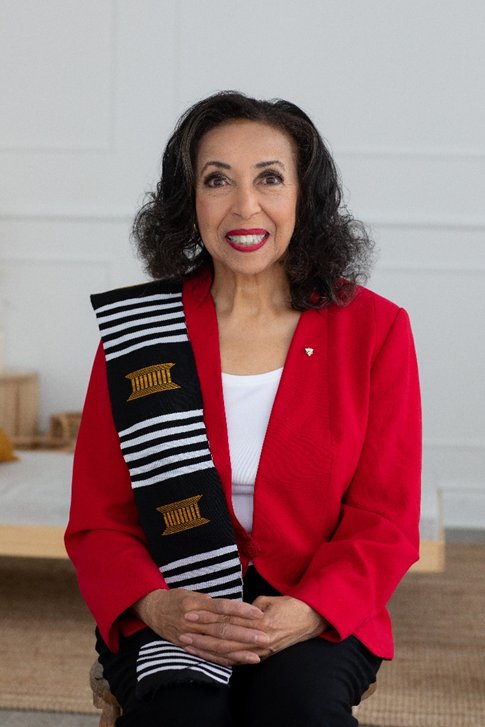 Rosemary Sadlier, O Ont (Order of Ontario) is a social justice advocate, researcher, writer, author, consultant and international speaker on Black History, anti-racism and women's issues. She is the past President, serving for 22 years as the unpaid leader of the Ontario Black History Society. She was the driving force of all secured commemorations of February as Black History Month, and she initiated and championed August 1st as Emancipation Day since 1995. Rosemary is dedicated to social justice through education and action.
 Salma is a Master of Public Policy candidate at the Munk School of Global Affairs and Public Policy, having previously obtained an Honours Bachelor of Arts from the University of Toronto. She is passionate about policymaking that addresses systemic issues and advances the interests of marginalized communities, working towards a more equitable and just future for all. Salma is deeply committed to creating an inclusive society that values every member and recognizes their contributions.
 Queen (pronouns: they/she) is a Black, Gender-Queer, Neurodivergent, Creative Technology Artist, and award winning scholar whose practice encompasses Queer theory, Afrofuturism, and Noetic sciences. Queen is also the Founding co-lead of Oddside Arts and has been serving the community for 20+ years, combating structural violence against Black and Indigenous youth through youth service resources, arts education programs in schools, community centres and justice advocacy.
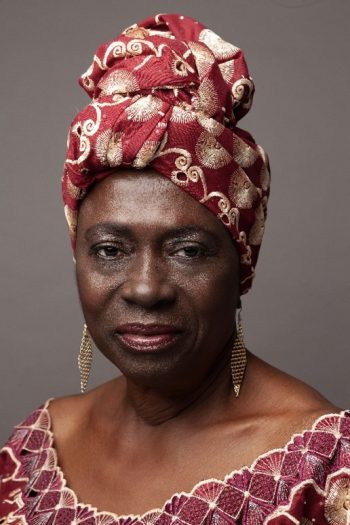 As a retiree, Charis Newton-Thompson graduated from Ontario Institute for Studies in Education of the University of Toronto with a Ph.D. in 2020. Her focus was the mentorship experiences of Black female administrators in Southern Ontario Public Secondary Schools. She was employed as an educator in Guyana, Jamaica, and Canada for over 30 years. Charis began volunteering in Toronto with the Black Education Project as a tutor/mentor over 45 years ago. Currently she continues her advocacy work with organizations such as Canadian Alliance of Black Educators.
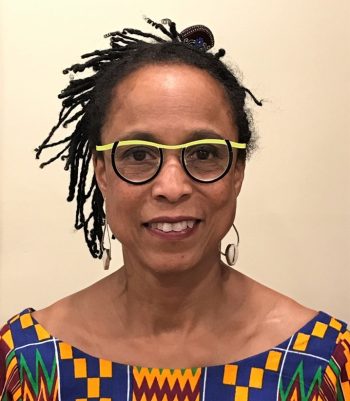 Kathy is Interim Dean, Faculty of Design, OCAD University. Her background merges visual arts and health. Her visual storytelling celebrates Black culture and the Black family. She has a Ph.D. in Pharmaceutical Sciences, master’s Public Health and is a Fellow at WHO Collaborating Centre for Governance, Accountability and Transparency in the Pharmaceutical Sector, Univ. of Toronto. She uses decolonized frameworks to examine governance, policy to foster wholistic health, inclusive neighbourhoods and equity. As a member of the Solid Black Collective she mentors Black youth.
 Maymuna (May) is a writer, illustrator and arts-educator based out of Tkaronto. In her role as an arts-educator, she facilitates & manages programs that use narrative-based art approaches to reclaim power and spark meaningful conversations. She has opened for The Roots and Shane Koyczan with her poems. She manages the IMARA Generation Project, an Afrocentric mental health literacy training program that serves Black youth, parents, faith-based leaders & service providers in the GTA.
 William has worked in the Canadian Health Care sector with different Organizations like Carelinks, Canadian Red Cross and African and Caribbean Council on HIV/AIDS in Ontario, addressing barriers and inequities in service delivery experienced by African, Caribbean, and Black communities. Physician by training, Amanyire holds an Executive certification in Advanced Health care Leadership, masters of Public Health, a Doctor of Medicine, a PGD in Health Administration and a Diploma in Clinical Medicine and Community Health.