

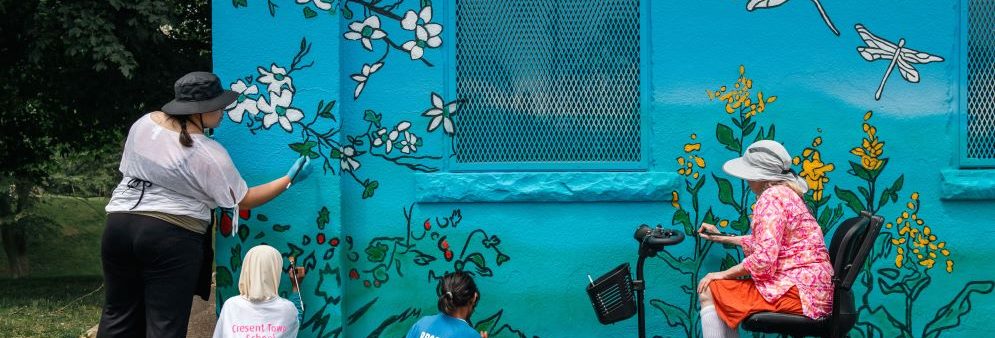
The Youth Climate Action Grants provide up to $1,000 in funding for Toronto District School Board (TDSB) and Toronto Catholic District School Board (TCDSB) student-led projects, activities and events that:
This program is a partnership between the City of Toronto, the TDSB and the TCDSB.
Priority will be given to projects completed before the last day of the current school year; however we will consider applications for projects that will be completed within one year.
Key dates are subject to change.
The Youth Climate Action Grants are open to all TDSB and TCDSB student-led groups consisting of two or more students from grades JK to 12. A TDSB or TCDSB staff member must serve as the project supervisor.
Student-led groups, including:
Eligible Projects:
Ineligible Projects:
Projects may fall within one or more of the following categories; this list is meant to demonstrate the kinds of possible projects. Projects are not limited to the categories and examples below.
| Theme | Description | Examples |
|---|---|---|
| Building Emissions Reduction | Cutting greenhouse gas emissions from buildings by using less energy, improving efficiency, and switching to cleaner energy sources. | Energy conservation campaigns, energy audits, energy-efficient technology demonstrations, etc. |
| Climate Change Education | Teaching community members about the causes, impacts, and solutions to climate change so they can take informed action. | Workshop series, eco-fairs, video campaigns, theatrical performances, etc. |
| Community Cohesion & Resilience | Helping communities stay connected and strong so they can adapt and recover from climate-related challenges together. | Climate preparedness workshops, climate wellness initiatives, climate vulnerability mapping, etc. |
| Food Security | Improving access to safe, nutritious, culturally appropriate food, to foster resilient food systems. | Food gardens, hydroponics and aquaponics, zero-waste cooking workshops, etc. |
| Nature-Based Solutions & Biodiversity Conservation | Projects that protect, enhance, or create natural environments to support biodiversity while leveraging ecosystem services to help communities reduce climate risks and build resilience. | Schoolyard naturalization, biodiversity monitoring, green roof demonstration, etc. |
| Renewable Energy Generation & Education | Producing or promoting clean energy from sources like solar, wind, and water, while teaching people how these technologies work and why they matter for a sustainable future. | Solar, wind, or renewable energy demonstration, neighbourhood renewable energy potential mapping, etc. |
| Sustainable Transportation | Encouraging low-emission forms of travel such as public transit, biking, walking, and electric vehicles. | Bicycle repair workshops, active transportation campaigns, bike rodeos/buses etc. |
| Waste Diversion & Circular Economy | Reducing waste by encouraging reuse, recycling, and upcycling. Educating community members about proper waste management practices to divert waste from landfill. | Repair cafes, tool libraries, clothing swaps, waste audits and education, etc. |
The funding requested cannot exceed $1,000. Funding can only be used for the direct delivery of the proposed project. Please refer to these lists when creating a project budget and spending your grant funding. If you are unsure if an expense is eligible, please contact climateactiongrants@toronto.ca.
We encourage the hiring of Indigenous, Black and equity-deserving staff, consultants, labourers, interpreters and translators, and encourage supporting local, Indigenous, Black and equity-deserving businesses for eligible purchases.
See an example Youth Climate Action Grants Budget for more information.
| Type of Expense | Items/Services |
|---|---|
| Accessibility & Barrier Reduction: Expenses related to removing barriers and improving project accessibility to support equitable participation. |
|
| General: Other expenses related to project delivery. |
|
| Materials & Supplies: Costs associated with purchasing materials and consumable supplies necessary to carry out project activities. |
|
| People & Labour: Costs for approved skilled labour, consultants, guest speakers, or facilitators supporting project activities. |
* Skilled labour providers, professional consultants, guest speakers and workshop facilitators must be approved by the school board. |
| Tools & Equipment: Expenses related to the rental of large equipment or purchase of smaller tools necessary to carry out project Activities |
|
| Workshop & Event Facilitation: Costs associated with delivering workshops, training sessions, and events. |
|
| Type of Expense | Items/Services |
|---|---|
| Accessibility & Barrier Reduction: Expenses related to removing barriers and improving project accessibility to support equitable participation. |
|
| General: Other expenses related to project delivery. |
|
| Materials & Supplies: Costs associated with purchasing materials and consumable supplies necessary to carry out project activities. |
|
| People & Labour: Costs for approved skilled labour, consultants, guest speakers, or facilitators supporting project activities. |
|
| Organization Operating Costs: Costs associated with the ongoing operation, maintenance, administration and capital improvements of a group, club, or organization. |
|
| Tools & Equipment: Expenses related to the rental of large equipment or purchase of smaller tools necessary to carry out project Activities |
|
| Workshop & Event Facilitation: Costs associated with delivering workshops, training sessions, and events. |
|
Upon project completion, grant recipients must submit:
A link to the online reporting form will be provided before the reporting deadline.
Check out the amazing projects supported by the Youth Climate Action Grants and get inspired to launch your own climate initiative.
| School | Climate Action | Project Name | Project Description | Ward |
|---|---|---|---|---|
| Alpha 2 Alternative School | Waste Diversion & Circular Economy | Closing the Loop: Turning Plastic Waste into Innovation | This project addresses plastic waste by educating students, improving waste sorting, and reclaiming plastics for in‑school reuse while building hands‑on skills in circular economy practices and climate‑conscious waste management. | 9 |
| Annette St. Junior Public School | Climate Change Education | Eco-Awareness & Sustainability | This project reduces school waste and energy use, raises urban biodiversity awareness, and engages families through student‑led audits, sustainability campaigns, and an interactive climate education booth. | 4 |
| Beaumonde Heights Junior Middle School | Climate Change Education | Sustainable Energy Project | Empowering students through Green Teams that leads sustainability actions, monitors energy and waste, engages in outdoor learning, and involves families in understanding how daily choices directly impact climate and ecosystems. | 1 |
| Birchmount Park Collegiate Institute | Food Security | Future Farmers Garden | A raised‑bed food garden where students learn hands‑on gardening skills, reduce food waste, improve soil health, and lead climate action through education and sustainable food choices. | 20 |
| Broadacres Junior Public School | Food Security | Improving Indoor Air Quality by Cultivating Edible Plants Indoors | Hands‑on learning growing edible plants, presenting on air quality and local food, planting and distributing seedlings, and participating in sustainability‑focused activities ending in a schoolwide STEM celebration | 2 |
| Burrows Hall Junior Public School | Food Security | Hands In The Soil, Eyes On The Future | A school garden project that engages students in native plant, vegetable, and Indigenous herb gardens that will support biodiversity, promote local produce, reduce food‑related carbon emissions, and build community resilience. | 23 |
| Central Toronto Academy | Nature-Based Solutions & Biodiversity Conservation | Tree Carbon Sequestration for Climate Change | By measuring school trees, students will estimate carbon sequestration using scientific tools and methods, while learning about urban tree equity in Toronto and why equitable access to green spaces supports climate resilience. | 11 |
| Central Toronto Academy | Food Security | CTA Sustainable Urban Gardening Project | Indoor and outdoor growing systems will engage students in hands‑on learning about sustainable food, biodiversity, and environmental stewardship while building practical skills in resource management and community resilience. | 11 |
| Don Valley Middle School | Climate Change Education | Mission Possible: Climate Action | Increasing climate literacy through a student‑led outdoor climate games event, where Eco‑Club members design and run interactive activities that teach climate change concepts and engage students and community members in climate action. | 17 |
| Donwood Park Public School | Waste Diversion & Circular Economy | The Environment Club | Students will lead garbage clean‑ups and waste audits, building pride and leadership while reducing litter and educating the school community about proper waste disposal and environmental responsibility. | 21 |
| Dorset Park Public School | Climate Change Education | Eco School Climate Change | Promoting energy conservation, waste reduction, and recycling through student‑led displays, creative reuse activities, and the creation of a garden featuring Indigenous plants to engage the school community. | 21 |
| Eastview Public School | Waste Diversion & Circular Economy | The Green Sips, Waste Free Water Pledge Project | A student‑led campaign reducing single‑use plastic by conducting a school‑wide bottle waste audit, educating students and families about plastic’s carbon footprint, and culminating in an Earth Day pledge to switch to reusable bottles. | 24 |
| Elizabeth Simcoe Junior Public School | Climate Change Education | Simcoe's Eco-Fair | A schoolwide eco‑fair where students learn about biodiversity through expert-led field trips and eco‑challenges, then share student-created projects with peers and families to promote environmental awareness. | 24 |
| Fisherville Senior Public School | Climate Change Education | The Fisherville Environmental Station (FES) | Students will design and build a solar‑powered weather station to collect and analyze local climate data, learn renewable energy concepts, and apply findings to develop solutions for climate‑related challenges in their communities. | 18 |
| High Park Alternative School | Waste Diversion & Circular Economy | Zero-Waste Batch Bakers | An after‑school club that teaches students and families climate‑friendly cooking, using local ingredients and batch baking to reduce food waste, cut food‑mile emissions, and strengthen school‑to‑home sustainability practices. | 4 |
| Hillside Outdoor Education School | Nature-Based Solutions & Biodiversity Conservation | Hillside Grows | A hands‑on outdoor classroom where students explore sustainable food systems, biodiversity, soil health, and waste reduction while engaging the school community in practical, local climate action. | 25 |
| Howard Junior Public School | Nature-Based Solutions & Biodiversity Conservation | Earth Buddies' Bird Help Campaign | Students will investigate climate impacts on local birds through research, habitat creation, and biodiversity monitoring while sharing findings to build awareness and appreciation of biodiversity with the school community. | 4 |
| Howard Junior Public School | Waste Diversion & Circular Economy | The Journey of Stuff Action Project | A student‑led inquiry where learners trace the life cycle of everyday products, reveal hidden climate and social impacts linked to them, and promote climate‑conscious action through repair, reuse, and sustainable consumption. | 4 |
| Humberwood Downs Junior Middle School | Waste Diversion & Circular Economy | Kitchen-to-Clean Circular Economy Project | Hands‑on workshops that turn kitchen scraps into natural products, reducing landfill waste, cutting chemical pollution, and lowering demand for single‑use plastic household cleaners through practical circular‑economy climate action. | 1 |
| Indian Road Crescent Junior Public School | Waste Diversion & Circular Economy | Waste Reduction at IRC | Empowering students to lead waste reduction through improved sorting stations, peer education, reuse initiatives, and friendly challenges that cut landfill waste, increase recycling and organics diversion, and foster lasting climate‑positive habits school‑wide. | 4 |
| Island Public School/Island Natural Science School | Food Security | Greenhouse Greening Project | Students will design and operate a school greenhouse, growing local food, reducing waste, and learning climate‑smart agriculture while educating families and visiting students about low‑carbon food systems. | 10 |
| Islington Junior Middle School | Nature-Based Solutions & Biodiversity Conservation | Education through signage | Students will develop bilingual signs with QR codes linking to research on native species, carbon storage, and ecosystem services, creating an accessible outdoor classroom that connects the community to urban biodiversity. | 3 |
| Islington Junior Middle School | Nature-Based Solutions & Biodiversity Conservation | Tom Riley Creek Climate Action & Biodiversity | Students will investigate how riparian vegetation supports carbon sequestration and climate resilience while connecting students to local waterways and create educational resources that promote stewardship and climate action. | 3 |
| Islington Junior Middle School | Climate Change Education | Student-led Eco Science Festival | An Eco‑Science and Climate Action Festival that engages students and families through interactive sustainability exhibits and workshops while reducing emissions by promoting waste diversion, composting, and active transportation to support long‑term community climate action. | 3 |
| Islington Junior Middle School | Food Security | Indoor and Outdoor Planters | Students will build balcony and tower planters for apartment living, enabling families to grow local food, reduce carbon emissions, and share practical construction skills and climate knowledge within their communities. | 3 |
| Islington Junior Middle School | Waste Diversion & Circular Economy | Textile Upcycle and Repurpose | Students will learn about the climate impacts of fast fashion while reducing GHG emissions through clothing reuse, upcycling, and repair, engaging students and the community in circular economy practices that divert textile waste from landfills. | 3 |
| Joseph Howe Senior Public School | Food Security | Community Roots Project | Creating a lasting, indoor propagation hub that will produce 500 seedlings yearly to cut food‑related GHG emissions, build climate leadership, support families, and remain self‑sustaining through seed saving. | 25 |
| Kenton Learning Centre | Nature-Based Solutions & Biodiversity Conservation | Kenton Climate Joy Project | Reducing climate anxiety by empowering students through growing food locally, community knowledge-sharing, fostering environmental hope, awareness, and stewardship, while expanding a successful initiative to additional classrooms to support wellbeing and climate action. | 18 |
| Lanor Junior Middle School | Waste Diversion & Circular Economy | The 3 R’s @ Lanor: Reduce, Reuse, Repurpose! | Understanding the link between overconsumption and climate change while building repair and repurposing skills, culminating in a showcase of student-created functional items and artwork. | 3 |
| Lawrence Park Collegiate Institute | Food Security | LPCI Urban Indigenous Garden | Building small indoor and outdoor gardens to learn sustainable agriculture and climate‑smart practices, gaining hands‑on skills in plant care, resource efficiency, and environmental stewardship. | 8 |
| Lester B. Pearson Collegiate Institute | Climate Change Education | Outdoor Classroom | A student‑designed outdoor classroom and garden that supports biodiversity, mental well‑being, and hands‑on climate education while engaging in low‑carbon learning and environmental stewardship. | 23 |
| Lord Lansdowne Junior Public School | Climate Change Education | Kensington Our Climate, Our campus | A student-designed public mural that will illustrate everyday climate actions that will inspire the school and community to work together toward a healthier, more resilient Toronto. | 11 |
| Silver Springs Public School | Renewable Energy Generation & Education | Renewable Energy STEM Project | Students will design solar and wind systems, calculate energy output and cost savings, and build awareness of renewable energy benefits to encourage long‑term energy conservation and household adoption. | 22 |
| Silverthorn Community School | Food Security | Cultivating Climate Leaders: The Indigenous Food Garden Initiative | Hands‑on, Indigenous‑led learning though building edible gardens, growing local food, and connecting sustainable agriculture to climate action, food security, and Toronto’s net‑zero goals. | 5 |
| Sir Ernest MacMillan Senior Public School | Food Security | Aqua-Buddies: Growing Green | Students will act as Climate Mentors and introduce aquaponics to kindergarten classrooms and partner schools, reducing food‑transport emissions while spreading practical climate education through peer and community mentorship. | 22 |
| West Humber Junior Middle School | Food Security | Building and Maintaining a School Growing Garden | A hands‑on climate action project where students practice sustainable gardening, reduce waste and water use, grow local food to cut emissions, support biodiversity, and build practical skills as environmental leaders. | 1 |
| West Humber Junior Middle School | Waste Diversion & Circular Economy | Harnessing Tiny Decomposers for Waste Reduction | A school‑wide sustainability initiative reducing food waste, educating students on consumption, and using hands‑on vermicomposting to divert organic waste from landfills and lower the school’s carbon footprint. | 1 |
| Westmount Junior School | Waste Diversion & Circular Economy | Worm Works | Diverting school food waste into vermicomposting, turning scraps into soil for native gardens, reducing methane emissions, strengthening climate literacy, and engaging students and families in hands‑on circular waste solutions. | 2 |
| William J McCordic School | Climate Change Education | Our Food Comes From? | Promoting recycling, gardening, and outdoor learning to build environmental awareness, reduce waste, grow food sustainably, connect students with nature, and engage families and the community in actions that lower greenhouse gas emissions. | 19 |
| Windfields Middle School | Nature-Based Solutions & Biodiversity Conservation | Windfields Wildlife Climate Corridor | Student will transform unused school gardens into a wildlife corridor and heat sink that supports wildlife, addresses climate impacts, and offers hands-on environmental learning for students while benefiting the wider community. | 15 |
| Winston Churchill Collegiate Institute | Food Security | Winston Churchill Food and Herbs Garden | Creating a sustainable school food garden that teaches hands‑on gardening and produces food locally while supporting classroom learning, family engagement, and student leadership through student-led education and action. | 21 |
| Woburn Junior Public School | Food Security | Eco Friendly Cooking | Exploring climate change through hands‑on eco‑friendly cooking, using local and garden‑grown ingredients, reducing food waste, creating reusable food storage, composting scraps, and sharing low‑carbon recipes to build practical, sustainable food skills. | 24 |
| York Mills Collegiate Institute | Climate Change Education | York Mills C.I. School-to-School Climate Change Workshop | Environmental science students will teach classes about climate action, gather community ideas, and partner with other students to transform planters into painted, native gardens inspired by local climate solutions. | 15 |
| School | Climate Action | Project Name | Project Description | Ward |
|---|---|---|---|---|
| Cardinal Carter Academy for the Arts | Climate Change Education | Tears for Mother Earth | A student-created dance and theatre performance exploring water, climate impacts, and environmental responsibility, blending arts and education to deepen understanding and inspire school and community audiences toward climate awareness and action. | 18 |
| Catholic Education Centre | Climate Change Education | From Hiroshima to Hope: The impact of nuclear war on the environment! | An educational initiative featuring Setsuko Thurlow to explore the environmental impacts of nuclear weapons, linking radiation damage and ecosystem destruction to climate disruption, food insecurity, and peacebuilding, inspiring students to view disarmament and sustainability as climate justice. | 18 |
| Father Henry Carr Catholic Secondary School | Food Security | Youth-Led Hydroponics for Sustainable, Climate-Smart Food Production | A hands-on hydroponics project where students build and maintain soil-free growing systems, learning to conserve water, reduce waste, grow local food year‑round, and understand connections between food systems, climate action, and sustainable urban living in Toronto. | 1 |
| Father Henry Carr Catholic Secondary School | Sustainable Transportation | The Electric Vehicle Project | Students will build an electric vehicle prototype, giving youth hands-on experience with sustainable engineering and clean transportation while building climate literacy, collaboration, and innovation to reduce emissions. | 1 |
| Holy Cross Catholic School | Climate Change Education | BEAUTY and THE BEAST: Exploring Human Impact Through Digital Photography | Students will document local environmental change through photography, design, and guided nature walks, exploring both ecosystem beauty and human impacts of climate change, pollution, waste, and loss of green space. | 14 |
| Holy Cross Catholic School | Food Security | Growing Green Indoors: An Automated Irrigation Project | Students will design micro:bit controlled irrigation systems to grow indoor plants, track water efficiency, and learn how technology and local food production support practical climate solutions and sustainable, low-emission food systems. | 14 |
| James Cardinal McGuigan Catholic High School | Climate Change Education | Focus on Change: Capturing Nature Through Our Eyes | The Drama Club will integrate a climate theme into a reimagined production of Peter Pan, reusing recycled materials for sets and costumes, reducing waste, and educating audiences through sustainable theatre practices while engaging students and the community in climate awareness. | 7 |
| James Cardinal McGuigan Catholic High School | Community Cohesion & Resilience | Peter Pan Production | A hands-on robotics project where students build sensor-equipped robots to collect environmental data, share findings with the school community, and take actions that improve energy efficiency, air quality, and climate change understanding. | 7 |
| Loretto Abbey Catholic Secondary School | Climate Change Education | Climate Data Robots: Students Measuring and Understanding Our Local Environment | A hands-on robotics project where students build sensor-equipped robots to collect environmental data, share findings with the school community, and take actions that improve energy efficiency, air quality, and climate change understanding. | 8 |
| Marshall McLuhan Catholic Secondary School | Climate Change Education | EcoVision: Empowering the McLuhan Community Through Climate Action | An activity-based project that builds awareness and practical action through recycling workshops, digital campaigns, student-led innovations, and expert partnerships, empowering the school community to understand climate impacts and take climate action. | 8 |
| Mary Ward Catholic Secondary School | Food Security | Mary Ward Community Garden | A community garden providing hands-on education through planting, composting, and harvesting, fostering intergenerational learning, engaging the wider community, and reducing greenhouse gas emissions by growing local food and diverting organic waste from landfills. | 22 |
| Notre Dame High School | Building Emissions Reduction | See the Heat | Using infrared cameras to conduct home energy audits, learning about power generation, efficiency, and climate change by identifying heat loss and building carbon footprints, then sharing findings with families to inform energy-saving decisions. | 19 |
| St. Benedict Catholic School | Climate Change Education | Climate Change Circuit | Student created activity stations that combines exercise with climate learning, where students, staff, and families move, learn sustainability tips, explore climate topics, and build environmental stewardship, and community connection. | 1 |
| St. Brigid Catholic School | Food Security | Plant to Plate | Students will grow microgreens indoors using sustainable methods, integrating science, math, and financial literacy while promoting healthy eating, reduced carbon footprints, and environmental stewardship. | 19 |
| St. Dorothy Catholic School | Climate Change Education | Seeds of Calm | A mindfulness and literacy space where students explore nature-themed books, reflect through reading and journaling, and build emotional wellbeing while learning about environmental care and climate change. | 1 |
| St. Dorothy Catholic School | Climate Change Education | Unearthing Climate Action, Biodiversity, and Sustainability | A school-wide Earth Week initiative featuring hands-on learning about climate action, sustainability, and biodiversity, culminating in a community celebration showcasing student art, projects, presentations, and activities that promote environmental stewardship. | 1 |
| St. Joachim Catholic School | Climate Change Education | ECO ZONE | Student-led climate fair where participants research climate topics and share findings through interactive displays and demonstrations, becoming climate educators for peers and the school community. | 20 |
| St. Josephs College School | Nature-Based Solutions & Biodiversity Conservation | The Climate Water Watch | Learning about local waterways by collecting climate-impact data, and sharing findings through seminars and awareness campaigns to educate peers about pollution and ecosystem health. | 11 |
| St. Josephs College School | Nature-Based Solutions & Biodiversity Conservation | The Community Garden | A school community garden planting native species to boost urban biodiversity, unite students around environmental action, raise climate awareness and engage the downtown Toronto community through education. | 11 |
| St. Josephs College School | Community Cohesion & Resilience | Two Sides of Change | A youth-led public art project featuring dual-panel installations that contrast Toronto’s climate challenges with hopeful solutions, empowering student voices, sparking community dialogue, and inspiring collective action towards a sustainable future. | 11 |
| St. Josephs College School | Renewable Energy Generation & Education | Shining a Light on Our School Energy Consumption | Students will code micro:bits to measure light intensity, analyze energy use and costs, propose efficient lighting solutions, and share findings school-wide to promote sustainable lighting choices and reduce greenhouse gas emissions. | 11 |
| St. Margaret Catholic School | Climate Change Education | Climate Change Innovation Fair | An Innovation Fair where students research local climate challenges, design sustainable solutions, and showcase prototypes, models, and proposals in a community gallery focused on real-world environmental action. | 8 |
| St. Margaret Catholic School | Community Cohesion & Resilience | 'Climate Voices: A Community Spoken Word Café | A spoken word poetry project where students research climate and sustainability issues, connect learning to Toronto’s climate goals, and share bilingual performances in a community event that elevates youth voices and inspires local climate action. | 8 |
| St. Paschal Baylon School | Climate Change Education | A Mindful Space for Earth and Me | Creating a calm, nature-inspired space where students read about Earth, sustainability, and climate change, practice mindfulness, reflect after environmental lessons, and explore how caring for the planet connects to their actions. | 18 |
| St. Timothy Catholic School | Nature-Based Solutions & Biodiversity Conservation | Medicine Wheel Earth Keepers | Students will restore outdoor spaces through seasonal native plant replanting, educational art, and Indigenous knowledge, strengthening local ecosystems, biodiversity, and long-term land healing through shared stewardship. | 17 |
Explore the resources below to find ideas, tools, guides, and real-world examples that can help you plan, deliver, and expand the impact of your Youth Climate Action Grants project.
| Resource | Description | Resource Links |
|---|---|---|
| Youth Climate Action Grants Project Templates | Ready-to-use project templates that provide ideas, guidance and sample activities aligned with Youth Climate Action Grant themes. |
|
| Citizen Science | Community-based science programs that engage people in collecting, monitoring, and sharing environmental data to support research, stewardship, and climate action. | |
| Volunteer Opportunities | Connect with volunteer opportunities, community stewardship activities, and environmental organizations working to advance climate action and sustainability. | |
| TDSB Resources | Programs, guidance, partnerships, and planning tools that support environmental projects and sustainability initiatives in schools. | |
| TCDSB Resources | Programs, resources, and support services that help schools plan and implement environmental and sustainability projects. | |
| Building Emissions Reduction | Resources that support energy efficiency, conservation, and greenhouse gas emissions reduction in buildings. | |
| Climate Change Education | Educational resources, lesson plans, activities, and programs that help students learn about climate change, sustainability, and environmental stewardship. | |
| Community Cohesion & Resilience | Resources that support community connections, climate preparedness, emergency readiness, and resilience to climate impacts. |
|
| Food Security | Resources that support food-growing projects, local food systems, food waste reduction, and increased community food security. | |
| Nature-based Solutions & Biodiversity Conservation | Resources that promote the protection, restoration, and stewardship of native species, habitats, ecosystems, and urban biodiversity. | |
| Renewable Energy Generation & Conservation | Resources that explore renewable energy, energy conservation, and emissions reduction solutions. | |
| Sustainable Transportation | Resources and programs that promote active, low-carbon, and sustainable transportation options such as walking, cycling, public transit, and electric vehicles. | |
| Waste Diversion & Circular Economy | Resources that support reducing waste, reusing materials, advancing circular economy practices, and minimizing single-use items. | |
| Student-Led Climate Project Examples | Explore examples of climate projects led by students. |
|