

Colborne Lodge School Trips
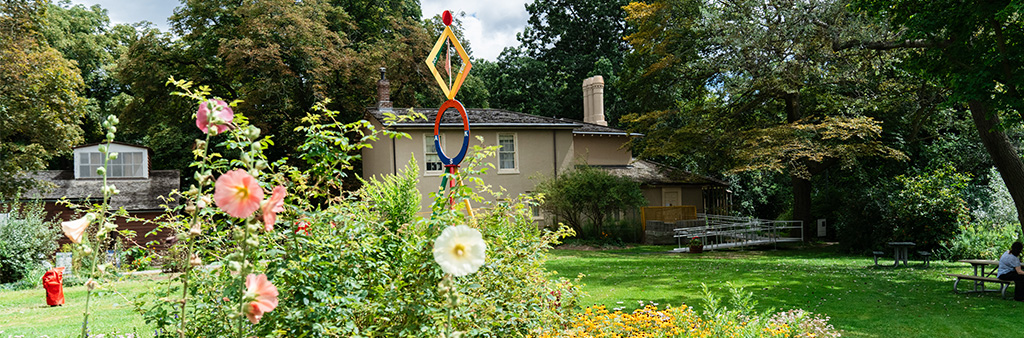
Colborne Lodge is located in High Park at 11 Colborne Lodge Drive, on the traditional territory of the Mississaugas of the Credit, the Anishnabeg, the Chippewa, the Haudenosaunee and the Wendat peoples. In 1836, British settlers John and Jemima Howard purchased 165 acres of land that they named High Park and began construction of their home, Colborne Lodge. In 1873, the Howards gifted their home and the surrounding land to the citizens of Toronto to be used as a public park.
Now a museum, Colborne Lodge provides opportunities to explore local history and consider the ongoing impacts of colonialism on the land and people of Toronto.
Explore the school trips below.
Students learn how differing perspectives and the relationship between people and the land influence decisions about land stewardship and management. This program begins with an exploration of the differing perspectives of Indigenous peoples and Settlers as reflected in the Dish with One Spoon Wampum and Treaty 13, The Toronto Purchase. Then students explore how differing perspectives continue to influence people’s opinions about how High Park should be managed today and in the future.
In this program, students will:
- Investigate a historical map of High Park
- Consider contemporary Settler and Indigenous perspectives on land stewardship
- Work in small groups to study and map a small section of High Park
- Consider strategies to investigate the parkland needs of local populations
This program has both indoor and outdoor components.
Duration
2 hours
Group Size
15 to 30 students
Cost
$5.31 plus HST per student
One supervisor free per 15 students or part thereof. $5.31 plus HST per additional supervisor.
Accessibility
Please advise of accessibility needs when contacting the museum.
Ontario Curriculum Connections
Grade 7 Geography: Physical Patterns in a Changing World, B
Grade 7 History: Canada, 1800–1850: Conflict and Challenges, B
Students reimagine the lives of High Park’s wildlife and immerse themselves into the environments that humans and animals share. A rhyming narrative poem guides learners through an experience of multi-media works created by Charisma Panchapakesan and influenced by the park’s historic house. How can humans and our more-than-human neighbours share the urban landscape?
In this program, students will:
- Listen to a rhyming narrative poem about the animals living and playing in Colborne Lodge and High Park.
- View multimedia art installations inside the historic house museum and discuss the role of art in our lives.
- Discuss what it means to be a steward of the land.
- Discuss the effects that green spaces have on our mental and physical health and well-being.
- Discuss what it means to be in good relations with the ecosystems that surround us.
- Deepen their connection to the spaces in which they live, learn and play.
Duration
1 to 1.5 hours
Group Size
15 to 30 students
Cost
$4.42 plus HST per student
One supervisor free per 15 students or part thereof. $4.42 plus HST per additional supervisor.
Accessibility
Please advise of accessibility needs when contacting the museum.
Ontario Curriculum Connections
Grade 1 Social Studies: Heritage and Identity: Our Changing Roles and Responsibilities
Grade 1 Social Studies: People and Environments: The Local Community
Grade 2 Social Studies: Heritage and Identity: Changing Family and Community Traditions
Grade 2 Social Studies: People and Environments: Global Communities
Grade 3 Social Studies: Heritage and Identity: Communities in Canada, 1780–1850
Grade 3 Social Studies: People and Environments: Living and Working in Ontario
This in-class outreach program allows students to interact with artifacts from the First World War. Students are shown how the inquiry process works in museums and then participate in their own inquiry process using the artifacts given to them. The program ends with a discussion of remembrance, and why we are still looking at artifacts from more than 100 years ago and how objects can help to tell a meaningful story.
Using a hands-on approach allows students to connect directly with the past and form their own opinions about the meaning of the First World War.
The main goal of the program is to allow students to ask questions, to look at and handle items and be curious about what they are and what they mean.
Duration
1 hour
Group Size
Up to 32 students
Cost
$175 plus HST per class
Accessibility
Please advise of accessibility needs when contacting the museum.