Houses in Toronto generate more than half of all greenhouse gas emissions from buildings across the city. These come primarily from the burning of fossil fuels, mainly natural gas, that power your furnace and water heater. Learn more about the source of Toronto’s emissions.
Heat pumps are a clean, energy-efficient alternative to gas furnaces that heat and cool your home without burning fossil fuels. Modern heat pumps provide year-round comfort, keeping your home warm during Toronto winters and cool throughout the humid summer, while also improving indoor air quality. Designed for cold climates, today’s heat pumps are proven to perform even in extreme winter conditions.
Enhancing your home’s heating and cooling with a heat pump can be easy, quick and potentially cost-effective. Learn more about whether a heat pump is right for your home with the Furnace Upgrade Program and Toronto Hydro's energy coaching services.
Learn how Paul, a homeowner in Toronto’s east end, experiences the comfort of heat pumps through his radiator-heated home.
In the summer, a heat pump acts like an air conditioner by extracting heat from the air inside your home. In the winter, the heat pump works in reverse to provide heating. Heat pumps use the same basic technology as an air-conditioner or refrigerator but have just been enhanced to allow for heating.
Both air-conditioners and heat pumps have:
Unlike an air-conditioner, a heat pump is fully reversible. This means that it contains a specific component, called a reversing valve which allows it to pump heat in either direction (into the home or out of the home). This is why heat pumps have both heating and cooling modes, and can switch between them as needed.
For more information on how heat pumps work to cool and heat your home, including how they function effectively and efficiently even on cold Canadian winter days, visit Natural Resources Canada.
Heat pumps are typically air-source or ground-source. In most cases, air-source heat pumps extract heat from the outdoor air (even in cold temperatures) into your home for heating, and expel heat from within your home to the outside for cooling. On the other hand, ground-source heat pumps (also called geo-exchange) move heat between your home and underground for heating and cooling.
It is important to note that in many cases, air-source heat pumps are the most viable option for Toronto homeowners. Given space constraints, ground-source heat pumps may not be a suitable choice for many, especially in a built-up urban environment like Toronto.
There are a range of air-source heat pumps available in the market.
| Type | Description |
|---|---|
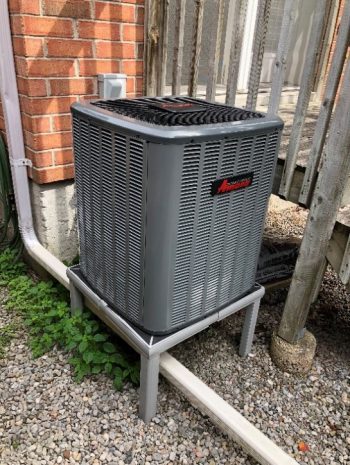
| Centrally-ducted air-source heat pumps | This type connects to the ductwork in a home in the same way as a furnace and central air-conditioner and they look similar to a furnace and air-conditioner. They normally have a back-up heating source, such as an electric resistance heating coil installed as a package with the heat pump.
|
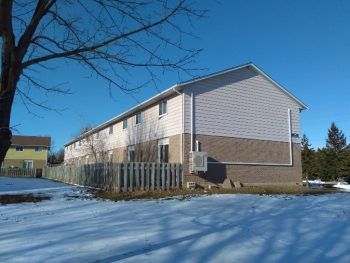
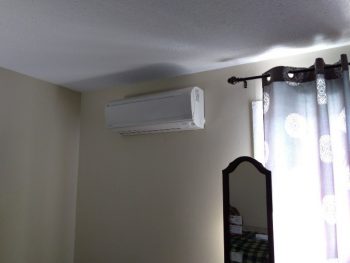
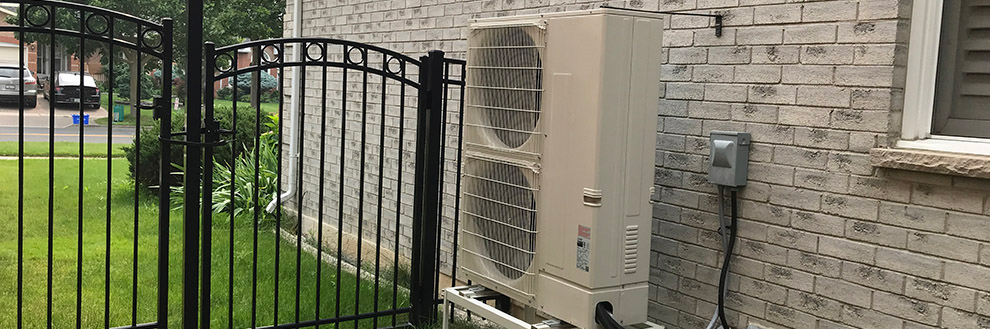
| Ductless air-source heat pumps | Ductless heat pumps are used when there is no existing ductwork inside the home. Typically, they use a single outdoor unit connected to one or more indoor units. The indoor unit can be mounted to the wall, floor or in the ceiling. Mini-split systems have one outdoor unit connected to one indoor unit. Each unit heats and cools one room or zone of a home. Multi-split systems have multiple indoor units connected to a single outdoor unit, which together provide heating or cooling for the entire house.
|
| Cold-climate air-source heat pumps | These types of heat pumps are designed to work in cold conditions, down to –30 degrees Celsius. They can be centrally-ducted, ductless or even be used in hybrid systems, which include a traditional furnace. Conventional air-source heat pumps (i.e. not cold-climate ones) must revert to a back-up heating option when outdoor temperatures go below -15 degrees Celsius. |
| Hybrid systems: Air-source plus a furnace | Hybrid systems are sometimes referred to as dual-fuel systems, and utilize both a traditional furnace and an air-source heat pump.
In a hybrid system, a heat pump is the main source of heat with a furnace providing supplemental heat, if needed, during periods of extreme cold. Generally, the heat pump operates above a certain outdoor temperature. Once the outdoor temperature falls below, the system switches over to the traditional furnace. The heat pump also replaces the home’s air conditioner. Hybrid systems can be lower cost than all-electric (no traditional furnace) options because the heat pump does not need to operate in extreme cold nor does it need to meet the full heating requirements of the home. This means the heat pump can be relatively smaller and simpler. |
| Air-to-water heat pumps | This type of heat pump heats water rather than the air inside a home. They can be used in homes that have radiant heating systems, such as radiant floor heating or ceiling panels. |
Most people will consider a heat pump when their furnace and/or air-conditioner is approaching end-of-life, but you should have a plan before your furnace or air conditioner breaks down.
You can start by learning about the different types of heat pumps and decide which type would be best for your home. If a heat pump will be required soon, start selecting a contractor and get the conversation going. If you need support, you can book a free energy coaching session through the Furnace Upgrade Program and access qualified contractors, service providers and professionals through Toronto Hydro's Cleantech Services Directory.
A common misconception is the need for a panel upgrade service to accommodate a heat pump. However, it is important to avoid unnecessary panel upgrades if they are not needed. Switching to a heat pump can increase your home’s electricity use. This might mean you need an electrical service upgrade, but not always. Knowing your home’s historical energy use can help you with planning. You can access your historical electricity use and your peak demand through Toronto Hydro’s self-serve portal. Download and discuss this data with your contractor or electrician who can help you determine if an upgrade is required.
One of the most important considerations when planning for and installing a heat pump is to ensure that it’s the right size for your home. To fully enjoy the benefits of your new heat pump, it is important to work with a qualified contractor who will accurately size the heat pump to fit the needs of your home.
Natural Resources Canada has developed a toolkit to help installers size and select air-source heat pumps.
If there is no existing central ducting in the home, then a ductless air-source heat pump should generally be considered. If there is central ducting, then a central air-source heat pump or hybrid system is possible. A qualified contractor must evaluate the implications of the existing ductwork on heat pump sizing.
If there is an existing hydronic system (where hot water is circulated through tubes installed under the floor or in wall/ceiling panels, such as a boiler with radiators and/or radiant in-floor) then air-to-water heat pumps may be possible, as would a ductless air-source heat pump system. However, replacing a boiler system with a heat pump can be more complex because the temperatures provided by heat pumps are lower than the temperatures from a boiler.
This is generally not an issue with radiant in-floor systems, but existing radiators, especially old ones, might not get warm enough. In this case, you may need to upgrade your radiators to versions that work better with lower heat. Another option is using a multi-split ductless heat pump system, which has small units in different rooms connected to a single outdoor unit. This can work well, but in older homes, some rooms might get too hot while others stay cold. Every house is different, so the ideal solution will depend on the unique characteristics of your home.
It is most cost-effective to replace a heating and cooling system when it is near its end-of-life. If you have a newer furnace and older air-conditioner, then a hybrid system can be considered. In a hybrid system, an air-source heat pump would replace the air-conditioner and be used with the existing furnace for heating. The heat pump would provide all the cooling and much of the heating in mild temperatures. Learn more about hybrid systems in the Types of Heat Pumps section.
Hybrid heat pump systems are the lowest cost, followed by all electric (cold climate) systems. Ground-source (geoexchange) heat pumps have the largest upfront cost, but may not be suitable for most Toronto homeowners. Some heat pumps are eligible for incentives and low-interest financing through the City of Toronto’s Home Energy Loan Program. Refer to the Grants, Incentives and Savings section to learn more about financing options.
Heat pumps are much more efficient than traditional furnaces. In the context of low-or no-interest loans, net monthly costs can be low and the total cost of ownership for a heat pump can be near that of traditional furnaces, or in some cases, lower.
Heating and cooling systems with the highest efficiency, and that use the least amount of natural gas are the most environmentally friendly. Ground-source heat pumps have the highest efficiencies and lowest electrical demand requirements. Premium high-performance air-source heat pumps are not far behind ground-source in terms of efficiency. Hybrid systems can use high-efficiency or low-efficiency air-source heat pumps and they leave a natural gas option in place, but they can still generate substantial natural gas savings for a low upfront cost.
There are various sources of savings that can offset upfront costs for heat pump installation, including government programs such as grants, rebates, incentives and low-interest loans. Similar to electric vehicles, it is useful to consider the total cost of ownership.
Estimated upfront costs are provided below as a general reference point. For more accurate costing, homeowners are encouraged to get multiple quotes from qualified system installers in their area. You can access qualified contractors, service providers and professionals through Toronto Hydro's Cleantech Services Directory. Upfront costs will vary with the heat pump brand as well as the warranty, features, efficiency and heating capacity of the heat pump. It will also vary with installation-specific factors of different homes.
Note that the costs provided below do not include upgrades to ductwork that may sometimes be required. The costs also do not include upgrades of the electrical service of a home, if needed. Especially when systems are installed with full electric resistance back-up, an electrical service upgrade to 200A may be required and may cost an additional $3,500 to $5,000.
| Type | Purchase and Installation Costs (Pre-tax and Without Government Funding) | Suitable For |
|---|---|---|
| Ductless split air-source heat pumps | Approximately $4,000 to $6,000 per mini split.
Multi-split systems, which combine multiple mini-split systems in different areas/rooms of your home, can heat or cool a whole home and may have a similar cost to an equivalent number of mini-splits. |
|
| Centrally-ducted air-source heat pumps (all-electric) | Approximately $14,000 to $22,000.
At the lower end of that spectrum are smaller systems (i.e. 2-ton and lower). The higher end of the spectrum includes larger systems. |
|
| Hybrid: Air-source heat pump plus a furnace | Approximately $4,000 to $6,000.
This may represent an additional cost of $1,000 to $3,000 over the cost of replacing an old air-conditioner with another traditional air-conditioner. |
|
| Ground-source (Geoexchange) | Up to $30,000 for a single-home retrofit in a Toronto neighbourhood (assuming a system size of 3.5 to 4.0 tons). |
|
Low-interest financing and incentives to help homeowners install heat pumps and other home energy improvement measures are available.
See a full list of energy efficiency grants and incentives for homeowners.
In terms of savings, an electric heat pump will reduce or eliminate the use of conventional heating fuels, namely natural gas. However, it will also increase electricity consumption.
The net utility bill savings depends on the fuel that the heat pump is replacing. For example, when switching from propane, oil or electric resistance heating, heat pumps generally have a substantial annual utility costs savings for heating. When offsetting natural gas, there can be anywhere from a small increase to a large decrease depending on various factors.
One of these factors is heat pump efficiency. A higher efficiency system will result in greater savings on utility bills. In hybrid systems, there are also different ways to automatically control the heat pump and furnace, including approaches that optimize for lowest cost operation.
It is also important to understand that the utility bill is not the only source of savings. No-or low-interest financing available for heat pumps will reduce the cost of financing compared to traditional equipment and rebates can reduce the upfront costs. Homeowners disconnecting from gas entirely can also save the fixed customer charge paid to the gas utility. Currently, it is approximately $27 per month or $324 per year.
The City of Toronto is supporting the development of heat pump case studies documenting installations around the city prepared by The Sustainable Technologies Evaluation Program (STEP) of the Toronto and Region Conservation Authority (TRCA).
Case studies show the equipment installation costs, homeowner experience, utility savings and other helpful information.
The capacity of a heat pump describes its heating or cooling output. The heat pump’s rated capacity is also referred to as its size. It may be given in units of kilowatt (kW) or BTU/hour (sometimes just referred to as BTUs). The required heating and cooling capacity for a home will vary with its size, amount of insulation and air-tightness.
The COP describes the efficiency of the heat pump. It is the heat energy output divided by the energy it consumes. For example, a heat pump COP of 3 means that 3 units of heat energy are provided for every 1 unit of energy used to power it. A high-efficiency furnace can be thought of as having a COP near 0.95. COP changes with the outdoor air (or ground) temperature and is highest in warmer conditions.
The HSPF considers several factors to estimate the average efficiency of an air-source heat pump over a heating season. Heat pumps with an HSPF that has been independently determined by a third-party will have a seal that says “AHRI Certified” on the manufacturer information sheets. The HSPF may be near 8.0 on the low-end, to more than 11.0 on the high-end. A greater HSPF will mean lower electricity consumption (and utility bills).
The EER describes the cooling efficiency of an air-conditioner in hot outdoor conditions. This contrasts with the SEER which provides an estimated average cooling efficiency over the course of a summer.
The SEER is the estimated average cooling efficiency over the course of the summer. For an air-source heat pump, it may be near 13 on the low end to more than 18 on the high end. Higher SEER means lower electricity consumption for cooling.
These terms all describe the ability of a heat pump to adjust its heating output. A single-stage heat pump is either fully on or fully off. A two-stage heat pump has a high and a low setting. This is often better to promote even heating and to prevent heat pumps from being oversized for cooling. Inverter-driven variable capacity heat pumps can closely match the heat pump capacity to the needs of the home. These can achieve the best performance.