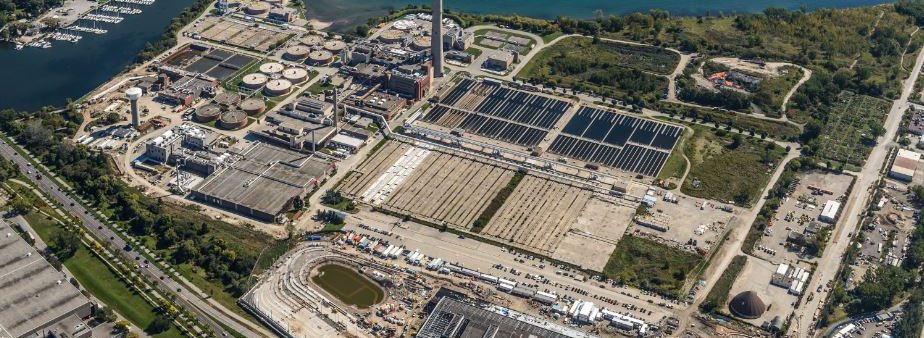
Wastewater is what residents and industry flush down toilets and empty down sinks and drains. This material then travels through the sanitary sewer system to one of four wastewater treatment plants where it is treated and released back into Lake Ontario. 

The safe and effective treatment of wastewater is important to the continued health and well-being of Toronto’s residents and the environment. 

Toronto’s wastewater treatment process operates under strict regulations and meets or exceeds standards set by the Ministry of the Environment, Conservation and Parks to protect public health and the environment. 

Wastewater is collected and treated 24 hours a day, 7 days at week via:

  • more than 3,700 km of sanitary sewers, 1,500 km of combined sewers and 300 km of trunk sewers
  • more than 520,000 sewer service connections
  • 79 wastewater pumping stations
  • four wastewater treatment plants

Licensed plant technicians are always present to oversee plant operations. All staff are appropriately certified and highly trained to keep the plants running safely and efficiently.

Plant operations are supported by a multidisciplinary team responsible for day-to-day operations, including skilled trades and technicians, engineering professionals, health and safety staff, and supervisory and management staff.

How treatment works

Preliminary treatment

Preliminary treatment involves removing: 

  • large debris (such as rocks, sticks, sand, silt and gravel washed into the sewer system) 
  • hygiene products (such as tampons, dental floss and wipes, which are not meant to be flushed) 

These materials are collected, washed and removed from the site. 

Primary treatment

Primary treatment separates solid organic matter (human waste) from wastewater.

  • Wastewater flows into large tanks called primary clarifiers, which slow the speed of the wastewater so solids can separate. 
  • Heavier solids sink to the bottom and form sludge, while lighter materials float to the top as scum. 
  • Both sludge and scum are collected and pumped into digester tanks for solids processing. 

Secondary treatment

Secondary treatment uses both biological and physical processes to further clean and treat the water.

  • Wastewater flows into aeration tanks, which plant technicians closely monitor and adjust to create an environment for microorganisms to multiply and grow.
  • Microorganisms break down pollutants and nutrients.
  • Wastewater then enters tanks called secondary clarifiers, which slow the flow to separate any microorganisms carried over from the aeration tanks.
  • Some microorganisms are returned to the aeration tanks while some are collected, thickened and pumped into digester tanks for solids processing.

Disinfection

  • Water is disinfected to destroy harmful pathogens.
  • The treated wastewater is then safe and meets all Ministry standards to be returned to the natural environment.
  • In most plants, some of the water is recycled within the facility for internal process use.

Solids processing

  • Solids removed during primary and secondary treatment are pumped into digester tanks.
  • A biological process using microorganisms, as well as heat, mixing and a long holding time (10-20 days), breaks down the complex organic matter and creates methane as a by-product.
    • The resulting solids are called biosolids, which are rich in organic material and nutrients.
    • The methane can be used to produce energy (heat and electricity) for the plant, reducing treatment costs and resources.

The City has four wastewater treatment plants. Review the most recent reports submitted to the Ministry of the Environment, Conservation and Parks regarding operations, capital projects, bypasses, maintenance costs, staffing, and health and safety initiatives.

Odours or unpleasant smells near wastewater treatment plants are common and typically short-lived. Local sewers and major sewer pipes can also cause similar temporary odours.

Weather conditions, including wind direction, temperature and humidity can make normal treatment-related odours more noticeable at times.

Managing plant odours

The goal of odour management is to ensure wastewater treatment plants capture odours, treat them on-site and prevent them from escaping into the surrounding communities. Each plant has comprehensive systems to manage odours produced during the treatment process. Components may include:

  • enclosures and ventilation systems to contain and capture odorous air from larger sources and prevent it from leaving the plant property
  • biofilters, which use naturally occurring microorganisms to remove odorous compounds from the captured air
  • activated carbon scrubbers, which use carbon to clean the odorous air from numerous smaller sources
  • controlled ventilation systems to collect and disperse treated air
  • best practice plant operations and housekeeping

Report a smell or odour from a wastewater treatment plant

Report an unpleasant smell or odour that you suspect is coming from a wastewater treatment plant.

All odour complaints are taken seriously and investigated by staff. Identifying the source can be complex, as conditions may change between the time an odour is reported and when staff are able to complete a site investigation.

Biosolids are the nutrient-rich, organic materials resulting from the treatment of sewage. Learn how the City manages biosolids.

Date modified: June 5, 2026